Last updated on June 12, 2026·5 min read
Why does high blood sugar make you tired and sleepy?
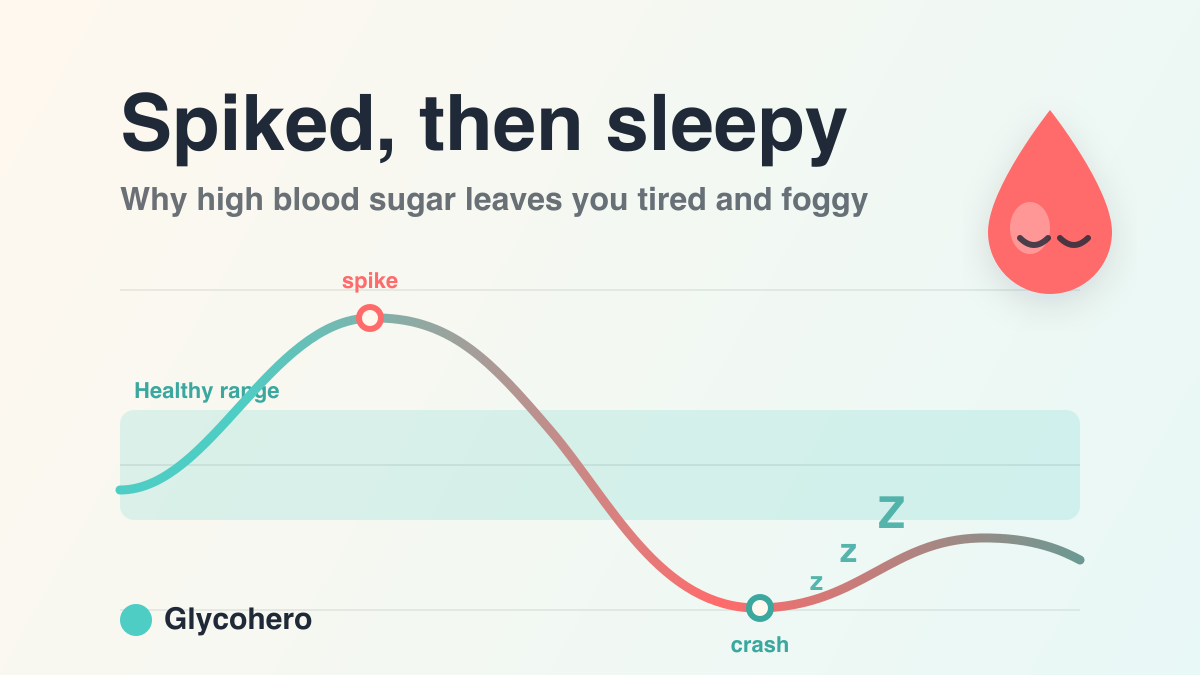
If you feel wiped out, heavy-eyed, or foggy and you suspect your blood sugar is to blame, you are probably onto something. Tiredness is one of the most common symptoms of high blood sugar, and it is also one of the easiest to miss because it builds slowly and looks like ordinary fatigue.
Here is what is actually happening, and what you can do about it.
The short answer
Yes, high blood sugar can make you tired and sleepy. When there is too much glucose in your blood (a state called hyperglycemia), your cells have trouble pulling that glucose in to use as energy. The fuel is there, but it cannot get where it needs to go, so your body and brain run low on usable power. On top of that, high blood sugar makes you urinate more, which mildly dehydrates you, and dehydration is tiring on its own.
The frustrating part: low blood sugar makes you tired too. Both extremes drain your energy, which is why the real goal is steady blood sugar, not simply low blood sugar.
Why high blood sugar drains your energy
There are three main mechanisms, and they usually stack on top of each other.
- Your cells cannot use the fuel. Glucose needs insulin to move from the blood into your cells. In insulin resistance and diabetes, that handoff works poorly, so glucose builds up in the blood while your cells stay hungry. The result feels like running on empty even though your blood is full of fuel.
- Dehydration from frequent urination. When blood sugar climbs above roughly 10 mmol/L (180 mg/dL), your kidneys start dumping the excess glucose into your urine, and they pull water out with it. That is why high blood sugar makes you thirsty and sends you to the bathroom often. The mild dehydration that follows is a direct cause of fatigue.
- Low-grade inflammation. Chronically high blood sugar promotes inflammation throughout the body, which is linked to that heavy, run-down feeling and to poorer sleep quality, creating a tiredness loop.
The post-meal sugar crash
You do not need diabetes to feel this one. Eat a big plate of fast carbs (white bread, sugary drinks, pastries, a large portion of white rice) and your blood sugar spikes quickly. Your pancreas responds with a surge of insulin, and an hour or two later your blood sugar can dip below where it started. That rebound dip is the classic sugar crash: tired, foggy, irritable, and hungry again.
The size of the crash tracks the size of the spike. The faster and higher your blood sugar rises, the harder the comedown tends to be. This is where the glycemic index matters: lower glycemic index foods release glucose slowly and produce a gentler curve, so you skip the spike and the crash.
Do not forget: low blood sugar makes you tired too
It is easy to assume tiredness always means high blood sugar, but the opposite end of the range does the same thing. Below 3.9 mmol/L (70 mg/dL) is hypoglycemia, and because your brain runs almost entirely on glucose, a low leaves you tired, shaky, irritable, sweaty, and unable to concentrate.
For context, in Glycohero we treat 3.9 to 7.8 mmol/L (70 to 140 mg/dL) as the healthy zone. Drift above it and you get the high-sugar sluggishness. Drop below it and you get the low-sugar version. Steady wins.
Not sure how your numbers translate between units? Our blood sugar converter switches any value between mmol/L and mg/dL instantly.
When tiredness is a warning sign
Occasional post-lunch drowsiness is normal. But fatigue that does not go away, especially when it shows up alongside other symptoms, deserves a doctor’s attention. See a healthcare provider if persistent tiredness comes with:
- Increased thirst and a dry mouth
- Needing to urinate often, including waking at night
- Blurred vision
- Unexplained weight loss
- Slow-healing cuts or frequent infections
That cluster is the classic pattern of undiagnosed or poorly controlled diabetes, and it is very treatable once identified. This article is educational and is not a substitute for medical advice.
How to get steadier energy
The fix for blood-sugar fatigue is the same whether or not you have diabetes: flatten the spikes and avoid the crashes.
- Build meals around protein, fat, and fiber. These slow digestion so glucose trickles in instead of flooding in. A plain bagel spikes you; eggs and avocado on that bagel do not.
- Choose lower glycemic index carbs. Oats, legumes, whole fruit, and whole grains raise blood sugar gently. See the glycemic index food list for what tends to be low versus high.
- Walk after eating. Even 10 to 15 minutes of movement lets your muscles pull glucose straight out of the blood, blunting the post-meal rise.
- Hydrate. Since high blood sugar dehydrates you, water genuinely helps you feel less sluggish.
- Protect your sleep. Poor sleep worsens insulin resistance the next day, which makes the tiredness loop tighter.
Feel the loop through play
The connection between what you eat, how your blood sugar moves, and how you feel is hard to picture from a chart. Glycohero turns it into a 2D platformer: grab quality carbs, dodge the danger foods that spike you, and exercise to bring high readings back down into the healthy range. The numbers are calibrated to real-world values, so the intuition transfers to real life.
Play the first level free in your browser, or get the full game on iOS.
Reference
Frequently asked questions
- Does high blood sugar make you sleepy?
- Yes. When blood sugar is high (hyperglycemia), glucose struggles to get into your cells for energy, so your body and brain feel underpowered even though there is plenty of fuel in the blood. High blood sugar also pulls water out of your body through frequent urination, and the resulting mild dehydration adds to the sleepy, sluggish feeling.
- Does high blood sugar make you tired?
- It commonly does. Persistent tiredness is one of the most frequently reported symptoms of high blood sugar. The fatigue comes from cells being unable to use glucose efficiently, dehydration, and low-grade inflammation. Tiredness that shows up alongside increased thirst, frequent urination, and blurred vision is worth getting checked by a doctor, because it can be a sign of undiagnosed diabetes.
- Why do I feel tired and sleepy after eating?
- A large, fast-digesting carbohydrate meal can spike your blood sugar and then trigger a sharp drop an hour or two later as insulin clears the glucose. That rebound dip is the classic sugar crash, and it leaves you tired, foggy, and craving more food. Pairing carbs with protein, fat, and fiber, and choosing lower glycemic index foods, produces a gentler curve and steadier energy.
- Can low blood sugar also make you tired?
- Yes. Both ends of the range cause fatigue. Low blood sugar (hypoglycemia, below 3.9 mmol/L or 70 mg/dL) starves the brain of fuel and causes tiredness, shakiness, irritability, and trouble concentrating. This is why steady blood sugar, not just low blood sugar, is the goal.
- How do I stop feeling sleepy after meals?
- Build meals around protein, healthy fat, and fiber, and keep fast carbs in check so blood sugar rises gently instead of spiking. A 10 to 15 minute walk after eating helps your muscles pull glucose out of the blood. Staying hydrated and getting enough sleep also reduce post-meal drowsiness.