# Glycohero: Full Content for LLMs
> Glycohero is an educational platformer that teaches diabetes-friendly eating and lifestyle through play. Available on iOS.
Glycohero is a free educational 2D platformer about blood sugar and diabetes management. Players grab quality carbs, avoid danger foods that spike blood sugar, and exercise to bring high readings back into the healthy range of 3.9 to 7.8 mmol/L (70 to 140 mg/dL). It is available on iOS with a free browser demo, and is suitable for kids and adults.
Website: https://bloodglucosehero.com
Japanese site: https://bloodglucosehero.com/jp/
Spanish site: https://bloodglucosehero.com/es/
Korean site: https://bloodglucosehero.com/ko/
Simplified Chinese site: https://bloodglucosehero.com/zh-hans/
Traditional Chinese site: https://bloodglucosehero.com/zh-hant/
French site: https://bloodglucosehero.com/fr/
Brazilian Portuguese site: https://bloodglucosehero.com/pt/
App Store: https://apps.apple.com/app/glycohero-blood-sugar-game/id6768890306
---
# Tools
## Blood Sugar Converter (mg/dL to mmol/L calculator)
URL: https://bloodglucosehero.com/blood-sugar-converter/
Converts blood sugar between mg/dL and mmol/L and estimates HbA1c. The conversion factor is 18.016, commonly rounded to 18: multiply mmol/L by 18 to get mg/dL, or divide mg/dL by 18 to get mmol/L. Examples: 5 mmol/L = 90 mg/dL; 7 mmol/L = 126 mg/dL; 100 mg/dL = 5.6 mmol/L; 140 mg/dL = 7.8 mmol/L. HbA1c is estimated with the ADAG formula: A1C (%) = (average mg/dL + 46.7) / 28.7. Ranges by estimated HbA1c: normal below 5.7% (about 70 to 117 mg/dL, 3.9 to 6.5 mmol/L), prediabetes 5.7 to 6.4%, diabetes 6.5% or higher. Hypoglycemia is below 70 mg/dL (3.9 mmol/L). The US and Japan report blood sugar in mg/dL; the UK, Canada, Australia, and most of Europe use mmol/L.
## Glycemic Index Food List
URL: https://bloodglucosehero.com/glycemic-index-food-list/
Approximate glycemic index (GI) values for common foods. GI ranks carbohydrate-containing foods from 0 to 100 by how fast they raise blood sugar: low is 55 or below, medium 56 to 69, high 70 or above. Important caveat: GI is a useful guide, not a precise rule. Values are lab averages and individual responses differ (pre-meal glucose, fiber, ripeness, cooking, portion, and food pairing all matter), and the American Diabetes Association does not recommend relying on GI alone. Practical tips: pair carbs with protein or fat, choose whole over processed foods, and watch ripeness and cooking method.
---
# Blog Articles
---
## 10+ prediabetes statistics you need to know in 2026
URL: https://bloodglucosehero.com/blog/prediabetes-statistics/
About 115 million US adults have prediabetes and about 8 in 10 don't know it. The key prediabetes statistics for 2026, by age, plus how many progress to type 2 diabetes and how many reverse it.
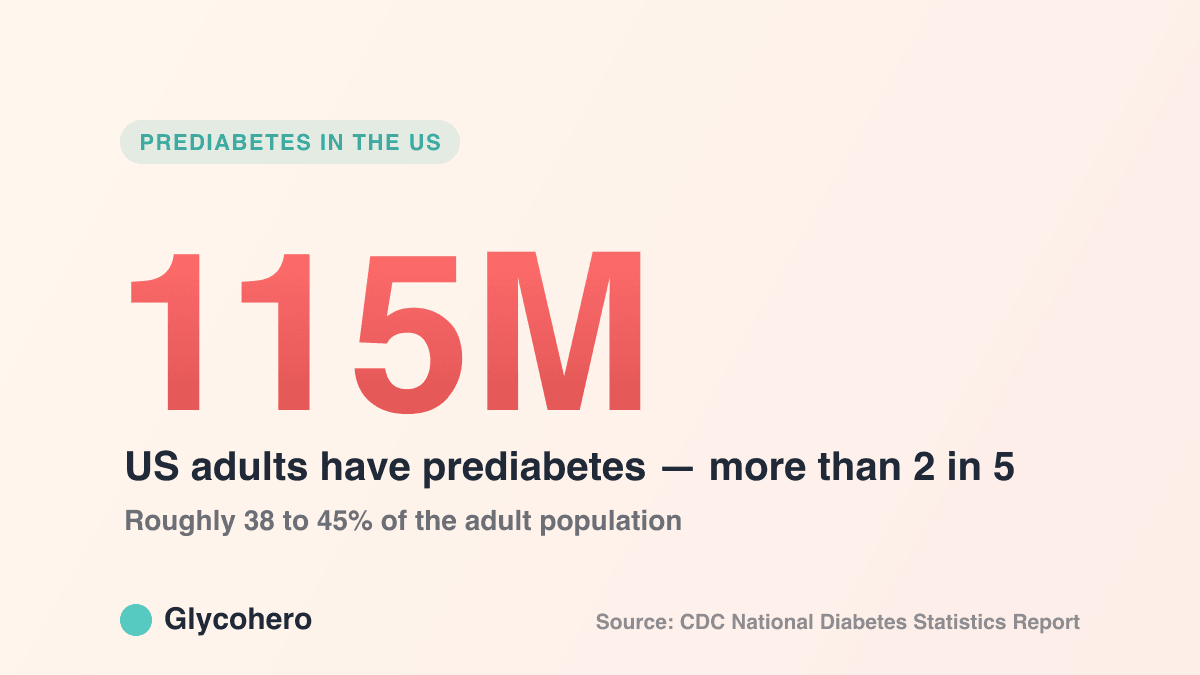
If you are looking for the headline number, here it is: **about 115 million US adults have prediabetes, more than 2 in 5, and about 8 in 10 of them don't know it.** It is one of the most common health conditions in the country, and one of the most quietly overlooked.
Below are the key prediabetes statistics in plain numbers, with the primary sources behind each one. Prediabetes means blood sugar that is higher than normal but not yet high enough to be type 2 diabetes, and the figures show both how widespread it is and how much of it is reversible.
## Prediabetes statistics at a glance
- **About 115 million** US adults have prediabetes, according to the [CDC National Diabetes Statistics Report](https://www.cdc.gov/diabetes/php/data-research/index.html). That is **more than 2 in 5** adults, roughly 38 to 45% of the adult population ([CDC](https://www.cdc.gov/diabetes/communication-resources/prediabetes-statistics.html)).
- **About 8 in 10** adults with prediabetes do not know they have it ([CDC](https://www.cdc.gov/diabetes/communication-resources/prediabetes-statistics.html)).
- **More than half** of adults aged 65 and older have prediabetes: 31.3 million people, or 52.1% ([CDC](https://www.cdc.gov/diabetes/php/data-research/index.html)).
- **About 1 in 5** adolescents aged 12 to 18 have prediabetes in a peer-reviewed JAMA Pediatrics analysis; a newer CDC estimate for ages 12 to 17 put the figure near 1 in 3 ([JAMA Pediatrics](https://jamanetwork.com/journals/jamapediatrics/fullarticle/2755415), [AP News](https://apnews.com/article/prediabetes-cdc-adolescents-data-cf752de21856b2886450621d85d93370)).
- In the Diabetes Prevention Program placebo group, people with prediabetes developed type 2 diabetes at about **11 cases per 100 people each year** ([Diabetes Prevention Program Research Group](https://www.nejm.org/doi/full/10.1056/NEJMoa012512)).
- A structured lifestyle program can cut that risk by **58%** (71% for people over 60), per the [National Diabetes Prevention Program](https://www.cdc.gov/diabetes-prevention/programs/index.html).
## How many people have prediabetes?
**More than 2 in 5 US adults, about 115 million people, have prediabetes.** That is the figure in the most recent [CDC National Diabetes Statistics Report](https://www.cdc.gov/diabetes/php/data-research/index.html), and it makes prediabetes far more common than diabetes itself, which affects about 40 million Americans, or about 12% of the US population.
You may also see the numbers **96 million** or **97.6 million**, often paired with "more than 1 in 3." Those come from earlier editions of the same CDC report built on older survey years. The direction of travel is the same either way: a large and growing share of American adults are already in the prediabetes range.
## Most people don't know they have it
**About 8 in 10 adults with prediabetes are unaware of it**, according to the [CDC](https://www.cdc.gov/diabetes/communication-resources/prediabetes-statistics.html). Put another way, only about **1 in 5** adults with prediabetes know they have it.
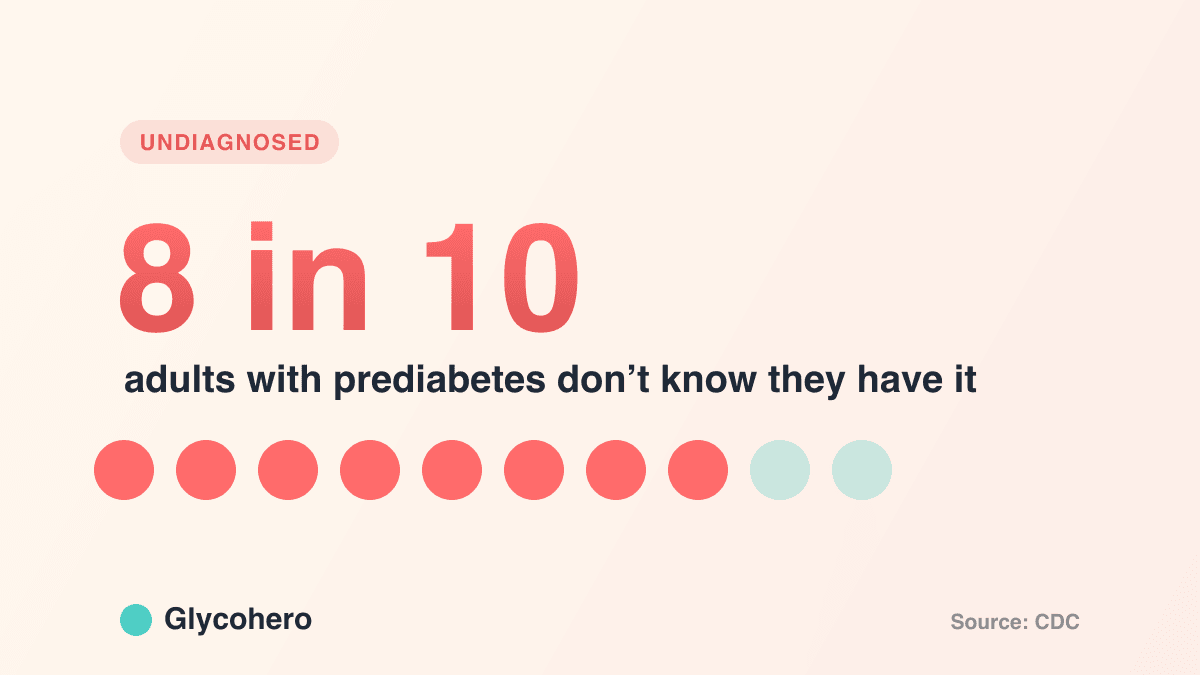
The reason is simple: prediabetes usually has no obvious symptoms. There is no dramatic reading on a meter, no clear warning sign, often nothing you would feel day to day. That is what makes the statistic striking. Tens of millions of people are walking around with elevated blood sugar and no idea, which is why prediabetes is often called a "silent" condition and why a simple blood test matters more than waiting for symptoms.
## Prediabetes in older adults
Prediabetes becomes especially common later in life. The current CDC National Diabetes Statistics Report estimates that **31.3 million adults aged 65 and older have prediabetes**, equal to **52.1%** of that age group ([CDC](https://www.cdc.gov/diabetes/php/data-research/index.html)).
That older-adult number deserves a separate callout, but prediabetes is not only a condition of later life. The youth data below shows why prediabetes is also becoming a pediatric and young-adult concern.
## Prediabetes in children and teens
This is the statistic that has changed the most. **About 1 in 5 US adolescents aged 12 to 18 have prediabetes.** That figure, 18%, comes from a peer-reviewed [JAMA Pediatrics](https://jamanetwork.com/journals/jamapediatrics/fullarticle/2755415) analysis of national survey data, which also found prediabetes in **24%** of young adults aged 19 to 34, close to 1 in 4.
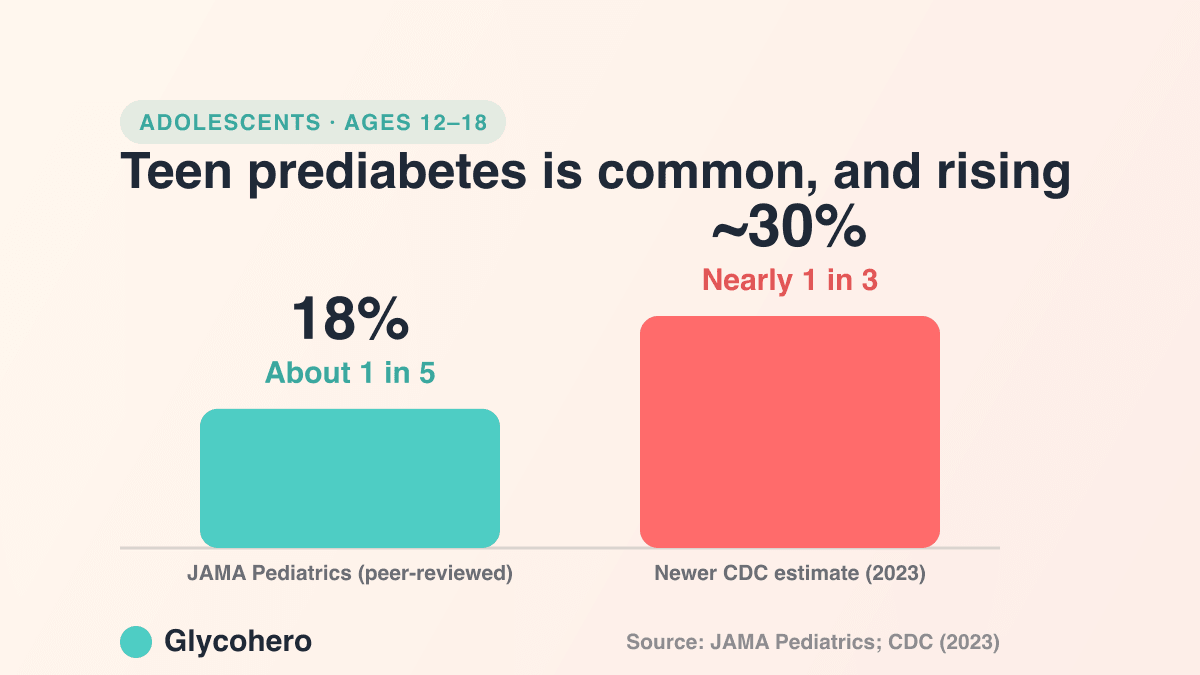
A newer CDC estimate for 2023 put prediabetes at nearly **1 in 3** adolescents aged 12 to 17, or about 8.4 million young people. That higher number used an updated method and [came with limited public detail](https://apnews.com/article/prediabetes-cdc-adolescents-data-cf752de21856b2886450621d85d93370), so outside experts have urged caution. The honest summary is that adolescent prediabetes looks common either way: the peer-reviewed estimate is about 1 in 5, while the newer CDC estimate is close to 1 in 3.
## How often prediabetes turns into type 2 diabetes
Prediabetes is a risk state, not a guarantee, but the odds without an intensive intervention are significant. In the landmark [Diabetes Prevention Program](https://www.nejm.org/doi/full/10.1056/NEJMoa012512), participants in the placebo group developed type 2 diabetes at a rate of **11 cases per 100 people each year**, close to 3 in 10 over the roughly three-year study. That comparison group received standard advice rather than the intensive lifestyle program.
That is the "why it matters" number. Prediabetes is the last clear off-ramp before type 2 diabetes, and it is the point where change makes the biggest difference.
## How long it takes to reverse prediabetes
Here is the more hopeful side of the data: **prediabetes can be reversible, but there is no fixed timeline.** Some people return blood sugar to a normal range within a few months to a year, while others need longer or need medication support. The timing depends on starting point, weight, medications, and consistency, but the effect of modest changes is large and well documented.
The landmark evidence is the [Diabetes Prevention Program](https://www.niddk.nih.gov/about-niddk/research-areas/diabetes/diabetes-prevention-program-dpp). The lifestyle group had goals of at least **7%** weight loss (14 pounds for someone weighing 200) and at least **150 minutes** of physical activity each week. That intervention cut the risk of developing type 2 diabetes by **58%** compared with placebo. For people over 60, the reduction was **71%**. At the 10-year follow-up, the lifestyle group still had a **34%** lower diabetes rate than the placebo group.
The practical levers are familiar: steadier meals with fewer blood sugar spikes, more movement, and gradual weight loss. If you want a sense of which foods push blood sugar up fastest, our guide to [foods that spike blood sugar](/blog/foods-that-spike-blood-sugar/) and our [glycemic index food list](/glycemic-index-food-list/) are good starting points.
## What counts as prediabetes: the exact numbers
Prediabetes is defined by three tests, and any one of them in the ranges below puts you in the prediabetes category. The cutoffs below match the [CDC diabetes testing ranges](https://www.cdc.gov/diabetes/diabetes-testing/index.html).
| Test | Normal | Prediabetes | Diabetes |
|---|---|---|---|
| A1C | Below 5.7% | 5.7% – 6.4% | 6.5% or above |
| Fasting glucose | Below 100 mg/dL (5.6 mmol/L) | 100 – 125 mg/dL (5.6 – 6.9 mmol/L) | 126 mg/dL (7.0 mmol/L) or above |
| 2-hour glucose (OGTT) | Below 140 mg/dL (7.8 mmol/L) | 140 – 199 mg/dL (7.8 – 11.0 mmol/L) | 200 mg/dL (11.1 mmol/L) or above |
A couple of things people often search for:
- **An A1C of 5.4, 5.5, or 5.6% is still normal.** Prediabetes starts at 5.7%. The closer you sit to that line, the more it is worth watching, but those readings are not yet prediabetes.
- **A fasting reading of 100 to 125 mg/dL is the prediabetes band.** Working between units? A reading in mg/dL divided by 18 gives you mmol/L, and our [blood sugar converter](/blood-sugar-converter) does it instantly in either direction.
For where these numbers sit on the wider scale, including the levels that become an emergency, see [what blood sugar level is dangerous](/blog/what-blood-sugar-level-is-dangerous/).
## Learn blood sugar through play
Numbers on a page are one thing; feeling how food and movement move your blood sugar is another. Glycohero turns it into a 2D platformer: grab quality carbs, dodge the danger foods that spike you into the high zone, and exercise to bring high readings back down into the healthy range. The values are calibrated to real-world numbers, so the intuition, the same intuition that helps keep prediabetes in check, transfers to real life.
[Play the first level free in your browser](/#play), or [get the full game on iOS](https://apps.apple.com/app/glycohero-blood-sugar-game/id6768890306).
## A note on the numbers
Prediabetes figures shift as national surveys are updated and as definitions are refined, which is why you will sometimes see two different headline numbers for the same thing. We have used the most recent CDC estimates here and noted the earlier ones where they still circulate. This article is educational and is not a substitute for medical advice; a blood test from a health professional is the only way to know where your own numbers sit.
## Reference
- https://www.cdc.gov/diabetes/php/data-research/index.html
- https://www.cdc.gov/diabetes/communication-resources/prediabetes-statistics.html
- https://www.cdc.gov/diabetes/diabetes-testing/index.html
- https://jamanetwork.com/journals/jamapediatrics/fullarticle/2755415
- https://apnews.com/article/prediabetes-cdc-adolescents-data-cf752de21856b2886450621d85d93370
- https://www.niddk.nih.gov/about-niddk/research-areas/diabetes/diabetes-prevention-program-dpp
- https://www.cdc.gov/diabetes-prevention/programs/index.html
- https://www.nejm.org/doi/full/10.1056/NEJMoa012512
### FAQ
Q: What percentage of Americans have prediabetes?
A: More than 2 in 5 US adults have prediabetes, roughly 38 to 45% of the adult population. In the most recent National Diabetes Statistics Report, the CDC puts the number at about 115 million adults. Earlier reports using different survey years cited about 96 to 98 million (more than 1 in 3), so you will see both figures quoted.
Q: How many people have prediabetes and don't know it?
A: About 8 in 10 adults with prediabetes do not know they have it, according to the CDC. Put another way, only about 1 in 5 adults with prediabetes know they have it. Prediabetes usually has no clear symptoms, which is why so much of it goes undiagnosed.
Q: What proportion of adolescents have prediabetes in the US?
A: About 1 in 5 US adolescents aged 12 to 18 have prediabetes, based on a peer-reviewed JAMA Pediatrics analysis that found a prevalence of 18%. A newer CDC estimate for ages 12 to 17 put the figure near 1 in 3 in 2023.
Q: How long does it take to reverse prediabetes?
A: There is no fixed timeline. Some people return their blood sugar to a normal range within a few months to a year, while others need longer or need medication support. In the Diabetes Prevention Program, a lifestyle group goal of at least 7% weight loss and 150 minutes of activity a week cut the risk of type 2 diabetes by 58%.
Q: Is an A1C of 5.6 prediabetes?
A: No. An A1C of 5.6% is still in the normal range. Prediabetes starts at 5.7% and runs up to 6.4%; an A1C of 6.5% or higher on repeat testing points to diabetes. So 5.4, 5.5, and 5.6% are all considered normal, though the closer you get to 5.7, the more it is worth watching.
Q: What blood sugar level is prediabetes?
A: Prediabetes is a fasting blood sugar of 100 to 125 mg/dL (5.6 to 6.9 mmol/L), an A1C of 5.7 to 6.4%, or a 2-hour glucose of 140 to 199 mg/dL (7.8 to 11.0 mmol/L) on a tolerance test. Below those ranges is normal; above them is diabetes.
Q: Does prediabetes make you tired?
A: It can, though prediabetes often causes no symptoms at all. Blood sugar that runs above the normal range can leave some people feeling tired or sluggish, especially after meals. Fatigue alone is not a reliable sign, which is one more reason prediabetes usually needs a blood test to catch.
---
## What blood sugar level is dangerous?
URL: https://bloodglucosehero.com/blog/what-blood-sugar-level-is-dangerous/
What counts as a dangerous blood sugar level, high and low. Clear mmol/L and mg/dL ranges, why 400 is an emergency, and when a reading means you should call for help.
If you have just seen a high number on a meter and want to know whether it is dangerous, here is the short version: **the danger zones are above roughly 13.9 mmol/L (250 mg/dL) and below 3.9 mmol/L (70 mg/dL)**, and a reading of 400 mg/dL (22.2 mmol/L) or higher should be treated as an emergency. Both ends of the scale are risky, not just the highs.
Below is a fuller picture of what each range means, in both units, plus the symptoms that turn a high number into an urgent one.
## The ranges at a glance
These are general educational figures. Your personal targets may differ, so treat them as a map, not medical advice.
| Reading (mmol/L) | Reading (mg/dL) | What it means |
|---|---|---|
| Below 3.0 | Below 54 | Severe low, an emergency |
| 3.0 to 3.9 | 54 to 70 | Low (hypoglycemia), treat now |
| 3.9 to 7.8 | 70 to 140 | Normal range (2 hours after eating) |
| 7.8 to 10.0 | 140 to 180 | Elevated, common after meals |
| 10.0 to 13.9 | 180 to 250 | High (hyperglycemia), take action |
| 13.9 to 22.2 | 250 to 400 | Dangerous, check ketones and call your provider |
| Above 22.2 | Above 400 | Emergency, seek urgent care |
Working between units? A reading in mg/dL divided by 18 gives you mmol/L (so 400 ÷ 18 = 22.2). Our [blood sugar converter](/blood-sugar-converter) does it instantly in either direction.
## Dangerously high blood sugar
High blood sugar (hyperglycemia) becomes dangerous in stages, not all at once.
- **Above 10.0 mmol/L (180 mg/dL):** your kidneys start spilling glucose into urine, which causes thirst and frequent urination. Not an emergency, but a signal to act.
- **Above 13.9 mmol/L (250 mg/dL):** this is the warning level. Your body may start breaking down fat for fuel, producing **ketones**. A buildup of ketones can lead to **diabetic ketoacidosis (DKA)**, a serious condition. If you can test for ketones, this is the point to do it.
- **Above 22.2 mmol/L (400 mg/dL):** treat this as an emergency, especially with symptoms. Extremely high blood sugar can progress to DKA or, particularly in type 2 diabetes, a **hyperosmolar hyperglycemic state (HHS)** driven by severe dehydration. Both can be life-threatening.
**Call for help right away if a high reading comes with any of these:**
- Nausea or vomiting
- Deep, rapid breathing
- Fruity-smelling breath
- Confusion or drowsiness
- Severe stomach pain
- Inability to keep fluids down
Those are signs of DKA or HHS, and they need medical care now, not later.
## Dangerously low blood sugar
It is easy to fixate on highs, but lows can be more immediately dangerous because they come on fast and starve the brain of fuel.
- **Below 3.9 mmol/L (70 mg/dL):** hypoglycemia. Treat with fast-acting carbs, for example glucose tablets or juice, then recheck.
- **Below 3.0 mmol/L (54 mg/dL):** a severe low. This can cause confusion, slurred speech, seizures, or loss of consciousness, and is a medical emergency.
Lows are especially a risk for people taking insulin or sulfonylureas, and they can strike overnight. This is one reason [alcohol can be risky](/blog/does-alcohol-raise-blood-sugar/): it can trigger a delayed low hours after drinking.
## Why "how high before death" has no single answer
People often search for an exact fatal number, but there is not one. What turns a high reading dangerous is not just the value, it is **how long it stays high**, whether ketones and dehydration set in, and the person's overall health. Two people at the same number can be in very different danger.
So the useful rule is not a threshold to memorize but a habit: very high readings, especially above 22.2 mmol/L (400 mg/dL) or alongside the warning symptoms above, mean it is time to get help, not to wait and watch.
## The goal is steady, not just low
Because both ends are dangerous, the target is not the lowest possible number, it is a **steady** one inside the healthy band. In Glycohero we treat **3.9 to 7.8 mmol/L (70 to 140 mg/dL)** as the safe zone: drift above it and you head toward the high-sugar dangers, drop below and you hit the lows. Staying centered is the whole game, on screen and in life.
If a high number left you feeling wiped out, that is no coincidence; here is [why high blood sugar makes you tired](/blog/why-does-high-blood-sugar-make-you-tired/).
## A note on context
A single high or low reading is not automatically an emergency. Meter errors, a recent meal, stress, and illness all move the number. What matters is the size of the reading, the symptoms with it, and the trend over time. Use the ranges here to know when a number deserves attention, and when it deserves a phone call. This article is educational and is not a substitute for medical advice.
## Feel the danger zones through play
Knowing the numbers is one thing; feeling how fast you can slide into a danger zone is another. Glycohero turns it into a 2D platformer: grab quality carbs, dodge the danger foods that spike you toward the high zone, and exercise to bring high readings back down into the healthy range before they tip into the red. The numbers are calibrated to real-world values, so the intuition transfers to real life.
[Play the first level free in your browser](/#play), or [get the full game on iOS](https://apps.apple.com/app/glycohero-blood-sugar-game/id6768890306).
## Reference
- https://www.cdc.gov/diabetes/treatment/index.html
- https://diabetes.org/living-with-diabetes/treatment-care/hyperglycemia
- https://www.niddk.nih.gov/health-information/diabetes/overview/preventing-problems/low-blood-glucose-hypoglycemia
- https://medlineplus.gov/ency/article/000320.htm
### FAQ
Q: What blood sugar level is dangerous?
A: Both extremes are dangerous. On the high side, a reading above 13.9 mmol/L (250 mg/dL) is a warning level that can lead to diabetic ketoacidosis, and above 22.2 mmol/L (400 mg/dL) is a medical emergency. On the low side, below 3.9 mmol/L (70 mg/dL) is hypoglycemia, and below 3.0 mmol/L (54 mg/dL) is a severe low that needs immediate treatment. The healthy target range sits between roughly 3.9 and 7.8 mmol/L (70 to 140 mg/dL).
Q: Is a blood sugar of 400 dangerous?
A: Yes. A blood sugar of 400 mg/dL (22.2 mmol/L) is dangerously high and should be treated as an emergency, especially with symptoms like nausea, vomiting, deep or rapid breathing, confusion, or fruity-smelling breath. These can signal diabetic ketoacidosis. Contact a healthcare provider or seek urgent care; do not wait to see if it comes down on its own.
Q: How high can blood sugar go before death?
A: There is no single fatal number, because outcome depends on how long the level stays high, whether ketones or severe dehydration develop, and the person's overall health. Untreated, extreme highs can cause diabetic ketoacidosis or a hyperosmolar hyperglycemic state, both of which can be life-threatening. The takeaway is not a threshold to fear but a rule to follow: very high readings, particularly above 22.2 mmol/L (400 mg/dL) or with warning symptoms, are a medical emergency that needs prompt care.
Q: What is a dangerously low blood sugar level?
A: Below 3.9 mmol/L (70 mg/dL) is low (hypoglycemia) and should be treated with fast-acting carbs. Below 3.0 mmol/L (54 mg/dL) is a severe low that can cause confusion, seizures, or loss of consciousness and is a medical emergency. Lows can be just as dangerous as highs and tend to come on much faster.
Q: Is 300 blood sugar dangerous?
A: A reading of 300 mg/dL (16.7 mmol/L) is very high and warrants action. It is above the level where ketones can start to build, so it is worth checking for ketones if you can, watching for symptoms, and contacting a healthcare provider, particularly if it stays there or keeps climbing.
Q: What is a normal blood sugar level?
A: A healthy range is roughly 3.9 to 7.8 mmol/L (70 to 140 mg/dL), lower when fasting and higher for a short time after meals. Fasting readings under 5.6 mmol/L (100 mg/dL) are considered normal, 5.6 to 6.9 mmol/L (100 to 125 mg/dL) suggests prediabetes, and 7.0 mmol/L (126 mg/dL) or above on repeat testing points to diabetes.
---
## Does stress raise blood sugar?
URL: https://bloodglucosehero.com/blog/does-stress-raise-blood-sugar/
Stress raises blood sugar by releasing cortisol and adrenaline, which flood glucose into your blood. Here is how it works, why it happens even without diabetes, and how to bring your levels back down.
If your blood sugar reads high and you have not eaten anything unusual, stress is one of the first things to suspect. Stress and blood sugar are tightly linked, and the connection catches a lot of people off guard because it has nothing to do with food.
Here is what is happening inside your body, and what you can do about it.
## The short answer
**Yes, stress raises blood sugar.** When you feel stressed, your body launches its fight-or-flight response and releases two hormones, **cortisol** and **adrenaline**. Their job is to get energy to your muscles fast, so they tell your liver to dump stored glucose into your bloodstream and make your cells temporarily resist insulin to keep that glucose available. The result is a rise in blood sugar, with no meal required.
It is an ancient survival system: if you were about to run from a predator, you would want fuel in your blood instantly. The problem is that a tense meeting, a traffic jam, or a wave of anxiety triggers the exact same response, and there is no sprint afterward to burn the sugar off.
## How stress hormones push glucose into your blood
There are two hormones doing most of the work, on two different timelines.
1. **Adrenaline (fast).** Within seconds of a stressful jolt, adrenaline signals your liver to release glucose and tells your cells to hold off on absorbing it. This is the sharp, short-lived spike you might see during a fright or an argument.
2. **Cortisol (slow and sustained).** Cortisol rises more gradually and stays elevated as long as the stress continues. It keeps glucose flowing into the blood and dampens insulin's effect for hours. Chronic stress means chronically high cortisol, which keeps blood sugar elevated long after any single stressful moment has passed.
Together they raise blood sugar and, at the same time, make it harder for insulin to bring that sugar back down. That double action is why stress highs can feel stubborn.
## Acute stress vs chronic stress
The distinction matters more than the source of the stress.
- **Acute stress** is a one-off spike: a near-miss in traffic, public speaking, a scary email. Blood sugar rises quickly and, in a body with a healthy insulin response, settles again once the moment passes.
- **Chronic stress** is the bigger problem. Ongoing work pressure, money worries, poor sleep, or constant low-level anxiety keep cortisol elevated day after day. That sustained load raises your average blood sugar and, over time, contributes to insulin resistance, which is a step toward prediabetes and type 2 diabetes.
## Does stress raise blood sugar without diabetes?
Yes. The stress response is universal, so cortisol and adrenaline raise blood sugar in everyone, diabetic or not. The difference is the cleanup. A healthy pancreas releases enough insulin to mop up the extra glucose fairly quickly, so a person without diabetes may never notice. In someone with diabetes or insulin resistance, that correction is slower and weaker, so stress-driven highs climb higher and linger longer.
This is also why stress can be an early, easy-to-miss signal. If you are seeing unexplained highs during stressful stretches even without a diagnosis, it is worth paying attention to.
## Do not forget physical stress
Stress is not only mental. Your body reads **illness, infection, injury, surgery, and pain** as serious threats and floods the system with the same hormones. That is why blood sugar so often spikes when you are sick with the flu, fighting an infection, or recovering from an operation. People with diabetes follow "sick-day rules" for exactly this reason and check their levels more frequently when unwell.
## What stress-driven highs feel like
A stress spike can produce the same sluggish, off feeling as any high reading: tiredness, trouble concentrating, thirst, and irritability that compounds the stress you already feel. If you want the full picture of why elevated blood sugar drains you, see [why high blood sugar makes you tired and sleepy](/blog/why-does-high-blood-sugar-make-you-tired/).
For context, in Glycohero we treat **3.9 to 7.8 mmol/L (70 to 140 mg/dL)** as the healthy zone. Stress is one of the forces that can push you above it without a single bite of food. Not sure how your numbers translate between units? Our [blood sugar converter](/blood-sugar-converter) switches any value between mmol/L and mg/dL instantly.
## How to lower blood sugar caused by stress
The fix works on two fronts: calm the stress response and help your body clear the glucose.
- **Breathe slowly.** A few minutes of slow, deep breathing activates the rest-and-digest system and lowers adrenaline and cortisol within minutes. It is the fastest lever you have in the moment.
- **Walk it off.** A 10 to 15 minute walk does double duty: it lowers stress hormones and lets your muscles pull glucose straight out of the blood. Movement is the single most reliable way to bring a stress high back down.
- **Protect your sleep.** Short or poor sleep raises cortisol and worsens insulin resistance the next day, tightening the stress-sugar loop. Steady sleep loosens it.
- **Eat steady, low-glycemic meals.** You cannot control every stressor, but you can avoid stacking a blood-sugar spike on top of a stress spike. Building meals around protein, fat, and fiber, and choosing lower [glycemic index foods](/glycemic-index-food-list), keeps the food side of the equation calm.
- **Address the chronic sources.** Acute fixes help in the moment, but lasting improvement comes from reducing the ongoing load: workload, worry, caffeine overload, and constant overstimulation all keep cortisol high.
## When to see a doctor
Stress-related highs that come and go with stressful events are usually manageable with the habits above. But talk to a healthcare provider if you notice:
- Frequent unexplained high readings, with or without obvious stress
- Highs that come alongside increased thirst, frequent urination, blurred vision, or fatigue
- Blood sugar that stays elevated long after a stressful period has ended
- Stress or anxiety that feels unmanageable on its own
Persistent highs can be a sign of undiagnosed or poorly controlled diabetes, and chronic stress is treatable. This article is educational and is not a substitute for medical advice.
## Feel the loop through play
The link between stress, movement, food, and your blood sugar is hard to picture from a chart. Glycohero turns it into a 2D platformer: grab quality carbs, dodge the danger foods that spike you, and exercise to bring high readings back down into the healthy range. The numbers are calibrated to real-world values, so the intuition transfers to real life.
[Play the first level free in your browser](/#play), or [get the full game on iOS](https://apps.apple.com/app/glycohero-blood-sugar-game/id6768890306).
## Reference
- https://www.cdc.gov/diabetes/living-with/mental-health.html
- https://diabetes.org/health-wellness/mental-health
- https://www.niddk.nih.gov/health-information/diabetes/overview/preventing-problems
### FAQ
Q: Does stress raise blood sugar?
A: Yes. When you are stressed, your body releases the hormones cortisol and adrenaline as part of the fight-or-flight response. These hormones tell your liver to release stored glucose into the blood for quick energy, and they make your cells temporarily more resistant to insulin. The result is higher blood sugar, even if you have not eaten anything.
Q: Can stress raise blood sugar without diabetes?
A: Yes. The stress response is universal, so cortisol and adrenaline raise blood sugar in everyone. In people without diabetes, a healthy pancreas usually releases enough insulin to bring the level back down fairly quickly. In people with diabetes or insulin resistance, that correction is slower and weaker, so stress-driven highs last longer and climb higher.
Q: How much can stress raise blood sugar?
A: It varies by person and by how intense and prolonged the stress is. Acute stress can push blood sugar up by a few mmol/L (tens of mg/dL) within minutes. Chronic, ongoing stress keeps cortisol elevated and can hold blood sugar high for hours or days, which over time contributes to insulin resistance and higher average levels.
Q: Does anxiety raise blood sugar?
A: Anxiety triggers the same fight-or-flight hormones as physical stress, so yes, it can raise blood sugar. The body does not distinguish much between a real threat and a worried mind: both release adrenaline and cortisol, both push glucose into the blood, and both can leave your readings higher than you expect.
Q: Does physical stress like illness raise blood sugar?
A: Yes, often sharply. Infections, injury, surgery, and pain are physical stressors that flood the body with stress hormones, which is why blood sugar frequently spikes when you are sick. This is the reason people with diabetes follow sick-day rules and check their levels more often when unwell.
Q: How do I lower blood sugar caused by stress?
A: Address the stress and the sugar together. Slow breathing, a short walk, and stepping away from the trigger lower stress hormones within minutes. Regular exercise, enough sleep, and steady low-glycemic meals reduce the baseline cortisol load. A 10 to 15 minute walk is especially effective because it both calms you and lets your muscles pull glucose straight out of the blood.
---
## Does alcohol raise or lower blood sugar?
URL: https://bloodglucosehero.com/blog/does-alcohol-raise-blood-sugar/
Alcohol can raise blood sugar at first and then drop it hours later, sometimes overnight. Here is why it does both, which drinks spike you most, and how long the effect lasts.
Alcohol is one of the most confusing things you can do to your blood sugar, because it pushes in two directions. Drink a sugary cocktail and your blood sugar climbs. A few hours later, the same drink can send it crashing. Both are true, and understanding why is the key to drinking more safely.
Here is what alcohol actually does, in order.
## The short answer
**Alcohol can raise blood sugar first and lower it later.** Whether you go up or down at any given moment depends on two competing forces:
1. **The carbs in the drink push blood sugar up.** Beer, sweet cocktails, dessert wine, and sugary mixers contain fast carbohydrates that spike blood sugar soon after you drink, just like any other sugary food.
2. **The alcohol itself pushes blood sugar down.** Your liver treats alcohol as a toxin and drops everything to clear it, which means it stops releasing the stored glucose it normally uses to keep your levels steady. With that backup supply switched off, blood sugar can fall, sometimes hours later.
So a sweet drink often produces an early rise followed by a delayed dip. A dry drink may skip the rise but still set up the later low. The delayed drop is the part most people miss, and it is the part that matters most for safety.
## Why alcohol raises blood sugar
This one is simple: it is the carbohydrates, not the alcohol. A pint of regular beer, a margarita, a rum and cola, or a glass of sweet wine all carry sugar or starch that digests quickly. That carbohydrate raises blood sugar the same way a [sugary food would](/blog/foods-that-spike-blood-sugar/), often within the first hour.
Pure spirits with a zero-carb mixer (soda water, for example) have almost no carbs, so they barely move blood sugar upward at all. The sweeter and carbier the drink, the bigger the early rise.
## Why alcohol lowers blood sugar
This is the part that surprises people. Between meals, your liver keeps blood sugar from falling by steadily releasing stored glucose. But your liver is also the organ that breaks down alcohol, and it treats that job as the priority. While it is busy metabolizing alcohol, it **pauses its glucose release**.
With the liver's safety net switched off, blood sugar can drift downward, especially if you drank on an empty stomach. For someone taking insulin or certain diabetes medications (like sulfonylureas), this can tip into outright **hypoglycemia**, a low that needs treating.
## The delayed low: hours later, even overnight
Because the liver stays distracted for a long time after you stop drinking, the low does not always arrive while you are still out. Alcohol can suppress glucose release for roughly **12 to 24 hours**, which means a dangerous low can show up:
- A few hours after your last drink
- Overnight while you are asleep
- The next morning, alongside a hangover
This delay is what makes alcohol genuinely risky for people on glucose-lowering medication. Worse, the symptoms of a low (confusion, shakiness, slurred speech, drowsiness) look a lot like being drunk or hungover, so they are easy to dismiss.
## Which drinks are best and worst
If your goal is steadier blood sugar, the carb content of the drink is what changes the early spike:
- **Highest spike:** regular beer, sweet cocktails (margaritas, daiquiris, anything frozen), dessert and sweet wines, and any spirit mixed with juice or regular soda.
- **Lower spike:** dry wine, light beer, and spirits with soda water or a diet mixer.
But here is the catch: **the delayed-low risk applies to every alcoholic drink**, low-carb or not, because all of them occupy the liver. Choosing a dry drink lowers the early rise; it does not remove the later dip.
## When to seek help
Drinking in moderation is manageable for many people, but talk to a healthcare provider if:
- You take insulin or other glucose-lowering medication and want to drink safely
- You have had a low after drinking, or have woken up shaky, sweaty, or confused
- You regularly drink and have diabetes or prediabetes
- You are unsure how alcohol interacts with your specific medications
A severe low can be a medical emergency. This article is educational and is not a substitute for medical advice, and it is not encouragement to drink.
## Feel the loop through play
The push and pull between food, movement, and your blood sugar is hard to picture from a chart. Glycohero turns it into a 2D platformer: grab quality carbs, dodge the danger foods that spike you, and exercise to bring high readings back down into the healthy range. The numbers are calibrated to real-world values, so the intuition transfers to real life.
[Play the first level free in your browser](/#play), or [get the full game on iOS](https://apps.apple.com/app/glycohero-blood-sugar-game/id6768890306).
## Reference
- https://medlineplus.gov/ency/patientinstructions/000968.htm
- https://diabetes.org/health-wellness/alcohol-and-diabetes
- https://www.niddk.nih.gov/health-information/diabetes/overview/healthy-living-with-diabetes
### FAQ
Q: Does alcohol raise or lower blood sugar?
A: Both, at different times. Sugary and carb-heavy drinks (beer, sweet cocktails, dessert wine, sugary mixers) raise blood sugar soon after you drink. But alcohol itself blocks your liver from releasing stored glucose, so a few hours later blood sugar can drop, sometimes low enough to cause hypoglycemia. The net effect depends on what you drink, how much, and whether you ate.
Q: How long does alcohol affect blood sugar?
A: Longer than most people expect. Alcohol can keep your liver from releasing glucose for up to about 12 to 24 hours after drinking, depending on how much you had. This is why a low can show up overnight or the next morning, well after the buzz has worn off. Effects are strongest while your body is still clearing the alcohol.
Q: Why does alcohol lower blood sugar?
A: Your liver normally drips stored glucose into your blood to keep levels steady between meals. When you drink, your liver prioritizes breaking down the alcohol and pauses that glucose release. With the liver's backup supply switched off, blood sugar can fall, especially if you drank on an empty stomach or are on insulin or certain diabetes medications.
Q: Does alcohol affect blood sugar the next day?
A: It can. Because alcohol suppresses the liver's glucose release for many hours, blood sugar can run low overnight or the next morning, particularly after heavier drinking. A hangover can also mask the symptoms of a low, which makes next-day hypoglycemia easy to miss.
Q: Which alcohol is best and worst for blood sugar?
A: The biggest spikes come from sugary drinks: regular beer, sweet cocktails, dessert and sweet wines, and anything with juice or soda mixers. Lower-carb options include dry wine, light beer, and spirits mixed with soda water or a diet mixer. But remember that even low-carb alcohol still suppresses the liver's glucose release, so the delayed-low risk applies to all of them.
Q: Can you drink alcohol if you have diabetes?
A: Many people with diabetes can drink in moderation, but it takes care because alcohol can cause delayed lows, especially with insulin or sulfonylureas. The standard precautions are: never drink on an empty stomach, eat carbohydrates while drinking, check your blood sugar before bed, and be aware that hypoglycemia can be mistaken for drunkenness. Always follow your own doctor's guidance.
---
## Why does high blood sugar make you tired and sleepy?
URL: https://bloodglucosehero.com/blog/why-does-high-blood-sugar-make-you-tired/
High blood sugar can leave you tired, sleepy, and foggy. Here is why hyperglycemia drains your energy, how the post-meal sugar crash works, and how to feel steadier.
If you feel wiped out, heavy-eyed, or foggy and you suspect your blood sugar is to blame, you are probably onto something. Tiredness is one of the most common symptoms of high blood sugar, and it is also one of the easiest to miss because it builds slowly and looks like ordinary fatigue.
Here is what is actually happening, and what you can do about it.
## The short answer
**Yes, high blood sugar can make you tired and sleepy.** When there is too much glucose in your blood (a state called hyperglycemia), your cells have trouble pulling that glucose in to use as energy. The fuel is there, but it cannot get where it needs to go, so your body and brain run low on usable power. On top of that, high blood sugar makes you urinate more, which mildly dehydrates you, and dehydration is tiring on its own.
The frustrating part: low blood sugar makes you tired too. Both extremes drain your energy, which is why the real goal is steady blood sugar, not simply low blood sugar.
## Why high blood sugar drains your energy
There are three main mechanisms, and they usually stack on top of each other.
1. **Your cells cannot use the fuel.** Glucose needs insulin to move from the blood into your cells. In insulin resistance and diabetes, that handoff works poorly, so glucose builds up in the blood while your cells stay hungry. The result feels like running on empty even though your blood is full of fuel.
2. **Dehydration from frequent urination.** When blood sugar climbs above roughly 10 mmol/L (180 mg/dL), your kidneys start dumping the excess glucose into your urine, and they pull water out with it. That is why high blood sugar makes you thirsty and sends you to the bathroom often. The mild dehydration that follows is a direct cause of fatigue.
3. **Low-grade inflammation.** Chronically high blood sugar promotes inflammation throughout the body, which is linked to that heavy, run-down feeling and to poorer sleep quality, creating a tiredness loop.
## The post-meal sugar crash
You do not need diabetes to feel this one. Eat a big plate of fast carbs (white bread, sugary drinks, pastries, a large portion of white rice) and your blood sugar spikes quickly. Your pancreas responds with a surge of insulin, and an hour or two later your blood sugar can dip below where it started. That rebound dip is the classic **sugar crash**: tired, foggy, irritable, and hungry again.
The size of the crash tracks the size of the spike. The faster and higher your blood sugar rises, the harder the comedown tends to be. This is where the [glycemic index](/glycemic-index-food-list) matters: lower glycemic index foods release glucose slowly and produce a gentler curve, so you skip the spike and the crash.
## Do not forget: low blood sugar makes you tired too
It is easy to assume tiredness always means high blood sugar, but the opposite end of the range does the same thing. Below **3.9 mmol/L (70 mg/dL)** is hypoglycemia, and because your brain runs almost entirely on glucose, a low leaves you tired, shaky, irritable, sweaty, and unable to concentrate.
For context, in Glycohero we treat **3.9 to 7.8 mmol/L (70 to 140 mg/dL)** as the healthy zone. Drift above it and you get the high-sugar sluggishness. Drop below it and you get the low-sugar version. Steady wins.
Not sure how your numbers translate between units? Our [blood sugar converter](/blood-sugar-converter) switches any value between mmol/L and mg/dL instantly.
## When tiredness is a warning sign
Occasional post-lunch drowsiness is normal. But fatigue that does not go away, especially when it shows up alongside other symptoms, deserves a doctor's attention. See a healthcare provider if persistent tiredness comes with:
- Increased thirst and a dry mouth
- Needing to urinate often, including waking at night
- Blurred vision
- Unexplained weight loss
- Slow-healing cuts or frequent infections
That cluster is the classic pattern of undiagnosed or poorly controlled diabetes, and it is very treatable once identified. This article is educational and is not a substitute for medical advice.
## How to get steadier energy
The fix for blood-sugar fatigue is the same whether or not you have diabetes: flatten the spikes and avoid the crashes.
- **Build meals around protein, fat, and fiber.** These slow digestion so glucose trickles in instead of flooding in. A plain bagel spikes you; eggs and avocado on that bagel do not.
- **Choose lower glycemic index carbs.** Oats, legumes, whole fruit, and whole grains raise blood sugar gently. See the [glycemic index food list](/glycemic-index-food-list) for what tends to be low versus high.
- **Walk after eating.** Even 10 to 15 minutes of movement lets your muscles pull glucose straight out of the blood, blunting the post-meal rise.
- **Hydrate.** Since high blood sugar dehydrates you, water genuinely helps you feel less sluggish.
- **Protect your sleep.** Poor sleep worsens insulin resistance the next day, which makes the tiredness loop tighter.
## Feel the loop through play
The connection between what you eat, how your blood sugar moves, and how you feel is hard to picture from a chart. Glycohero turns it into a 2D platformer: grab quality carbs, dodge the danger foods that spike you, and exercise to bring high readings back down into the healthy range. The numbers are calibrated to real-world values, so the intuition transfers to real life.
[Play the first level free in your browser](/#play), or [get the full game on iOS](https://apps.apple.com/app/glycohero-blood-sugar-game/id6768890306).
## Reference
- https://www.cdc.gov/diabetes/signs-symptoms/index.html
- https://medlineplus.gov/ency/article/000305.htm
- https://diabetes.org/about-diabetes/warning-signs-symptoms
- https://www.niddk.nih.gov/health-information/diabetes/overview/symptoms-causes
### FAQ
Q: Does high blood sugar make you sleepy?
A: Yes. When blood sugar is high (hyperglycemia), glucose struggles to get into your cells for energy, so your body and brain feel underpowered even though there is plenty of fuel in the blood. High blood sugar also pulls water out of your body through frequent urination, and the resulting mild dehydration adds to the sleepy, sluggish feeling.
Q: Does high blood sugar make you tired?
A: It commonly does. Persistent tiredness is one of the most frequently reported symptoms of high blood sugar. The fatigue comes from cells being unable to use glucose efficiently, dehydration, and low-grade inflammation. Tiredness that shows up alongside increased thirst, frequent urination, and blurred vision is worth getting checked by a doctor, because it can be a sign of undiagnosed diabetes.
Q: Why do I feel tired and sleepy after eating?
A: A large, fast-digesting carbohydrate meal can spike your blood sugar and then trigger a sharp drop an hour or two later as insulin clears the glucose. That rebound dip is the classic sugar crash, and it leaves you tired, foggy, and craving more food. Pairing carbs with protein, fat, and fiber, and choosing lower glycemic index foods, produces a gentler curve and steadier energy.
Q: Can low blood sugar also make you tired?
A: Yes. Both ends of the range cause fatigue. Low blood sugar (hypoglycemia, below 3.9 mmol/L or 70 mg/dL) starves the brain of fuel and causes tiredness, shakiness, irritability, and trouble concentrating. This is why steady blood sugar, not just low blood sugar, is the goal.
Q: How do I stop feeling sleepy after meals?
A: Build meals around protein, healthy fat, and fiber, and keep fast carbs in check so blood sugar rises gently instead of spiking. A 10 to 15 minute walk after eating helps your muscles pull glucose out of the blood. Staying hydrated and getting enough sleep also reduce post-meal drowsiness.
---
## Foods that spike blood sugar (and what to eat instead)
URL: https://bloodglucosehero.com/blog/foods-that-spike-blood-sugar/
Which foods spike blood sugar fastest, why oatmeal, bananas, popcorn, and sweet potatoes are not as simple as they seem, and the easy swaps that keep your levels steady.
Every food made of carbohydrate raises your blood sugar to some degree. The question that actually matters is how fast and how high. A bowl of lentils and a can of soda contain similar carbs, but one produces a gentle ripple and the other a steep spike followed by a crash.
Here is what makes the difference, which everyday foods spike the hardest, and the simple swaps that keep your levels steady.
## The short answer
The foods that spike blood sugar fastest are **fast-digesting carbohydrates with little fiber, fat, or protein to slow them down.** That means sugary drinks, white bread, white rice, breakfast cereal, pastries, sweets, and white potatoes. They sit high on the [glycemic index](/glycemic-index-food-list), so the glucose in them hits your blood almost as quickly as pure sugar.
The good news: you rarely have to cut these foods entirely. Changing the type, the portion, or what you eat alongside them is usually enough to turn a spike into a gentle rise.
## What actually makes a food spike your blood sugar
Four things decide how steep the rise will be:
1. **Glycemic index (speed).** The glycemic index ranks carb foods from 0 to 100 by how fast they raise blood sugar. Low is 55 or below, high is 70 or above. White bread is roughly 75; lentils are about 30. However, note that glycemic index values are lab averages and your own response can differ. Treat the numbers as a guide for comparing foods, not a precise rule. See [why you should not trust GI 100%](/glycemic-index-food-list) for more.
2. **Fiber.** Fiber slows digestion, so whole, fiber-rich carbs release glucose gradually. Stripping the fiber out (white flour, juice) removes the brake.
3. **Fat and protein.** Eating carbs alongside fat or protein slows stomach emptying, so the same carbs spike less. Bread alone spikes; bread with eggs and avocado does not.
4. **Processing and ripeness.** The more a food is broken down before it reaches you, the faster it digests. Finely milled flour, instant oats, and very ripe fruit all spike more than their whole, less-ripe versions.
## Foods that spike blood sugar
These are the usual culprits, roughly from fastest to more moderate:
| Food | Why it spikes |
| --- | --- |
| Soda, juice, sweet drinks | Liquid sugar with zero fiber, absorbed almost instantly |
| White bread, bagels, white rice | Refined starch, high glycemic index, low fiber |
| Breakfast cereal, instant oatmeal | Processed grains, often with added sugar |
| Pastries, cookies, cake | Refined flour plus sugar plus little fiber |
| White potatoes (mashed, fries) | Starch that digests very quickly, especially mashed |
| Candy and sweets | Concentrated sugar |
For a fuller breakdown with approximate glycemic index values, see our [glycemic index food list](/glycemic-index-food-list).
## "Wait, does that food spike blood sugar?"
A few common foods get asked about constantly because the answer is not obvious.
- **Oatmeal.** Steel-cut and rolled oats are slow and gentle. Instant or flavored packets spike fast because the oats are pre-broken-down and usually sweetened.
- **Bananas.** A green banana sits around 30 on the glycemic index; a ripe, spotty one climbs to about 60 as its resistant starch turns to sugar. Eat them on the firmer side and pair with nut butter.
- **Popcorn.** Plain air-popped popcorn is a whole grain and only moderate, around 55 to 65. The trap is portion size and the butter-and-sugar versions.
- **Sweet potatoes.** Often called a free pass, but they still raise blood sugar. Boiled sweet potato is gentler than baked or mashed, where the heat makes the starch even easier to absorb.
- **Watermelon.** Its glycemic index is high (about 72), but a normal serving contains few carbs, so the real-world impact (its glycemic load) is small. Portion is everything here.
## What to eat instead
You do not need a special diet, just gentler defaults. A few swaps that make a big difference:
- Soda or juice becomes **water, sparkling water, or unsweetened tea**
- White bread becomes **dense whole-grain or sourdough**
- White rice becomes **brown rice, quinoa, or barley**
- Mashed potato becomes **boiled new potatoes, or beans and lentils**
- Sugary cereal becomes **rolled oats with nuts and berries**
- A snack of crackers becomes **Greek yogurt, cheese, nuts, or veggies and hummus**
Naturally steady foods you can lean on: non-starchy vegetables, eggs, fish, chicken, nuts, seeds, avocado, plain Greek yogurt, and most berries.
## How to blunt a spike from any meal
Even when you do eat fast carbs, you can soften the curve:
- **Pair, do not strip.** Add protein and fat to every carb. Toast with eggs, fruit with nuts.
- **Eat carbs last.** Starting a meal with vegetables and protein, then eating the starch, produces a smaller spike than eating the starch first.
- **Walk after eating.** Even 10 to 15 minutes lets your muscles pull glucose out of the blood.
- **Mind the portion.** Half the rice, a normal handful of popcorn, a firmer banana. Amount matters as much as type.
## See it through play
Glycohero turns this whole idea into a 2D platformer. You grab quality carbs, dodge the danger foods that spike you, and exercise to bring high readings back into the healthy range of **3.9 to 7.8 mmol/L (70 to 140 mg/dL)**. Every food in the game is rated by its real glycemic impact, so you build an instinct for which foods spike and which keep you steady.
[Play the first level free in your browser](/#play), or [get the full game on iOS](https://apps.apple.com/app/glycohero-blood-sugar-game/id6768890306).
## Reference
- https://www.cdc.gov/diabetes/healthy-eating/index.html
- https://www.health.harvard.edu/diseases-and-conditions/glycemic-index-and-glycemic-load-for-100-foods
- https://diabetes.org/food-nutrition/understanding-carbs/get-to-know-carbs
- https://medlineplus.gov/ency/patientinstructions/000941.htm
### FAQ
Q: What foods spike blood sugar the most?
A: Fast-digesting, low-fiber carbohydrates spike blood sugar the most: sugary drinks (soda, juice, sweet coffee), white bread and white rice, breakfast cereals, pastries and sweets, and white potatoes. These are high on the glycemic index and contain little fiber, fat, or protein to slow digestion, so glucose floods into the blood quickly.
Q: Does oatmeal spike blood sugar?
A: It depends on the type. Steel-cut and old-fashioned rolled oats are higher in fiber and digest slowly, so they cause a gentle rise. Instant or flavored oatmeal is processed and often sweetened, so it spikes blood sugar much faster. Adding protein and fat, such as nuts, seeds, or Greek yogurt, flattens the curve further.
Q: Do bananas spike blood sugar?
A: Bananas raise blood sugar, but ripeness matters a lot. A green, less ripe banana has a glycemic index around 30 because much of its starch is still resistant starch. A fully ripe, spotty banana climbs to about 60 as that starch turns to sugar.
Q: Does popcorn raise blood sugar?
A: Plain, air-popped popcorn is a whole grain and raises blood sugar moderately, with a glycemic index around 55 to 65. Portion size is the main issue, since it is easy to eat a large volume. Movie-style popcorn loaded with sugar, butter, or caramel raises blood sugar much more.
Q: What can I eat that will not spike my blood sugar?
A: Non-starchy vegetables, eggs, fish, poultry, nuts, seeds, plain Greek yogurt, cheese, avocado, and most berries cause little or no spike because they are low in fast carbs and high in protein, fat, or fiber. When you do eat carbs, choosing lower glycemic index options and pairing them with protein and fat keeps the rise gentle.
---
## Glycohero is live on the iOS App Store
URL: https://bloodglucosehero.com/blog/glycohero-is-live/
Glycohero, a 2D platformer about blood sugar, is now available on iOS.
Glycohero is now available on the iOS App Store!
## What Glycohero is
A 2D platformer about blood sugar.
You play a small caped hero who runs and jumps through themed levels: a kitchen, a supermarket, a beach, a forest, a hospital, and a particularly merciless night market. On the way, you choose what to eat. Vegetables, lean protein, and quality carbs reward you with shields and pills you can throw at enemies and bosses. Sugary drinks and junk food spike your blood sugar bar into the red. Stay too high or too low for too long and you lose. Reach the level's flag with your blood sugar inside the safe range, and you unlock a boss fight themed around that level.
Each boss is built around a real-world food or lifestyle challenge: the Cake King, the Soda Titan, the Junk Food King, the Vending Machine Goliath.
See it in action 👇
## Why a game
Most diabetes-education content reads like a textbook. Beautifully written textbooks exist; they tend to be read by people who already care. The audience this game is trying to reach (people whose HbA1c is creeping up but who have not been told anything is wrong, families helping a newly diagnosed kid, the merely curious) does not usually go looking for textbooks.
A game can be different. You *feel* the mechanic. You watch the meter spike after the donut.
Glycohero is built around a single principle: turn nutrition awareness into muscle memory.
## What's in v1.0
- **10 themed levels** with progressive difficulty. The first two are **free forever**.
- **10 boss fights**, each tied to a different real-world challenge (sugary drinks, fast food, late-night snacking, etc.).
- **A reviewed flashcard library** across four topics: Blood Sugar & Diabetes, Food & Nutrition, Exercise & Activity, Lifestyle & Daily Habits. Every card includes a **Reference** button that opens the underlying authoritative source so you can verify and dig deeper.
- **Three playable characters**, each with a different balance of speed, tolerance, and exercise effectiveness.
- **Multilingual** support (English, Japanese, Chinese, Korean, French, etc.), auto-detected from your device language.
No ads. No accounts. No data collection from inside the app. Your progress lives on your device.
## What's next
A monthly content cadence: new levels, new bosses, new flashcards, new foods.
If there is a topic you would find useful, a feature you want to see, or a bug you spot, [feel free to reach out](mailto:contact@bloodglucosehero.com).
## Try it
The fastest way to know whether you would like the game is to play it.
- **In your browser**: scroll to the [Play demo](/#play) section on the homepage. The first level runs right there, no install.
- **On your iPhone**: [download it on the App Store](https://apps.apple.com/app/glycohero-blood-sugar-game/id6768890306).
Thanks for reading! Hope you find it useful, and that the next time you glance at the blood-sugar line on a lab report, it feels a little less like an arbitrary number.
---
## What is blood glucose?
URL: https://bloodglucosehero.com/blog/what-is-blood-glucose/
A plain-English guide to blood glucose: what it is, where it comes from, what counts as a healthy range, and why it matters whether or not you have diabetes.
If you have ever pricked a finger, worn a continuous glucose monitor, or watched a family member do either, you have met blood glucose. But what actually is it, and why is it the number doctors keep talking about?
This is a plain-English guide. No medical jargon you have to look up.
## Blood glucose is sugar dissolved in your blood
Blood glucose, also called blood sugar, is the amount of glucose, a simple sugar, dissolved in your bloodstream at any given moment. Your body uses glucose the way a car uses fuel. Your brain alone burns through about 120 grams of it a day. Every muscle contraction, every thought, every heartbeat is paid for in glucose.
The blood is just the delivery system. Glucose enters the blood from your gut after you eat, and the bloodstream ferries it to every cell that needs energy.
## Where does the glucose come from?
Three places, in this order:
1. **Carbohydrates you ate recently.** Bread, rice, pasta, fruit, sugar, milk, beer, anything starchy or sweet. Your gut breaks these down into glucose and absorbs it into your blood within minutes to hours.
2. **Glucose your liver releases between meals.** When you have not eaten for a while, your liver hands glucose into the blood from its short-term storage (glycogen) so your brain does not run dry.
3. **Glucose your body manufactures from scratch.** During longer fasts, the liver can build glucose from amino acids and glycerol. This is why low-carb diets do not crash your blood sugar to zero.
## What is a normal blood glucose level?
For someone without diabetes, blood glucose stays in a surprisingly narrow band:
- **Fasting (before breakfast or after several hours without food): 3.9 to 5.5 mmol/L** (about 70 to 99 mg/dL).
- **One to two hours after a meal:** under 7.8 mmol/L (140 mg/dL).
The body works hard to keep you inside that range. In Glycohero we use **3.9 to 7.8 mmol/L** (70 to 140 mg/dL) as the healthy zone for the game, which captures both fasting and post-meal targets in one band.
Diagnostic thresholds depend on the test. For fasting plasma glucose, 5.6 to 6.9 mmol/L (100 to 125 mg/dL) indicates prediabetes and 7.0 mmol/L (126 mg/dL) or higher indicates diabetes. In a two-hour oral glucose tolerance test, 7.8 to 11.0 mmol/L (140 to 199 mg/dL) indicates prediabetes and 11.1 mmol/L (200 mg/dL) or higher indicates diabetes. A positive result usually needs to be repeated on another day unless there are clear symptoms and very high blood glucose.
On the other side, anything below 3.9 mmol/L (70 mg/dL) is hypoglycemia. Below 2.0 mmol/L (36 mg/dL) is medically dangerous and the brain stops working normally.
Reading in different units? Use our [blood sugar converter](/blood-sugar-converter) to switch any value between mmol/L and mg/dL instantly.
## How the body keeps blood glucose in range
Two hormones do most of the work, and they are made by the same organ, the pancreas, but by different cells inside it:
- **Insulin** lowers blood glucose. When you eat, the pancreas releases insulin, which tells muscle, liver, and fat cells to pull glucose out of the blood and either burn it or store it.
- **Glucagon** raises blood glucose. When you go too long without eating, the pancreas releases glucagon, which tells the liver to break down its glycogen stores and release glucose back into the blood.
Diabetes is, at heart, a problem with this system. In type 1 diabetes, the immune system has destroyed the cells that make insulin, so the body cannot push glucose into cells without injected insulin. In type 2 diabetes, the body still makes insulin but the cells stop responding to it (a state called insulin resistance), and over time the pancreas wears out trying to keep up.
## Why does it matter?
In the short term, very high or very low blood glucose feels awful. Highs cause thirst, fatigue, and brain fog. Lows cause shakiness, sweating, and confusion, and can be life-threatening if untreated.
In the long term, persistently high blood glucose silently damages small blood vessels. That damage shows up over years as eye disease, kidney disease, nerve damage, and heart disease. The good news: most of that damage is preventable when blood glucose stays in range.
Even if you do not have diabetes, blood glucose is worth understanding. Energy, sleep, mood, hunger, and weight are all tied to how steadily your blood glucose moves through the day. Eating in ways that produce gentler glucose curves (more fiber, more protein, less ultra-processed sugar) is one of the simplest health upgrades available.
## Try it through play
Glycohero turns this exact loop into a 2D platformer: eat, watch your blood glucose move, exercise to bring it down, and dodge the danger foods. The numbers in the game are calibrated to real-world ranges so the muscle memory transfers.
[Play the first two levels free in your browser](/#play), or [grab the full game on iOS](https://apps.apple.com/app/glycohero-blood-sugar-game/id6768890306).
## Reference
- https://medlineplus.gov/bloodglucose.html
- https://diabetes.org/about-diabetes/diagnosis
- https://diabetes.org/living-with-diabetes/treatment-care/checking-your-blood-sugar
### FAQ
Q: What do blood glucose levels tell you?
A: A blood glucose reading is a real-time snapshot of how much fuel is circulating in your blood. Tracked over time it reveals how well your body manages energy: how meals, activity, sleep, and stress move your numbers, and whether your insulin system is keeping you in a healthy range or drifting toward prediabetes or diabetes.
Q: What are 5 signs your blood sugar is too high?
A: When blood sugar runs too high (hyperglycemia), five common signs are: (1) increased thirst, (2) frequent urination, (3) fatigue or low energy, (4) blurred vision, and (5) headaches or trouble concentrating. Symptoms build gradually, which is why high blood sugar often goes unnoticed without testing.
Q: What is the difference between mmol/L and mg/dL?
A: They are two units for the same measurement. Most of the world uses mmol/L; the United States uses mg/dL. To convert, multiply mmol/L by 18 to get mg/dL, or divide mg/dL by 18 to get mmol/L. For example, 5.5 mmol/L equals about 99 mg/dL. You can switch any value instantly with our blood sugar converter.
Q: What causes blood glucose to rise?
A: Eating carbohydrates is the main driver: bread, rice, pasta, fruit, sugar, and milk all break down into glucose your gut absorbs into the blood. Between meals your liver also releases stored glucose, and stress hormones can nudge it up too.
Q: How can I lower my blood glucose naturally?
A: Movement is the fastest lever: even a short walk after eating helps muscles pull glucose out of the blood. Over time, eating more fiber and protein, cutting back on ultra-processed sugar, sleeping well, and managing stress all produce gentler, lower glucose curves.
---
## 血糖値の正常値・基準値一覧|空腹時・食後2時間・HbA1c
URL: https://bloodglucosehero.com/jp/blog/blood-sugar-normal-range/
血糖値の正常値・基準値を一覧表で確認。空腹時血糖値、食後2時間値、HbA1cの目安と、正常高値・境界型・糖尿病型の違いを日本糖尿病学会の基準にもとづいて解説します。
健康診断の結果を見て、「この血糖値は正常なのだろうか」と気になっていませんか。最初に押さえたい目安は次の3つです。
- **空腹時血糖値**:110 mg/dL未満が正常型の条件。ただし、100〜109 mg/dLは「正常高値」
- **75g経口ブドウ糖負荷試験(75gOGTT)の2時間値**:140 mg/dL未満が正常型の条件
- **HbA1c(NGSP値)**:5.6%未満が特定健診の保健指導判定値を下回る範囲。6.5%以上は糖尿病型
「正常型」と判定するには、空腹時血糖値と75gOGTT2時間値の**両方**が基準を満たす必要があります。一方、一般的な健診では75gOGTTを行わないことが多いため、空腹時血糖値やHbA1cから追加確認の必要性を判断します。この記事では、検査ごとの基準と数値の読み方を整理します。
## 血糖値の正常値・基準値一覧
[日本糖尿病学会の糖尿病診療ガイドライン2024](https://www.jds.or.jp/uploads/files/publications/gl2024/01.pdf)では、静脈血漿で測った血糖値を次のように分類しています。
| 判定区分 | 空腹時血糖値 | 75gOGTT 2時間値 | 随時血糖値 | 判定条件 |
| --- | --- | --- | --- | --- |
| 正常型 | 110 mg/dL未満 | 140 mg/dL未満 | 判定に使用しない | 空腹時と2時間値の両方を満たす |
| 境界型 | 110〜125 mg/dL | 140〜199 mg/dL | 判定に使用しない | 正常型にも糖尿病型にも当てはまらない |
| 糖尿病型 | 126 mg/dL以上 | 200 mg/dL以上 | 200 mg/dL以上 | いずれか1つを満たす |
境界型の行にある2つの範囲は、両方を満たす必要があるという意味ではありません。たとえば、空腹時血糖値が110 mg/dL未満でも、75gOGTT2時間値が140〜199 mg/dLなら境界型です。
HbA1cは血糖値とは別の指標なので、上の3区分をHbA1cだけで決めることはできません。ただし、HbA1c 6.5%以上は糖尿病型に該当し、診断時の重要な判断材料になります。
## 健康診断で見る空腹時血糖値とHbA1c
健診結果を読むときは、診断基準だけでなく、異常を早めに見つけるための判定値も確認します。[厚生労働省の特定健康診査資料](https://www.mhlw.go.jp/content/10900000/001684332.pdf)が示す目安は次のとおりです。
| 検査 | 基準範囲内 | 保健指導判定値以上 | 受診勧奨判定値以上 |
| --- | --- | --- | --- |
| 空腹時血糖値 | 100 mg/dL未満 | 100 mg/dL以上 | 126 mg/dL以上 |
| HbA1c(NGSP) | 5.6%未満 | 5.6%以上 | 6.5%以上 |
100 mg/dLと110 mg/dLという2つの区切りがあるのは、間違いではありません。**100 mg/dLは特定健診で保健指導を検討する判定値、110 mg/dLは75gOGTTと組み合わせて正常型を判定する区切り**です。
実際に特定保健指導の対象となるかどうかは、腹囲やBMI、血圧、脂質、喫煙歴なども含めて決まります。表の数値だけで対象が確定するわけではありません。
## 空腹時血糖値の正常値:100〜109 mg/dLは「正常高値」
空腹時血糖値は、10時間以上食事をしていない状態で測ります。日本糖尿病学会は、**100〜109 mg/dLを正常域の中の「正常高値」として区別しています**。
空腹時血糖値が100〜109 mg/dLという結果だけでは、糖尿病型に該当しません。ただし、この範囲には75gOGTTで耐糖能異常が見つかる人も含まれます。日本糖尿病学会は100〜109 mg/dLの場合に75gOGTTを行うことが望ましいとしており、肥満、高血圧、脂質異常症、糖尿病の家族歴などがある場合は特に確認が大切です。
健診で「異常なし」と表示されていても、前年より数値が上がっていないかを見ておきましょう。1回の数字だけでなく、変化を追うことで早めの相談につなげやすくなります。
## 食後2時間の血糖値は140 mg/dL未満が目安
75gOGTTでは、**ブドウ糖液を飲んで2時間後の血糖値が140 mg/dL未満**であることが正常型の条件です。140〜199 mg/dLは境界型、200 mg/dL以上は糖尿病型に該当します。
普段の食後血糖値については、[厚生労働省 e-ヘルスネットの「食後高血糖」](https://kennet.mhlw.go.jp/information/information/dictionary/metabolic/ym-086.html)が、食後1〜2時間で140 mg/dLを超える状態を食後高血糖と説明しています。空腹時血糖値が正常でも、食後だけ高くなる場合があります。
ただし、75gOGTTと普段の食事は同じ検査ではありません。普段の食事は糖質量や食べる速さが一定ではないため、家庭で測った1回の数値だけで正常型や糖尿病型を判定することはできません。食後の高値が繰り返し気になる場合は、記録を持って医療機関に相談しましょう。食後の眠気やだるさが気になる方は、[血糖値スパイクとは](/jp/blog/blood-sugar-spike/)も参考にしてください。
## HbA1cの基準値と見方
HbA1c(NGSP値)は、**過去1〜2か月分の血糖値のあらましを反映する指標**です。採血直前の食事に影響されにくいため、健診や糖尿病の診断で使われます。
| HbA1c | 数値の見方 |
| --- | --- |
| 5.6%未満 | 特定健診の保健指導判定値を下回る |
| 5.6〜5.9% | 日本糖尿病学会では75gOGTTを行うことが望ましい範囲 |
| 6.0〜6.4% | 日本糖尿病学会では75gOGTTを強く推奨する範囲 |
| 6.5%以上 | 糖尿病型。医療機関での確認が必要 |
HbA1cが6.5%未満でも、空腹時血糖値や随時血糖値が糖尿病型に該当する場合があります。反対に、HbA1cが6.5%以上でも、HbA1cだけで糖尿病の診断は確定できません。血糖値による確認や再検査が必要です。
## 「基準値」と「正常値」は同じとは限らない
日常会話では「基準値」と「正常値」をほぼ同じ意味で使いますが、健診結果では区別して考えるとわかりやすくなります。
- **正常型**:日本糖尿病学会が定める糖代謝の判定区分
- **基準範囲**:検査機関や健診制度が示す参考範囲
- **保健指導判定値**:生活習慣を振り返る支援を検討するための区切り
- **受診勧奨判定値**:医療機関での確認を勧めるための区切り
健診票に「H」「要指導」「要受診」などの表示があれば、同じ用紙に載っている判定基準を確認してください。検査方法や健診制度によって表示が異なる場合があります。
## 空腹時血糖値だけでは食後高血糖がわからない
一般的な健康診断では、空腹時血糖値とHbA1cを測ることが多く、食後の血糖値を直接確認していません。そのため、空腹時血糖値が正常でも、食後高血糖が見つからない場合があります。
75gOGTTでは、10〜14時間の絶食後に75gのブドウ糖を含む検査用の飲料を飲み、負荷前と2時間後の血糖値を測ります。正常高値、境界型、糖尿病が疑われる範囲などで、医師が必要性を判断します。
家庭用血糖測定器や持続血糖測定器の値は、日々の変化を知る手がかりになりますが、日本糖尿病学会の診断基準では静脈血漿値を使います。機器の数値だけで診断せず、気になる結果を医療機関で確認してください。
## 数値が基準を超えていたら
血糖値が基準を超えても、1回の検査だけで糖尿病と決まるわけではありません。糖尿病型が別の日の検査でも確認された場合や、同じ採血で血糖値とHbA1cの両方が糖尿病型だった場合など、[日本糖尿病学会の診断基準](https://www.jds.or.jp/modules/study/index.php?content_id=10)に沿って診断します。
[厚生労働省の令和6年(2024年)国民健康・栄養調査](https://www.mhlw.go.jp/stf/newpage_66279.html)では、「糖尿病が強く疑われる者」は約1,100万人、「糖尿病の可能性を否定できない者」は約700万人と推計されています。血糖値やHbA1cの意味を知り、必要な受診につなげることは、多くの人に関わる課題です。
受診勧奨判定値を超えていた場合や、のどの渇き、多尿、体重減少などが続く場合は、早めに医療機関へ相談してください。すでに治療中の方は、自己判断で薬や食事を変えず、主治医の指示に従いましょう。
## mg/dLとmmol/Lの違い
日本の健診結果ではmg/dLが使われます。イギリス、カナダ、オーストラリアなどではmmol/Lが広く使われています。
血糖値の換算では18を使います。mmol/Lに18を掛けるとmg/dL、mg/dLを18で割るとmmol/Lになります。たとえば7.8 mmol/Lは約140 mg/dLです。[血糖値換算ツール](/jp/blood-sugar-converter/)を使うと、単位の換算と推定HbA1cを確認できます。
血糖値の仕組みを知りたい方は[血糖値とは](/jp/blog/what-is-blood-glucose/)、食事の選び方を見直したい方は[血糖値を下げる食べ物ランキング](/jp/blog/foods-to-lower-blood-sugar/)と[低GI食品一覧](/jp/glycemic-index-food-list/)もご覧ください。
## ゲームで血糖値の変化を体験する
血糖ヒーローは、食べ物や運動による血糖値の変化を2Dアクションで表現した教育ゲームです。食べ物を選び、運動で高い数値を下げながら、健康ゾーンを保ってゴールを目指します。ゲーム内の数値は現実の範囲を参考にしていますが、診断や治療の判断に使うものではありません。
[ブラウザで無料デモをプレイ](/jp/#play)するか、[iOS版をApp Storeからダウンロード](https://apps.apple.com/jp/app/%E8%A1%80%E7%B3%96%E3%83%92%E3%83%BC%E3%83%AD%E3%83%BC-%E8%A1%80%E7%B3%96%E7%AE%A1%E7%90%86%E3%82%B2%E3%83%BC%E3%83%A0/id6768890306)してお楽しみください。
## 出典
- [日本糖尿病学会「糖尿病診断基準」](https://www.jds.or.jp/modules/study/index.php?content_id=10)
- [日本糖尿病学会「糖尿病診療ガイドライン2024 第1章 糖尿病診断の指針」](https://www.jds.or.jp/uploads/files/publications/gl2024/01.pdf)
- [日本糖尿病学会「高齢者糖尿病の血糖コントロール目標について」](https://www.jds.or.jp/modules/important/index.php?content_id=66)
- [厚生労働省 e-ヘルスネット「食後高血糖」](https://kennet.mhlw.go.jp/information/information/dictionary/metabolic/ym-086.html)
- [糖尿病情報センター「糖尿病は早く見つけましょう」](https://dmic.jihs.go.jp/general/about-dm/030/010/01.html)
- [厚生労働省「令和6年国民健康・栄養調査の結果」](https://www.mhlw.go.jp/stf/newpage_66279.html)
- [厚生労働省「40歳になったら、受診勧奨判定値以上なら、すぐに医療機関を受診しましょう」](https://www.mhlw.go.jp/content/10900000/001684332.pdf)
### FAQ
Q: 血糖値の正常値はいくつですか?
A: 日本糖尿病学会の判定では、空腹時血糖値が110 mg/dL未満、かつ75g経口ブドウ糖負荷試験(75gOGTT)の2時間値が140 mg/dL未満の両方を満たす場合が「正常型」です。一方、特定健診では空腹時血糖値100 mg/dL以上が保健指導判定値です。数値の違いは、診断と健診で目的が異なるために生じます。
Q: 空腹時血糖値が100〜109 mg/dLは正常ですか?
A: 正常域には入りますが、日本糖尿病学会は100〜109 mg/dLを「正常高値」として区別しています。将来の糖尿病発症リスクや75gOGTTで耐糖能異常が見つかる可能性を考え、経過確認や75gOGTTを検討する範囲です。健診結果を持って医療機関に相談すると、ほかの検査値やリスクも含めて判断してもらえます。
Q: 食後2時間の血糖値の正常値は?
A: 75gOGTTの2時間値は140 mg/dL未満が正常型の条件です。また、厚生労働省 e-ヘルスネットでは、通常の食事後1〜2時間で140 mg/dLを超える状態を食後高血糖としています。ただし、普段の食事は糖質量が一定ではないため、家庭で測った1回の数値だけでは診断できません。
Q: 食後2時間の血糖値が200 mg/dLを超えたら糖尿病ですか?
A: 75gOGTTの2時間値が200 mg/dL以上なら「糖尿病型」です。一方、普段の食事は糖質量が一定ではないため、家庭で測った食後血糖値が1回200 mg/dLを超えただけでは糖尿病と診断できません。高い数値が繰り返す場合や、のどの渇き、多尿、体重減少などがある場合は、測定記録を持って早めに医療機関へ相談してください。
Q: HbA1cの正常値はいくつですか?
A: 特定健診では、HbA1c(NGSP値)5.6%未満が保健指導判定値を下回る範囲です。5.6%以上は生活習慣や追加検査を確認する目安となり、6.5%以上は糖尿病型に該当します。ただし、HbA1cだけで糖尿病の診断を確定することはできません。
Q: 血糖値の正常値は年齢で変わりますか?
A: この記事で示す正常型・境界型・糖尿病型の判定基準は、成人の年代別には分かれていません。一方、糖尿病と診断された後の治療目標は、年齢、低血糖の危険性、合併症、生活状況などを考慮して個別に決めます。診断基準と治療目標は分けて考える必要があります。
Q: 血糖値がいくつから糖尿病と診断されますか?
A: 空腹時血糖値126 mg/dL以上、75gOGTT2時間値200 mg/dL以上、随時血糖値200 mg/dL以上のいずれか、またはHbA1c 6.5%以上は「糖尿病型」です。糖尿病の診断には、別の日の再検査や、血糖値とHbA1cを組み合わせた確認などが必要です。1回の検査結果だけで自己判断せず、医療機関で確認してください。
---
## 血糖値スパイクとは?症状・原因と食後の眠気を防ぐ対策
URL: https://bloodglucosehero.com/jp/blog/blood-sugar-spike/
血糖値スパイクとは、食後に血糖値が短時間で大きく上がる状態です。食後の眠気やだるさとの関係、原因、リスク、食べ方や食後の運動でできる対策をわかりやすく解説します。
食後に強い眠気やだるさが出るなら、「血糖値スパイク」が関係しているかもしれません。血糖値スパイクとは、**食後に血糖値が短時間で大きく上がる状態**を指す言葉です。空腹時血糖値は正常でも食後だけ高くなることがあり、一般的な健康診断では見つかりにくい場合があります。
この記事では、血糖値スパイクの症状、原因、体の中で起こる変化、今日からできる対策を、信頼できる情報をもとにわかりやすくまとめます。
## 血糖値スパイクとは
血糖値スパイクとは、**食後に血糖値が短時間で大きく上がる状態**のことです。健康診断で測る空腹時血糖値が正常でも、食後には血糖値が高くなっている人がいます。グラフにすると鋭くとがった山(スパイク)のように見えるため、この名前で呼ばれます。
目安となる数値もあります。食後1〜2時間の血糖値が**140 mg/dLを超える**状態は、食後高血糖とされています([厚生労働省 e-ヘルスネット](https://kennet.mhlw.go.jp/information/information/dictionary/metabolic/ym-086.html))。空腹時の検査だけでは見つからないため、健康診断では正常と言われていても、食後には血糖値が上がりすぎていることがあります。
食後高血糖は、糖尿病の予備群や動脈硬化のリスク要因として重要視されています。食後の眠気だけで血糖値スパイクと決めつけることはできませんが、「毎回強く眠くなる」「だるさが続く」といった場合は、食後の血糖値にも目を向ける価値があります。
## 血糖値スパイクの症状(食後の眠気・だるさ)
血糖値スパイクでよく相談される症状が、**食後の強い眠気**です。昼食のあとに耐えられないほど眠くなる場合、血糖値の急な変動が関わっている可能性があります。
主な症状には次のようなものがあります。
- 食後の強い眠気
- だるさや倦怠感
- 集中しづらい、頭がぼんやりする
- イライラする、気分が落ち込む
- 食後まもないのに感じる空腹感
- 頭痛
ただし、眠気やだるさは睡眠不足、食べ過ぎ、疲労、薬、ほかの病気でも起こります。はっきりした症状が出ない人も少なくありません。自覚症状だけで判断しにくいことが、血糖値スパイクを見逃しやすい理由の一つです。
## なぜ食後に眠くなるのか
食後の眠気には、消化に伴う体の変化や食事量、睡眠不足など、いくつかの要因が関係します。その中で、血糖値の急な変動も一つの要因です。
糖質の多い食事を短時間で食べると、血糖値が急に上がりやすくなります。体は血糖値を下げるため、膵臓から**インスリン**を分泌します。その後の血糖値の変動が大きいと、眠気やだるさを感じることがあります。
とくに、糖質に偏った食事、早食い、一度に多く食べること、長い空腹の後の食事は、食後の血糖値を上げやすくします。食後すぐに横になりたくなるほど眠い場合でも、原因を血糖値だけに絞らず、食事内容や睡眠、体調をあわせて見直しましょう。
## 血糖値スパイクの原因
血糖値スパイクは、食べる内容と食べ方の両方から起こります。主な原因は次のとおりです。
- **糖質に偏った食事**:白米、パン、麺類、菓子、砂糖入り飲料などをまとめて取ると、血糖値が短時間で上がりやすくなります。
- **早食い・食べ過ぎ**:短時間に多く食べるほど、血糖値の上昇は急になります。
- **長すぎる空腹**:食事の間隔が空きすぎると、次の食事で血糖値が上がりやすくなります。
- **食物繊維の不足**:野菜や海藻などが少ないと、糖の吸収がゆるやかになりにくくなります。
- **運動不足**:体を動かす習慣が少ないと、食後の血糖値が下がりにくくなります。
## 放置するとどうなる
一度の血糖値スパイクがすぐに大きな害になるわけではありません。問題は、それが**繰り返し起こること**です。
食後高血糖が続くと、糖尿病へ移行するリスクが高まるとされています。
さらに、食後高血糖は**血管への負担**にもなります。動脈硬化が進みやすくなり、将来的な脳卒中や心筋梗塞などのリスクにつながるおそれがあると指摘されています([厚生労働省 e-ヘルスネット](https://kennet.mhlw.go.jp/information/information/dictionary/metabolic/ym-086.html))。だからこそ、早めに食後の血糖値を意識することが大切です。
## 血糖値スパイクを防ぐ対策
血糖値スパイクは、毎日の習慣で抑えられます。今日から始められる対策を挙げます。
1. **食べる順番を工夫する**:野菜、海藻、きのこなど食物繊維の多いものを先に食べ、次にたんぱく質、ご飯やパンなどの糖質は後に回します。同じ食事でも、順番を変えるだけで食後の上がり方をゆるやかにしやすくなります。
2. **ゆっくりよく噛んで食べる**:早食いや食べ過ぎを避け、時間をかけて食べると、血糖値の上昇がゆるやかになります。
3. **食後に軽く体を動かす**:食後の散歩など軽い運動で筋肉が血液中のブドウ糖を使いやすくなり、血糖値の上がりすぎを抑える助けになります。
4. **砂糖入り飲料を控える**:清涼飲料水やジュースは血糖値を素早く上げます。水やお茶に置き換えると効果的です。
5. **極端な空腹を作らない**:欠食を避け、食事の間隔を空けすぎないことも、次の食事でのスパイクを防ぐ助けになります。
## 血糖値スパイクを抑える食べ方・食べ物
「何を食べるか」だけでなく「どう食べるか」がポイントです。
先に食べたいのは、**食物繊維の多い食品**(野菜、海藻、きのこ、豆類)と**たんぱく質**(肉、魚、卵、大豆製品)です。これらを糖質より先に取ると、糖の吸収がゆるやかになりやすくなります。主食は、白米より玄米、白いパンより全粒粉のパンなど、血糖値が上がりにくいものを選ぶとよいでしょう。
反対に、精製された炭水化物や砂糖入り飲料は、血糖値を急に上げやすい食品です。食品ごとの血糖値の上がりやすさは、[グリセミック指数(GI)の食品リスト](/jp/glycemic-index-food-list/)で確認できます。
## まず知っておきたい数値
自分の状態を知るには、食後の血糖値に目を向けることが第一歩です。健康な人の目安は、**空腹時が約70〜99 mg/dL**、**食後2時間が140 mg/dL未満**です。食後1〜2時間で140 mg/dLを超える場合は、食後高血糖の可能性があります。
血糖値の基本や単位については、[血糖値とは](/jp/blog/what-is-blood-glucose/)でくわしく解説しています。空腹時・食後・HbA1cの基準値を検査ごとに整理した一覧は、[血糖値の正常値一覧](/jp/blog/blood-sugar-normal-range/)にまとめています。mmol/L と mg/dL を換算したいときは、[血糖値換算ツール](/jp/blood-sugar-converter/)をご利用ください。気になる症状が続く場合は、自己判断せず医療機関に相談してください。
## ゲームで血糖値の変化を体験する
血糖値スパイクは、食べ物と食べ方で変わります。血糖ヒーローでは、その感覚をゲームとして体験できます。血糖値が上がりにくい食品を選び、急上昇しやすい食品を避け、運動で数値を健康な範囲に戻す。スパイクを起こさずに進むことが、そのまま攻略につながります。ゲーム内の数値は現実の範囲を参考に調整しているため、血糖値の動きを感覚的に学べます。
[ブラウザで無料デモをプレイ](/jp/#play)するか、[iOS版をApp Storeからダウンロード](https://apps.apple.com/jp/app/%E8%A1%80%E7%B3%96%E3%83%92%E3%83%BC%E3%83%AD%E3%83%BC-%E8%A1%80%E7%B3%96%E7%AE%A1%E7%90%86%E3%82%B2%E3%83%BC%E3%83%A0/id6768890306)してお楽しみください。
## 出典
- https://kennet.mhlw.go.jp/information/information/dictionary/metabolic/ym-086.html
- https://diabetes.org/about-diabetes/diagnosis
### FAQ
Q: 血糖値スパイクとは何ですか?
A: 血糖値スパイクとは、食後に血糖値が短時間で大きく上がる状態を指す言葉です。空腹時血糖値は正常でも食後だけ高くなることがあり、一般的な健康診断では見つかりにくい場合があります。目安として、食後1〜2時間の血糖値が140 mg/dLを超える状態は食後高血糖とされます。
Q: 血糖値スパイクの症状は?
A: 食後の強い眠気やだるさ、集中しづらさ、頭がぼんやりする感じ、食後まもない空腹感などが出ることがあります。ただし、こうした症状は血糖値以外の原因でも起こります。はっきりした自覚症状がない場合もあるため、気になる場合は血糖値の測定や医療機関での相談が大切です。
Q: 食後に眠くなるのはなぜですか?
A: 食後の眠気には、消化による体の変化、睡眠不足、食事量など複数の要因があります。糖質に偏った食事を早く食べると血糖値が急に上がりやすく、その後の変動が眠気やだるさに関わることがあります。強い眠気が毎回続く場合は、血糖値だけで決めつけず医療機関で相談しましょう。
Q: 血糖値スパイクを防ぐ方法は?
A: 食物繊維の多い野菜や海藻、きのこを先に食べ、たんぱく質を組み合わせ、主食や甘いものを後に回すと、食後の血糖値上昇をゆるやかにしやすくなります。ゆっくり食べる、食べ過ぎを避ける、食後に軽く歩く、砂糖入り飲料を控える、欠食で極端な空腹を作らないことも役立ちます。
Q: 血糖値スパイクは何時間続きますか?
A: 食後の血糖値は食事内容や体質によって変わりますが、食後1〜2時間の値が一つの目安になります。厚生労働省 e-ヘルスネットでは、食後1〜2時間の血糖値が140 mg/dLを超える状態を食後高血糖としています。眠気やだるさが何時間続くかは、血糖値以外の要因にも左右されます。
---
## 血糖値を下げる食べ物ランキング|上がりにくい食品と食べ方
URL: https://bloodglucosehero.com/jp/blog/foods-to-lower-blood-sugar/
血糖値を下げる食べ物を探している人へ。食べてすぐ下げる食品ではなく、食後の血糖値を上げにくい低GI食品や食物繊維の多い食品、食べ方のコツを解説します。
「血糖値を下げる食べ物」を探している方に、最初に大切なことをお伝えします。**食べてすぐ血糖値を下げる食品はありません。** 現実的に役立つのは、食後の血糖値が**上がりにくい**食品を選び、食べ方を工夫することです。
この記事では、血糖値が上がりにくい食べ物の一覧、「速攻で下げる」という言葉の誤解、今日から使える食べ方のコツを、信頼できる情報をもとにまとめます。
## 「血糖値を下げる食べ物」はある?
正確には、血糖値を直接下げる食べ物はありません。目指したいのは、食後の血糖値を**急に上げすぎない**ことです。そのカギになるのが、次の2つです。
- **食物繊維が多い食品**:野菜、海藻、きのこ、豆類など。糖の吸収をゆるやかにする助けになります。
- **低GIの食品**:GI(グリセミック指数)は、食品が食後の血糖値を上げる速さを0〜100で表す指標です。55以下が低GIとされ、低GI食品ほど血糖値がゆるやかに上がる傾向があります。
たんぱく質(肉、魚、卵、大豆製品)や脂質は、それ自体では血糖値をほとんど上げません。こうした食品を糖質と組み合わせることが、食後の血糖値対策の基本になります。
なお、GIはあくまで目安です。実際の血糖値の変化は、食べる量、調理法、一緒に食べるもの、その人の体質によって変わります。特定の食品に頼るのではなく、全体のバランスで考えましょう。
## 血糖値が上がりにくい食べ物ランキング(低GI食品一覧)
血糖値が上がりにくい代表的な食品を、GI値の低い順にまとめました。GI値は身近な食品のおおよその目安です。
| 食品 | 分類 | GI値 |
|---|---|---|
| チアシード | 種子 | 1 |
| ブロッコリー | 野菜 | 10 |
| きのこ | 野菜 | 10 |
| アボカド | 果物 | 10 |
| ギリシャヨーグルト(無糖) | 乳製品 | 11 |
| ほうれん草 | 野菜 | 15 |
| トマト | 野菜 | 15 |
| パプリカ | 野菜 | 15 |
| アーモンド | ナッツ | 15 |
| くるみ | ナッツ | 15 |
| 豆乳(無糖) | 豆類 | 20 |
| さくらんぼ | 果物 | 22 |
| グレープフルーツ | 果物 | 25 |
| ひよこ豆 | 豆類 | 33 |
| りんご | 果物 | 36 |
| いちご | 果物 | 41 |
| キヌア | 穀物 | 53 |
| そば | 穀物 | 54 |
| オートミール | 穀物 | 55 |
| 玄米 | 穀物 | 55 |
野菜、きのこ、海藻、豆類、ナッツは全体に低GIです。主食は、白米より玄米、白いパンより全粒粉パンやそばを選ぶと、血糖値が上がりにくくなります。さらに多くの食品のGI値を比べたい場合は、[低GI食品一覧(GI値リスト)](/jp/glycemic-index-food-list/)をご覧ください。
## 血糖値を「速攻で下げる」ことはできる?
結論から言うと、**食べ物で血糖値をすぐに下げることはできません。** 「速攻で下げる」食品を探している方は多いですが、そうした即効性のある食品はないと考えてください。
食後の血糖値が気になるときに現実的なのは、**食後の軽い運動**です。食後に無理のない範囲で歩くと、筋肉が血液中のブドウ糖を使いやすくなり、血糖値の上がりすぎを抑える助けになります。
甘い飲み物を水やお茶に替えることも、血糖値を上げないという意味で役立ちます。ただし、これらは「上げない」ための工夫であって、「下げる」方法ではありません。薬で治療している方は、血糖値を下げようと自己判断で食事を抜いたりせず、必ず医療機関の指示に従ってください。
## 反対に、血糖値を上げやすい食べ物
血糖値対策では、上がりにくい食品を足すだけでなく、上げやすい食品を減らすことも大切です。次の食品はGIが高く、血糖値を急に上げやすい代表例です。
| 食品 | GI値 |
|---|---|
| 白米 | 75 |
| 白パン | 75 |
| ポテトチップス | 75 |
| ケーキ | 75 |
| インスタント麺 | 73 |
| クッキー・キャンディ | 70 |
| 清涼飲料水 | 63 |
これらをまったく食べてはいけないわけではありません。量を控えめにする、食事の後半に回す、食物繊維の多い食品と組み合わせるといった工夫で、血糖値への影響をやわらげられます。
## 血糖値を上げにくくする食べ方のコツ
「何を食べるか」と同じくらい、「どう食べるか」も大切です。
1. **食べる順番を工夫する**:野菜、海藻、きのこなど食物繊維の多いものを先に食べ、次にたんぱく質、ご飯やパンなどの糖質は後に回します。同じ食事でも、順番を変えるだけで食後の上がり方をゆるやかにしやすくなります。
2. **ゆっくりよく噛む**:早食いや食べ過ぎを避けると、血糖値の上昇がゆるやかになります。
3. **食後に軽く歩く**:食後の散歩などの軽い運動は、血糖値の上がりすぎを抑える助けになります。
食後に血糖値が大きく変動すると、強い眠気やだるさに関わることがあります。くわしくは[血糖値スパイクとは?症状・原因と食後の眠気を防ぐ対策](/jp/blog/blood-sugar-spike/)で解説しています。
## まず知っておきたい数値とツール
自分の状態を知るには、食後の血糖値に目を向けることが第一歩です。健康な人の目安は、**空腹時が約70〜99 mg/dL**、**食後2時間が140 mg/dL未満**です。
血糖値の基本については[血糖値とは](/jp/blog/what-is-blood-glucose/)で、mmol/L と mg/dL の換算は[血糖値換算ツール](/jp/blood-sugar-converter/)で確認できます。血糖値の管理について不安がある場合や治療中の方は、自己判断せず医療機関に相談してください。
## ゲームで血糖値の変化を体験する
血糖値は、食べ物と食べ方で変わります。血糖ヒーローでは、その感覚をゲームとして体験できます。血糖値が上がりにくい食品を選び、急上昇しやすい食品を避け、運動で数値を健康な範囲に戻す。食べ方の工夫が、そのまま攻略につながります。ゲーム内の数値は現実の範囲を参考に調整しているため、血糖値の動きを感覚的に学べます。
[ブラウザで無料デモをプレイ](/jp/#play)するか、[iOS版をApp Storeからダウンロード](https://apps.apple.com/jp/app/%E8%A1%80%E7%B3%96%E3%83%92%E3%83%BC%E3%83%AD%E3%83%BC-%E8%A1%80%E7%B3%96%E7%AE%A1%E7%90%86%E3%82%B2%E3%83%BC%E3%83%A0/id6768890306)してお楽しみください。
## 出典
- https://kennet.mhlw.go.jp/information/information/dictionary/metabolic/ym-086.html
- https://nutritionsource.hsph.harvard.edu/carbohydrates/carbohydrates-and-blood-sugar/
- Atkinson FS, Brand-Miller JC, et al. International Tables of Glycemic Index and Glycemic Load Values 2021. American Journal of Clinical Nutrition, 2021;114(5):1625-1632.
### FAQ
Q: 血糖値を下げる食べ物は何ですか?
A: 食べてすぐ血糖値を下げる食品はありません。ただし、食後の血糖値が上がりにくい食品はあります。ブロッコリー、きのこ、ほうれん草などの野菜、レンズ豆やひよこ豆などの豆類、アーモンドやくるみ、玄米やオートミールなどです。食物繊維を多く含み、糖の吸収をゆるやかにしやすい食品を選ぶことが基本です。
Q: 血糖値を速攻で下げる食べ物はありますか?
A: 食べ物で血糖値をすぐに下げることはできません。食後の血糖値が気になるときは、食後に軽く歩くなど、無理のない範囲で体を動かす方法が現実的です。筋肉が血液中のブドウ糖を使いやすくなり、血糖値の上がりすぎを抑える助けになります。薬で治療中の方は、自己判断せず医療機関の指示に従ってください。
Q: 血糖値を下げる飲み物は?
A: 水、お茶、無糖のコーヒーなど、糖分を含まない飲み物が基本です。砂糖入りの清涼飲料水やジュースは血糖値を上げやすいため、水やお茶に置き換えるだけでも食後の血糖値対策になります。特定の飲み物が血糖値を大きく下げるわけではありません。
Q: コンビニで買える血糖値対策の食べ物は?
A: サラダ、海藻やきのこの惣菜、ゆで卵、サラダチキン、素焼きナッツ、無糖ヨーグルト、納豆、無糖の豆乳などが選びやすい食品です。野菜やたんぱく質を先に食べ、おにぎりやパンなどの糖質を後に回すと、食後の血糖値が上がりにくくなります。
Q: 血糖値を下げる食べ方のコツは?
A: 食物繊維の多い野菜、きのこ、海藻を先に食べ、次にたんぱく質、ご飯やパンなどの糖質を後に回すと、食後の血糖値上昇をゆるやかにしやすくなります。あわせて、ゆっくりよく噛む、食べ過ぎない、食後に軽く歩くことも役立ちます。
---
## 血糖値とは?正常値の目安と血糖値が上がる仕組み
URL: https://bloodglucosehero.com/jp/blog/what-is-blood-glucose/
血糖値とは何か、ブドウ糖はどこから来るのか、正常値の目安、インスリンの働き、血糖値が高い場合や低い場合の影響をわかりやすく解説します。
指先から採血したことがある方、持続血糖測定器を使ったことがある方、家族が測定する様子を見たことがある方にとって、血糖値は身近な言葉かもしれません。では、血糖値とは具体的に何を表し、なぜ健康管理で重視されるのでしょうか。
専門用語をできるだけ使わず、基本からわかりやすく説明します。
## 血糖値とは血液中のブドウ糖の量
血糖値とは、その時点で血液中に含まれているブドウ糖の濃度です。ブドウ糖は、体を動かすための重要なエネルギー源です。脳だけでも1日に約120グラムを消費し、筋肉を動かすときや考えるとき、心臓が拍動するときにも使われます。
血液は、ブドウ糖を全身へ運ぶ役割を担います。食事から得たブドウ糖は腸で吸収されて血液に入り、エネルギーを必要とする細胞へ届けられます。
## ブドウ糖はどこから来るのか
血液中のブドウ糖には、主に次の供給源があります。
1. **食事に含まれる炭水化物**。パン、米、パスタ、果物、砂糖、牛乳、ビールなどに含まれる炭水化物は、消化によってブドウ糖に分解され、数分から数時間かけて血液へ吸収されます。
2. **肝臓に蓄えられたブドウ糖**。食事をしていない時間が続くと、肝臓はグリコーゲンとして蓄えていたブドウ糖を血液へ放出し、脳などにエネルギーを供給します。
3. **体内で新しく作られるブドウ糖**。絶食時間が長くなると、肝臓はアミノ酸やグリセロールからブドウ糖を作れます。炭水化物を控えても血糖値がゼロにならないのは、この仕組みがあるためです。
## 血糖値の正常値はどのくらい?
糖尿病でない人の血糖値は、通常は比較的狭い範囲に保たれています。
- **空腹時**:3.9〜5.5 mmol/L(約70〜99 mg/dL)
- **食後1〜2時間**:7.8 mmol/L(140 mg/dL)未満
体は、血糖値をこの範囲に保つよう調整しています。血糖ヒーローでは、空腹時と食後の目安を一つの範囲で表すため、**3.9〜7.8 mmol/L**(70〜140 mg/dL)をゲーム内の健康ゾーンに設定しています。
日本では、日本糖尿病学会の基準にもとづいて正常型・境界型・糖尿病型の3つに判定します。空腹時血糖値が110 mg/dL未満、かつ75g経口ブドウ糖負荷試験の2時間値が140 mg/dL未満を両方満たす状態が正常型です。検査ごとの区切りやHbA1cの基準値は、[血糖値の正常値一覧](/jp/blog/blood-sugar-normal-range/)で表にまとめています。
一方、3.9 mmol/L(70 mg/dL)未満は低血糖にあたります。2.0 mmol/L(36 mg/dL)未満は医学的に危険な状態で、脳が正常に働かなくなるおそれがあります。
単位を換算したい場合は、[血糖値換算ツール](/jp/blood-sugar-converter)でmmol/Lとmg/dLを相互に変換できます。
## 血糖値を一定に保つ仕組み
血糖値の調整には、膵臓で作られるインスリンとグルカゴンというホルモンが大きく関わります。
- **インスリン**は血糖値を下げる働きをします。食事をすると膵臓からインスリンが分泌され、筋肉、肝臓、脂肪の細胞に、血液中のブドウ糖を取り込んで利用または蓄えるよう促します。
- **グルカゴン**は血糖値を上げる働きをします。食事をしていない時間が続くと膵臓からグルカゴンが分泌され、肝臓に蓄えられたグリコーゲンを分解して、ブドウ糖を血液へ放出するよう促します。
糖尿病は、この調整機能がうまく働かなくなる病気です。1型糖尿病では、免疫系によってインスリンを作る細胞が破壊されるため、注射などでインスリンを補う必要があります。2型糖尿病では、体内でインスリンが作られていても細胞が反応しにくくなり、これをインスリン抵抗性と呼びます。状態が続くと、膵臓のインスリン分泌機能も低下していきます。
## 血糖値が重要な理由
短期的には、血糖値が高すぎても低すぎても体調に影響します。高血糖では、のどの渇き、疲労感、頭がぼんやりするなどの症状が現れることがあります。低血糖では、手の震え、発汗、混乱などが起こり、対処が遅れると命に関わる場合もあります。
高血糖が長期間続くと、細い血管が徐々に傷つきます。その影響は、目、腎臓、神経、心臓などの合併症として現れることがあります。血糖値を適切な範囲に保つことは、こうしたリスクを減らすうえで重要です。
糖尿病でない人にとっても、血糖値の仕組みを知ることには意味があります。血糖値の変化は、エネルギー、睡眠、気分、空腹感、体重などと関係しています。食物繊維やタンパク質を十分に取り、砂糖を多く含む高度加工食品を控えることは、食後の血糖値を穏やかに保つ助けになります。
## ゲームで血糖値の変化を体験する
血糖ヒーローでは、食べ物を選び、血糖値の変化を確認し、運動で数値を下げ、血糖値を上げやすい食べ物を避ける流れを2Dアクションゲームにしています。ゲーム内の数値は現実の範囲を参考に調整しているため、血糖値の動きを感覚的に学べます。
[ブラウザで無料デモをプレイ](/jp#play)するか、[iOS版をApp Storeからダウンロード](https://apps.apple.com/jp/app/%E8%A1%80%E7%B3%96%E3%83%92%E3%83%BC%E3%83%AD%E3%83%BC-%E8%A1%80%E7%B3%96%E7%AE%A1%E7%90%86%E3%82%B2%E3%83%BC%E3%83%A0/id6768890306)してお楽しみください。
## 出典
- https://medlineplus.gov/bloodglucose.html
- https://diabetes.org/about-diabetes/diagnosis
- https://diabetes.org/living-with-diabetes/treatment-care/checking-your-blood-sugar
### FAQ
Q: 血糖値から何がわかりますか?
A: 血糖値は、その時点で血液中にどれだけブドウ糖があるかを示します。継続して記録すると、食事、運動、睡眠、ストレスによって数値がどう変わるか、インスリンが血糖値を健康な範囲に保てているか、前糖尿病や糖尿病の傾向がないかを確認する手がかりになります。
Q: 血糖値が高いときに見られる5つの症状は?
A: 高血糖でよく見られる症状には、(1)のどの渇き、(2)頻尿、(3)疲労感やだるさ、(4)目のかすみ、(5)頭痛や集中力の低下があります。症状は徐々に現れることがあるため、検査を受けるまで高血糖に気づかない場合もあります。
Q: mmol/Lとmg/dLの違いは何ですか?
A: どちらも血糖値を表す単位です。日本や米国では主にmg/dLが使われ、世界の多くの国ではmmol/Lが使われます。mmol/Lをmg/dLに換算するには18を掛け、mg/dLをmmol/Lに換算するには18で割ります。たとえば5.5 mmol/Lは約99 mg/dLです。血糖値換算ツールを使えば、どちらの単位にもすぐに換算できます。
Q: 血糖値が上がる主な原因は何ですか?
A: 主な要因は炭水化物を含む食品です。パン、米、パスタ、果物、砂糖、牛乳などは消化によってブドウ糖に分解され、腸から血液へ吸収されます。食事と食事の間には肝臓が蓄えていたブドウ糖を放出し、ストレスホルモンによって血糖値が上がることもあります。
Q: 血糖値を下げるためにできることは?
A: 食後に短時間歩くなど、体を動かすと筋肉が血液中のブドウ糖を取り込みやすくなります。長期的には、食物繊維やタンパク質を十分に取り、砂糖を多く含む高度加工食品を控え、睡眠とストレスを整えることが、血糖値の急激な変化を抑える助けになります。治療中の方は医療専門家の指示に従ってください。
---
## 血糖ヒーローがiOS App Storeで配信開始
URL: https://bloodglucosehero.com/jp/blog/glycohero-is-live/
食事や運動と血糖値の関係を遊びながら学べる2Dアクションゲーム「血糖ヒーロー」が、iOS App Storeで配信されました。
血糖ヒーローがiOS App Storeで配信されました。
## 血糖ヒーローとは
血糖値をテーマにした2Dアクションゲームです。
マントを着た小さなヒーローを操作し、キッチン、スーパーマーケット、ビーチ、森、病院、夜市など、さまざまな舞台を走ってジャンプします。道中では、どの食べ物を選ぶかが重要です。野菜、脂肪の少ないタンパク質、良質な炭水化物を取ると、敵やボスに使えるシールドやピルを獲得できます。一方、甘い飲み物やジャンクフードを取ると血糖値が急上昇します。血糖値が高すぎる状態や低すぎる状態が続くとゲームオーバーです。安全な範囲を保ったままゴールすると、その舞台をテーマにしたボス戦に進めます。
ボスは、甘いお菓子、清涼飲料、ファストフード、自動販売機など、実生活で身近な食べ物や生活習慣をモチーフにしています。
実際のプレイ動画はこちらです。
## なぜゲームで学ぶのか
糖尿病や血糖値について学べる情報は数多くありますが、教科書のように感じられるものも少なくありません。すでに関心がある人には役立っても、HbA1cが少しずつ上がっている人、糖尿病と診断されたばかりの子どもを支える家族、血糖値の仕組みを初めて知りたい人が、自分から専門書を探すとは限りません。
ゲームでは、食べ物を取った直後にメーターが上がる様子を見ながら、仕組みを感覚として理解できます。
血糖ヒーローが目指しているのは、食事と血糖値の関係を知識だけで終わらせず、遊びを通して身につけられる形にすることです。
## ゲームの内容
- **さまざまな舞台のレベル**を進みながら、段階的に難しくなるゲームに挑戦できます。一部は無料で遊べます。
- **個性豊かなボス戦**では、甘い飲み物、ファストフード、夜食など、実生活の課題をテーマにしたボスが登場します。
- **監修済みの学習カード**では、血糖値と糖尿病、食事と栄養、運動、生活習慣などを学べます。各カードの「出典」ボタンから、根拠となる情報源を確認できます。
- **複数のプレイアブルキャラクター**から、スピード、血糖値への耐性、運動効果が異なるキャラクターを選べます。
- **多言語に対応**し、端末の言語設定に合わせて英語、日本語、中国語、韓国語、フランス語などを自動で表示します。
広告はありません。アカウント登録も不要です。アプリ内で個人データを収集せず、進行状況は端末内に保存されます。
## 今後の予定
新しいレベル、ボス、学習カード、食べ物など、今後もコンテンツを追加していく予定です。
取り上げてほしいテーマ、追加してほしい機能、不具合などがありましたら、[お気軽にご連絡ください](mailto:contact@bloodglucosehero.com)。
## 遊んでみる
ゲームの雰囲気を知るには、実際に遊んでみるのが一番です。
- **ブラウザで遊ぶ**:トップページの[無料デモ](/jp#play)を、インストールせずにプレイできます。
- **iPhoneやiPadで遊ぶ**:[App Storeからダウンロード](https://apps.apple.com/jp/app/%E8%A1%80%E7%B3%96%E3%83%92%E3%83%BC%E3%83%AD%E3%83%BC-%E8%A1%80%E7%B3%96%E7%AE%A1%E7%90%86%E3%82%B2%E3%83%BC%E3%83%A0/id6768890306)できます。
検査結果で血糖値を目にしたとき、その数字が何を表しているのかを少しでも身近に感じてもらえたらうれしいです。
---
## ¿Qué es la glucemia? Valores normales
URL: https://bloodglucosehero.com/es/blog/que-es-la-glucemia/
Qué es la glucemia, cuáles son los valores normales en ayunas y después de una prueba de glucosa, y cuándo una lectura requiere atención.
La **glucemia** es la concentración de glucosa que hay en la sangre en un momento determinado. La glucosa es un azúcar que el cuerpo utiliza como fuente de energía; la glucemia es la medida de cuánto circula por la sangre.
En algunos países se habla de **glicemia** en lugar de glucemia. Ambas palabras se refieren a la misma medición.
## ¿Qué es la glucemia y para qué sirve?
La glucosa llega a la sangre después de que el aparato digestivo descompone los carbohidratos de los alimentos. Cuando la glucemia sube, el páncreas libera insulina para ayudar a que la glucosa entre en las células y se use o almacene como energía. Esta explicación coincide con la definición de [MedlinePlus en español](https://medlineplus.gov/spanish/bloodglucose.html), un servicio de la Biblioteca Nacional de Medicina de Estados Unidos.
Medir la glucemia permite observar cómo responde el cuerpo a la comida, la actividad física, una enfermedad y ciertos medicamentos. En personas con diabetes, las mediciones también ayudan a ajustar el tratamiento junto con el equipo de salud.
## ¿De dónde viene la glucosa de la sangre?
La glucosa procede principalmente de estas fuentes:
- **Los carbohidratos de los alimentos.** Pan, arroz, pasta, fruta, leche, legumbres y alimentos azucarados contienen carbohidratos que el cuerpo transforma total o parcialmente en glucosa.
- **Las reservas del hígado.** Entre comidas y durante la noche, el hígado puede liberar glucosa almacenada como glucógeno.
- **La glucosa que fabrica el organismo.** El hígado también puede producir glucosa a partir de otros compuestos cuando hace falta mantener el suministro de energía.
Por eso la glucemia no depende solo de la última comida. El sueño, el estrés, una infección, la actividad física y algunos medicamentos también pueden modificarla.
## Valores normales de glucemia
Los valores dependen de **qué prueba se hizo y en qué condiciones**. Una lectura casera después de una comida no se interpreta igual que una prueba de laboratorio en ayunas.
La siguiente tabla resume los puntos de corte que se utilizan para diagnosticar prediabetes y diabetes en personas adultas no embarazadas:
| Prueba de laboratorio | Rango sin diabetes | Prediabetes | Diabetes |
|---|---:|---:|---:|
| Glucosa plasmática en ayunas | Menos de 100 mg/dL (menos de 5,6 mmol/L) | 100–125 mg/dL (5,6–6,9 mmol/L) | 126 mg/dL (7,0 mmol/L) o más |
| Tolerancia oral a la glucosa, a las dos horas | Menos de 140 mg/dL (menos de 7,8 mmol/L) | 140–199 mg/dL (7,8–11,0 mmol/L) | 200 mg/dL (11,1 mmol/L) o más |
Estos puntos de corte proceden de la guía de [pruebas y diagnóstico del NIDDK en español](https://www.niddk.nih.gov/health-information/informacion-de-la-salud/diabetes/informacion-general/pruebas-diagnostico). Por lo general, un profesional confirma un resultado compatible con diabetes mediante una segunda prueba, salvo determinadas situaciones con síntomas claros y glucosa muy alta.
Durante el embarazo se utilizan otros criterios. Tampoco se debe intentar diagnosticar diabetes con un glucómetro doméstico.
### Objetivos habituales para personas con diabetes
Los valores diagnósticos anteriores no son lo mismo que los objetivos diarios de tratamiento. [MedlinePlus](https://medlineplus.gov/spanish/bloodglucose.html) señala como objetivos típicos para muchas personas con diabetes:
- **Antes de una comida:** 80–130 mg/dL (4,4–7,2 mmol/L).
- **Dos horas después de empezar una comida:** menos de 180 mg/dL (10,0 mmol/L).
El rango personal puede ser distinto según la edad, el embarazo, los medicamentos, otras enfermedades y el riesgo de hipoglucemia. El equipo de salud debe indicar el objetivo adecuado.
¿Necesitas comparar unidades? Usa el [convertidor de glucosa en sangre](/es/blood-sugar-converter) para pasar de mg/dL a mmol/L o al contrario.
## ¿Cuándo se considera baja la glucemia?
Para muchas personas con diabetes, una glucemia inferior a **70 mg/dL (3,9 mmol/L)** se considera baja. Una lectura inferior a **54 mg/dL (3,0 mmol/L)** requiere actuar de inmediato. La [guía de hipoglucemia de MedlinePlus](https://medlineplus.gov/spanish/hypoglycemia.html) explica que los síntomas pueden incluir temblores, sudoración, hambre, mareo, irritabilidad o confusión.
La hipoglucemia grave puede causar pérdida del conocimiento o convulsiones. Si una persona no puede tragar, está inconsciente o necesita ayuda para tratarse, se trata de una emergencia.
## Cómo regulan la glucemia la insulina y el glucagón
El páncreas produce dos hormonas clave:
- **La insulina reduce la glucemia.** Ayuda a que la glucosa pase de la sangre a las células y favorece el almacenamiento de energía.
- **El glucagón aumenta la glucemia.** Indica al hígado que libere glucosa cuando el nivel empieza a bajar.
En la diabetes tipo 1, el organismo produce muy poca insulina o ninguna. En la diabetes tipo 2, las células responden peor a la insulina y, con el tiempo, también puede disminuir la capacidad del páncreas para producirla.
## Por qué importa mantener la glucemia en rango
Una glucemia demasiado alta puede causar sed, cansancio, visión borrosa y necesidad de orinar con frecuencia. Una glucemia baja puede provocar temblores, sudoración, mareo y confusión.
Cuando la glucemia permanece elevada durante mucho tiempo, aumenta el riesgo de daño en los ojos, los riñones, los nervios, el corazón y los vasos sanguíneos. El tratamiento, los controles médicos y los hábitos adecuados ayudan a reducir ese riesgo.
La comida influye, pero no todos los carbohidratos ni todas las porciones producen la misma respuesta. Si quieres profundizar, consulta [qué frutas puede comer una persona con diabetes](/es/blog/que-frutas-puede-comer-un-diabetico/) y nuestra [lista de alimentos por índice glucémico](/es/glycemic-index-food-list).
## Aprende sobre glucemia jugando
Glycohero convierte la relación entre comida, movimiento y glucemia en un juego de plataformas educativo. Ves cómo cambia el medidor, tomas decisiones y practicas conceptos básicos en un entorno sencillo. La mecánica es una simplificación educativa y no sustituye un plan médico personal.
[Prueba la demo en tu navegador](/es/#play) o [descarga Glycohero en iOS](https://apps.apple.com/app/glycohero-blood-sugar-game/id6768890306).
## Fuentes
- **MedlinePlus en español:** [Glucosa en la sangre](https://medlineplus.gov/spanish/bloodglucose.html).
- **Instituto Nacional de la Diabetes y las Enfermedades Digestivas y Renales (NIDDK):** [Pruebas y diagnóstico de la diabetes](https://www.niddk.nih.gov/health-information/informacion-de-la-salud/diabetes/informacion-general/pruebas-diagnostico).
- **MedlinePlus en español:** [Hipoglucemia](https://medlineplus.gov/spanish/hypoglycemia.html).
- **Asociación Americana de la Diabetes:** [Diagnóstico de la diabetes](https://diabetes.org/es/sobre-la-diabetes/diagn%C3%B3stico).
*Esta guía ofrece información educativa general. No sustituye una evaluación, un diagnóstico ni un tratamiento indicados por un profesional de la salud.*
### FAQ
Q: ¿Qué indican los niveles de glucemia?
A: Una lectura de glucemia indica cuánta glucosa hay en la sangre en ese momento. Una sola medición puede cambiar por la comida, la actividad física, el estrés, una enfermedad o los medicamentos. Para diagnosticar prediabetes o diabetes se necesitan pruebas de laboratorio interpretadas por un profesional de la salud.
Q: ¿Glucemia y glucosa son lo mismo?
A: No exactamente. La glucosa es el azúcar que circula en la sangre y sirve como fuente de energía. La glucemia es la concentración de esa glucosa en un momento determinado. En algunos países también se usa la palabra glicemia con el mismo significado que glucemia.
Q: ¿Qué señales puede causar una glucemia muy alta?
A: La hiperglucemia puede causar mucha sed, necesidad de orinar con frecuencia, cansancio, visión borrosa y dolor de cabeza. Sin embargo, algunas personas no presentan síntomas. Una medición alta repetida o acompañada de vómitos, dificultad para respirar, confusión o somnolencia intensa requiere valoración médica.
Q: ¿Cuál es la diferencia entre mmol/L y mg/dL?
A: Son dos unidades para medir la glucosa en sangre. Para convertir mmol/L a mg/dL, multiplica por 18; para pasar de mg/dL a mmol/L, divide entre 18. Por ejemplo, 5,5 mmol/L equivale aproximadamente a 99 mg/dL. Puedes usar nuestro convertidor de glucosa en sangre.
Q: ¿Qué puede hacer que suba la glucemia?
A: Los carbohidratos de los alimentos suelen elevar la glucemia. También pueden influir el estrés, una enfermedad, dormir poco, algunos medicamentos y una dosis insuficiente de insulina en quienes la utilizan. La respuesta varía entre personas y entre comidas.
Q: ¿Cómo se puede bajar una glucemia alta de forma segura?
A: No existe una solución natural que sirva para todas las personas. Sigue el plan indicado por tu equipo de salud, toma los medicamentos según la receta, bebe agua y realiza actividad física solo cuando sea segura para ti. No cambies una dosis de insulina por cuenta propia. Si la glucemia es muy alta, hay cetonas o aparecen síntomas intensos, busca atención médica.
---
## ¿Qué frutas puede comer un diabético?
URL: https://bloodglucosehero.com/es/blog/que-frutas-puede-comer-un-diabetico/
Una persona con diabetes puede comer fruta entera. Aprende a elegir porciones y a valorar los carbohidratos y el índice glucémico de cada fruta.
**Sí, una persona con diabetes puede comer fruta.** No existe una lista universal de frutas prohibidas. Lo importante es elegir una forma adecuada, cuidar la porción y contar los carbohidratos cuando el plan de tratamiento lo requiera.
La [Asociación Americana de la Diabetes](https://diabetes.org/es/alimentos-nutricion/leer-etiquetas-de-alimentos/fruta) recomienda priorizar fruta fresca, congelada o enlatada sin azúcares añadidos. La fruta entera aporta agua, fibra, vitaminas y minerales, además de azúcares naturales.
## ¿Un diabético puede comer fruta?
Sí. Aunque esta pregunta suele escribirse con la palabra *diabético*, en el artículo usamos **persona con diabetes** porque la enfermedad no define a la persona.
La fruta contiene carbohidratos y puede elevar la glucemia. Eso no significa que deba eliminarse. La cantidad total de carbohidratos, el tamaño de la porción, la madurez y la respuesta individual ayudan a decidir cómo incluirla.
Si necesitas una introducción a la medición, consulta [qué es la glucemia y cuáles son los valores normales](/es/blog/que-es-la-glucemia/).
## Las mejores formas de comer fruta con diabetes
La forma de presentación cambia la facilidad con la que se controla la porción:
| Forma de la fruta | Qué conviene buscar | Referencia aproximada de carbohidratos |
|---|---|---:|
| Fresca y entera | Una pieza pequeña o una porción medida | Una pieza pequeña suele aportar cerca de 15 g |
| Congelada | Sin azúcar ni jarabes añadidos | Cerca de ½ taza suele aportar 15 g |
| Enlatada | En agua, en su propio jugo o sin azúcar añadida | Cerca de ½ taza suele aportar 15 g |
| Fruta deshidratada | Sin azúcar añadida y en porción pequeña | Cerca de 2 cucharadas pueden aportar 15 g |
| Jugo de fruta | Jugo 100 % y una porción medida | Entre ⅓ y ½ taza puede aportar 15 g |
Son referencias generales de la [guía de fruta de la Asociación Americana de la Diabetes](https://diabetes.org/es/alimentos-nutricion/leer-etiquetas-de-alimentos/fruta). La cantidad exacta cambia según la fruta y el producto, por lo que conviene consultar la etiqueta o una herramienta de conteo de carbohidratos.
## Cómo usar el índice glucémico sin confundirse
El **índice glucémico (IG)** clasifica la rapidez con la que un alimento con carbohidratos eleva la glucosa, en comparación con la glucosa pura. Se considera bajo hasta 55, medio entre 56 y 69, y alto a partir de 70.
El IG puede orientar, pero no mide cuántos carbohidratos contiene la porción. La cantidad consumida sigue siendo fundamental. [MedlinePlus en español](https://medlineplus.gov/spanish/ency/patientinstructions/000941.htm) también señala que la madurez, la preparación y los alimentos que acompañan una comida pueden cambiar la respuesta.
Estos valores aproximados ayudan a comparar frutas comunes:
| Fruta | IG aproximado | Clasificación orientativa |
|---|---:|---|
| Cerezas | 22 | Bajo |
| Toronja | 25 | Bajo |
| Manzana | 36 | Bajo |
| Pera | 38 | Bajo |
| Fresas | 41 | Bajo |
| Durazno | 42 | Bajo |
| Naranja | 43 | Bajo |
| Kiwi | 50 | Bajo |
| Arándanos | 53 | Bajo |
| Uvas | 59 | Medio |
| Mango | 60 | Medio |
| Plátano maduro | 62 | Medio |
| Piña | 66 | Medio |
| Sandía | 72 | Alto |
Los valores proceden de referencias como las [tablas internacionales de índice y carga glucémica](https://pubmed.ncbi.nlm.nih.gov/34258626/) y la [base de datos de Glycemic Index Research](https://glycemicindex.com/). Son cifras orientativas: una variedad distinta o un grado de madurez diferente puede producir otro resultado.
La **carga glucémica** añade la cantidad de carbohidratos de una porción al cálculo. La sandía ilustra la diferencia: puede tener un IG alto, pero contiene mucha agua y relativamente pocos carbohidratos en una porción habitual. Por eso no conviene evaluar una fruta por el IG de forma aislada.
Puedes comparar más alimentos en nuestra [lista de alimentos por índice glucémico](/es/glycemic-index-food-list).
## Frutas que requieren más atención a la porción
Ninguna de estas frutas está prohibida. La recomendación es medir la cantidad y observar la respuesta personal:
| Fruta o presentación | Por qué genera dudas | Qué conviene considerar |
|---|---|---|
| Plátano | La madurez puede aumentar el IG | Elegir una porción que encaje en el plan y contar los carbohidratos |
| Mango y piña | Tienen sabor dulce y un IG medio | Servir una cantidad medida en lugar de comer directamente del recipiente |
| Sandía | Tiene un IG alto | Considerar también los carbohidratos de la porción y no solo el IG |
| Uvas | Es fácil comer muchas sin notarlo | Separar la porción antes de empezar |
| Fruta deshidratada | Concentra carbohidratos en poco volumen | Usar porciones pequeñas y revisar si contiene azúcar añadida |
| Jugo | Se bebe rápido y sacia menos que la fruta entera | Preferir fruta entera y medir el jugo cuando se incluya |
## ¿Existen frutas prohibidas para la diabetes?
No hay fundamento para una lista rígida de “frutas prohibidas”. Una persona puede incluir plátano, mango, piña, sandía o uvas si la porción se adapta al plan de alimentación.
La excepción no depende de una fruta concreta, sino de la situación personal. Una alergia, una enfermedad renal, una interacción con medicamentos u otra condición médica puede requerir límites específicos. En esos casos, debe prevalecer la recomendación del equipo de salud.
## ¿Cuánta fruta se puede comer al día?
No existe una cifra universal. La cantidad depende del plan de carbohidratos, los medicamentos, la actividad física, las preferencias y los objetivos de cada persona.
Para quien cuenta carbohidratos, una porción de fruta suele equivaler a unos **15 g de carbohidratos**. Algunos ejemplos generales son:
- Una pieza pequeña de fruta entera.
- Cerca de ½ taza de fruta congelada o enlatada.
- Entre ¾ y 1 taza de bayas o melón.
- Cerca de 2 cucharadas de fruta deshidratada.
- Entre ⅓ y ½ taza de jugo.
Estas equivalencias no significan que todas las personas deban comer la misma cantidad diaria. Sirven para integrar la fruta en el total de carbohidratos indicado.
## Fruta entera o jugo: qué cambia
La fruta entera conserva la estructura y la fibra, requiere masticación y suele producir más saciedad. El jugo aporta carbohidratos en poco volumen y se consume con rapidez, por lo que controlar la cantidad puede ser más difícil.
El jugo 100 % de fruta no es un alimento prohibido, pero una porción pequeña contiene alrededor de 15 g de carbohidratos. Para el consumo habitual, la fruta entera suele ser la opción más sencilla.
## Consejos para incorporar fruta
- **Empieza por la porción.** Cuenta los carbohidratos antes de decidir según el IG.
- **Prefiere fruta entera y sin azúcares añadidos.** Fresca, congelada o enlatada son opciones válidas.
- **Observa la respuesta personal.** Un glucómetro o un monitor continuo puede mostrar cómo responde tu cuerpo, si tu equipo de salud recomienda medirla.
- **Considera toda la comida.** La proteína, la grasa, la fibra y otros carbohidratos también influyen en la respuesta después de comer.
- **Pide ayuda para personalizar.** Un profesional de nutrición con experiencia en diabetes puede adaptar las porciones al tratamiento y a los alimentos de tu región.
## Aprende a elegir alimentos jugando
Glycohero utiliza una mecánica sencilla para mostrar que tanto el índice glucémico como la cantidad de carbohidratos influyen en la glucemia. El juego convierte esa relación en decisiones visibles, pero no clasifica un alimento como una recomendación médica personal.
Puedes [probar la demo en tu navegador](/es/#play), consultar la [lista de alimentos por índice glucémico](/es/glycemic-index-food-list) o usar el [convertidor de glucosa en sangre](/es/blood-sugar-converter).
## Fuentes
- **Asociación Americana de la Diabetes:** [Fruta](https://diabetes.org/es/alimentos-nutricion/leer-etiquetas-de-alimentos/fruta).
- **MedlinePlus en español:** [Índice glucémico y diabetes](https://medlineplus.gov/spanish/ency/patientinstructions/000941.htm).
- **Atkinson FS, Brand-Miller JC y colaboradores:** [International Tables of Glycemic Index and Glycemic Load Values 2021](https://pubmed.ncbi.nlm.nih.gov/34258626/).
- **Glycemic Index Research, University of Sydney:** [Base de datos de índice glucémico](https://glycemicindex.com/).
*Esta guía ofrece información educativa general. No sustituye un plan de alimentación personalizado ni las indicaciones de un profesional de la salud.*
### FAQ
Q: ¿Qué frutas puede comer una persona con diabetes?
A: Una persona con diabetes puede incluir cualquier fruta dentro de un plan de alimentación adecuado. Las opciones más fáciles de incorporar suelen ser las frutas frescas, congeladas o enlatadas sin azúcares añadidos. La porción y la cantidad total de carbohidratos importan más que una lista de frutas permitidas o prohibidas.
Q: ¿Cuáles son las frutas prohibidas para la diabetes?
A: No existe una lista universal de frutas prohibidas. El plátano, el mango, la piña, la sandía y las uvas pueden formar parte de la alimentación si la porción encaja en el plan de carbohidratos. Los jugos y la fruta deshidratada requieren más atención porque concentran carbohidratos en poco volumen.
Q: ¿Una persona con diabetes puede comer plátano, mango, piña o sandía?
A: Sí. La madurez, la variedad y la porción cambian la respuesta de la glucosa. Conviene medir la cantidad, comer la fruta entera y observar la respuesta personal. En la sandía, por ejemplo, el índice glucémico puede ser alto, pero una porción habitual aporta menos carbohidratos que muchas personas imaginan.
Q: ¿Cuánta fruta puede comer una persona con diabetes al día?
A: No hay una cantidad única para todas las personas. Si cuentas carbohidratos, una pieza pequeña o alrededor de media taza de fruta congelada o enlatada suele aportar unos 15 gramos. El número de porciones debe adaptarse al tratamiento, la actividad física, los objetivos personales y el resto de la alimentación.
Q: ¿La fruta sube la glucemia?
A: Sí, porque la fruta contiene carbohidratos. La subida depende de la fruta, la madurez, la porción, la comida que la acompaña y la respuesta individual. La fruta entera suele ser más fácil de manejar que el jugo porque conserva la fibra y sacia más.
Q: ¿Se puede comer fruta por la noche si se tiene diabetes?
A: Sí. La hora no convierte una fruta en un alimento prohibido. Hay que considerar la porción, los medicamentos, la glucemia personal y el resto de la cena o colación. Si aparecen subidas o bajadas nocturnas, conviene revisar el patrón con el equipo de salud.
---
## Glycohero ya está disponible en la App Store
URL: https://bloodglucosehero.com/es/blog/glycohero-is-live/
Glycohero, un juego de plataformas 2D sobre la glucosa en sangre, ya está disponible para iPhone y iPad.
¡Glycohero ya está disponible en la App Store!
## Qué es Glycohero
Un juego de plataformas 2D sobre la glucosa en sangre.
Juegas como un pequeño héroe con capa que corre y salta por escenarios temáticos: una cocina, un supermercado, una playa, un bosque, un hospital y hasta un mercado nocturno bastante implacable. En el camino, decides qué comer. Las verduras, las proteínas magras y los carbohidratos de calidad te dan escudos y pastillas que puedes lanzar contra enemigos y jefes. Las bebidas azucaradas y la comida chatarra disparan tu barra de glucosa hasta la zona roja. Si te mantienes demasiado alto o demasiado bajo por mucho tiempo, pierdes. Llega a la meta con la glucosa dentro del rango seguro y desbloquearás una pelea contra un jefe relacionado con el tema del nivel.
Cada jefe se basa en un reto real de comida o estilo de vida: pastel, refresco, comida chatarra, máquinas expendedoras y otros momentos en los que elegir bien se vuelve difícil.
Míralo en acción 👇
## Por qué un juego
Gran parte del contenido educativo sobre diabetes se siente como un libro de texto. Hay libros excelentes, pero suelen leerlos personas que ya están interesadas en el tema. El público al que este juego quiere llegar incluye a personas cuya HbA1c va subiendo poco a poco sin que nadie les haya explicado qué significa, familias que acompañan a un niño recién diagnosticado y gente simplemente curiosa. Ese público no siempre busca material médico tradicional.
Un juego puede funcionar de otra manera. *Sientes* la mecánica. Ves cómo el medidor se dispara después de una dona.
Glycohero está construido alrededor de una idea: convertir la relación entre comida, movimiento y glucosa en algo que se entiende con el cuerpo, no solo con la cabeza.
## Qué incluye la v1.0
- **Niveles temáticos** con dificultad progresiva. La demo del navegador se puede jugar gratis.
- **Peleas contra jefes**, cada una ligada a un reto real distinto, como bebidas azucaradas, comida rápida o antojos nocturnos.
- **Una biblioteca de tarjetas revisada** sobre glucosa y diabetes, comida y nutrición, ejercicio y actividad, y hábitos diarios. Cada tarjeta incluye un botón de **Referencia** que abre la fuente en la que se basa, para que puedas verificarla y profundizar.
- **Personajes jugables** con distintos equilibrios de velocidad, tolerancia y efectividad del ejercicio.
- **Soporte multilingüe**, detectado automáticamente según el idioma de tu dispositivo.
Sin anuncios. Sin cuentas. Sin recolección de datos dentro de la app. Tu progreso vive en tu dispositivo.
## Qué sigue
El plan es seguir ampliando el juego con nuevos niveles, jefes, tarjetas y alimentos.
Si hay algún tema que te resultaría útil, una función que te gustaría ver o un error que detectaste, [escríbenos](mailto:contact@bloodglucosehero.com).
## Pruébalo
La forma más rápida de saber si te va a gustar el juego es jugarlo.
- **En tu navegador**: ve a la sección [Jugar la demo](/es/#play) en la página principal. El primer nivel corre ahí mismo, sin instalar nada.
- **En tu iPhone**: [descárgalo en la App Store](https://apps.apple.com/app/glycohero-blood-sugar-game/id6768890306).
¡Gracias por leer! Esperamos que te sea útil y que la próxima vez que veas la línea de glucosa en un análisis de laboratorio, se sienta un poco menos como un número arbitrario.
---
## 혈당 히어로가 iOS App Store에 출시되었습니다
URL: https://bloodglucosehero.com/ko/blog/glycohero-is-live/
혈당 관리가 주제인 2D 플랫포머 게임, 혈당 히어로를 이제 iOS에서 만나보세요.
혈당 히어로가 iOS App Store에 출시되었습니다!
## 혈당 히어로는 어떤 게임인가요?
혈당을 주제로 한 2D 플랫포머입니다.
망토를 두른 작은 히어로가 되어 주방, 마트, 해변, 숲, 병원, 그리고 유난히 가혹한 야시장까지 각기 다른 테마의 스테이지를 누빕니다. 길을 따라가며 먹을 음식을 고릅니다. 채소와 기름기 적은 단백질 식품, 건강한 탄수화물을 먹으면 보호막을 얻거나 적과 보스에게 던질 알약을 받을 수 있습니다. 단 음료와 정크푸드를 먹으면 혈당 게이지가 붉은 구간까지 치솟습니다. 혈당이 너무 높거나 낮은 상태로 오래 지속되면 게임 오버입니다. 혈당을 안전 범위로 유지한 채 스테이지 끝의 깃발에 도달하면, 해당 스테이지의 주제에 맞춘 보스전이 열립니다.
보스는 저마다 현실의 음식이나 생활 습관 문제에서 모티브를 얻었습니다. 케이크 킹, 소다 타이탄, 정크푸드 킹, 자판기 골리앗처럼요.
플레이 영상으로 확인해 보세요 👇
## 왜 게임인가
당뇨병 교육 콘텐츠는 대부분 교과서처럼 느껴집니다. 훌륭하게 쓰인 교과서도 물론 있지만, 그런 책은 이미 관심이 있는 사람들이 주로 읽습니다. 반면 이 게임은 HbA1c가 조금씩 오르지만 아직 별다른 이상이 있다는 말을 듣지 못한 사람, 당뇨병을 갓 진단받은 아이를 돕는 가족, 혈당이 그저 궁금한 사람에게 다가가고자 합니다. 이들은 대개 스스로 교과서를 찾아 읽지 않습니다.
게임은 다를 수 있습니다. 원리를 머리로만 이해하는 것이 아니라 몸으로 *느낄* 수 있으니까요. 도넛을 먹은 뒤 치솟는 혈당 게이지를 직접 보게 됩니다.
혈당 히어로는 한 가지 원칙을 바탕으로 만들었습니다. 영양 지식을 머리로만 아는 데 그치지 않고 몸으로 익히게 하자는 것입니다.
## v1.0 주요 콘텐츠
- **테마별 10개 스테이지.** 난이도가 점점 올라가며, 앞의 두 스테이지는 **영원히 무료**입니다.
- **보스전 10종.** 각각 단 음료, 패스트푸드, 야식처럼 서로 다른 현실의 과제와 연결됩니다.
- **내용 검토를 거친 플래시카드 라이브러리.** 혈당과 당뇨병, 음식과 영양, 운동과 활동, 생활 습관까지 네 가지 주제를 다룹니다. 모든 카드에는 **참고** 버튼이 있어, 근거가 된 신뢰도 높은 출처를 바로 열어 확인하고 더 자세히 알아볼 수 있습니다.
- **플레이할 수 있는 캐릭터 3종.** 속도, 혈당 내성, 운동 효율의 균형이 저마다 다릅니다.
- **다국어 지원**(한국어, 영어, 일본어, 중국어, 프랑스어 등). 기기의 언어 설정에 따라 자동으로 선택됩니다.
광고도, 계정도 없습니다. 앱 안에서 데이터를 수집하지 않습니다. 진행 상황은 기기 안에만 저장됩니다.
## 앞으로의 계획
매달 새로운 콘텐츠를 추가할 예정입니다. 새로운 스테이지, 보스, 플래시카드, 음식이 차례로 찾아옵니다.
다루면 좋을 주제나 보고 싶은 기능이 있거나 버그를 발견했다면 [언제든 알려주세요](mailto:contact@bloodglucosehero.com).
## 직접 해보기
이 게임이 마음에 드는지 확인하는 가장 빠른 방법은 직접 플레이해 보는 것입니다.
- **브라우저에서**: 홈페이지의 [데모 플레이](/ko#play) 섹션으로 이동하세요. 첫 번째 스테이지를 별도 설치 없이 바로 즐길 수 있습니다.
- **iPhone에서**: [App Store에서 다운로드하세요](https://apps.apple.com/kr/app/%ED%98%88%EB%8B%B9-%ED%9E%88%EC%96%B4%EB%A1%9C-%ED%98%88%EB%8B%B9-%EA%B4%80%EB%A6%AC-%EA%B2%8C%EC%9E%84/id6768890306).
읽어 주셔서 감사합니다. 이 게임이 도움이 되기를 바랍니다. 다음에 검사 결과지에서 혈당 수치를 볼 때는 그 숫자가 조금 덜 낯설게 느껴지면 좋겠습니다.
---
## 《血糖英雄》已在 iOS App Store 上线
URL: https://bloodglucosehero.com/zh-hans/blog/glycohero-is-live/
以血糖为主题的 2D 闯关游戏《血糖英雄》,现已在 iOS 上线。
《血糖英雄》现已在 iOS App Store 上线!
## 《血糖英雄》是什么
一款以血糖为主题的 2D 闯关游戏。
你将扮演一位披着斗篷的小英雄,在不同主题的关卡中奔跑、跳跃,穿过厨房、超市、海滩、森林、医院,以及格外严酷的夜市。沿途还要决定吃什么。选择蔬菜、瘦肉等优质蛋白质和优质碳水化合物,可以获得护盾或用来攻击敌人与 Boss 的药丸;含糖饮料和垃圾食品则会让血糖条迅速升至红色区域。如果血糖过高或过低的状态持续太久,游戏就会结束。将血糖维持在安全范围内并到达终点旗帜,即可解锁与关卡主题对应的 Boss 战。
每个 Boss 都对应一个现实中的食物或生活方式难题:蛋糕之王、碳酸泰坦、垃圾食品之王、自动售货机巨灵。
实机演示看这里 👇
## 为什么做成游戏
大多数糖尿病教育内容读起来都像教科书。优秀的教材当然不少,但主动阅读这类内容的人,往往本来就很关注这个主题。这款游戏希望触达的人,包括 HbA1c 正在悄悄升高、却还没有得到任何异常提醒的人,陪伴刚确诊孩子的家人,以及单纯想了解血糖的人。这些人通常不会主动找教科书来读。
游戏能带来不同的体验。你不只是读懂原理,还会*亲身感受*游戏机制:吃下甜甜圈后,眼看着血糖表迅速升高。
《血糖英雄》围绕一个原则打造:让营养意识成为肌肉记忆。
## v1.0 里有什么
- **10 个主题关卡**,难度循序渐进。前两关**永久免费**。
- **10 场 Boss 战**,每一场都对应一个不同的现实难题(含糖饮料、快餐、深夜零食等等)。
- **一套经过审核的学习卡片库**,涵盖四大主题:血糖与糖尿病、食物与营养、运动与活动、生活方式与日常习惯。每张卡片都带有**参考资料**按钮,可以打开背后的权威来源,方便你核实内容并深入了解。
- **三个可玩角色**,在速度、血糖耐受度和运动效率方面各有不同的平衡。
- **多语言支持**(英语、日语、中文、韩语、法语等),会根据你的设备语言自动切换。
没有广告。没有账号。App 内不收集任何数据。你的进度只保存在你自己的设备上。
## 接下来
我们计划每月推出新内容,包括新关卡、新 Boss、新学习卡片和新食物。
如果有希望游戏涵盖的主题、想看到的功能,或者发现了问题,[欢迎随时联系我们](mailto:contact@bloodglucosehero.com)。
## 试试看
想知道自己喜不喜欢这款游戏,最快的办法就是玩一玩。
- **在浏览器中**:前往首页的[试玩](/zh-hans#play)区域,无需安装即可直接体验第一关。
- **在 iPhone 上**:[在 App Store 下载](https://apps.apple.com/app/glycohero-blood-sugar-game/id6768890306)。
感谢阅读!希望这款游戏能对你有所帮助。下次查看化验单上的血糖数值时,也希望那个数字不再显得那么陌生。
---
## 《血糖英雄》已在 iOS App Store 上架
URL: https://bloodglucosehero.com/zh-hant/blog/glycohero-is-live/
以血糖為主題的 2D 闖關遊戲《血糖英雄》,現已在 iOS 上架。
《血糖英雄》現已在 iOS App Store 上架!
## 《血糖英雄》是什麼
一款以血糖為主題的 2D 闖關遊戲。
你會扮演一位披著斗篷的小英雄,在不同主題的關卡中奔跑、跳躍,穿梭於廚房、超市、海灘、森林、醫院,以及格外嚴酷的夜市。沿途還要決定吃什麼。選擇蔬菜、瘦肉等優質蛋白質與優質碳水化合物,可以獲得護盾,或取得用來攻擊敵人與頭目的藥丸;含糖飲料和垃圾食物則會讓血糖條迅速升到紅色區域。如果血糖過高或過低的狀態持續太久,遊戲就會結束。將血糖維持在安全範圍內並抵達終點旗幟,就能解鎖符合關卡主題的頭目戰。
每個頭目都對應一個現實中的食物或生活型態難題:蛋糕之王、碳酸泰坦、垃圾食品之王、自動售貨機巨靈。
實機影片看這裡 👇
## 為什麼做成遊戲
大多數糖尿病衛教內容讀起來都像教科書。優秀的教科書當然不少,但主動翻開它們的人,通常本來就很關心這個主題。這款遊戲希望接觸的對象,包括 HbA1c 正在悄悄上升、卻還沒被提醒可能有異常的人,陪伴剛確診孩子的家人,以及單純想了解血糖的人。這些人通常不會主動找教科書來讀。
遊戲能帶來不同的體驗。你不只是讀懂原理,還會*親身感受*遊戲機制:吃下甜甜圈後,親眼看著血糖表快速升高。
《血糖英雄》圍繞一個原則打造:讓營養觀念成為肌肉記憶。
## v1.0 有什麼
- **10 個主題關卡**,難度循序漸進。前兩關**永久免費**。
- **10 場頭目戰**,每一場都對應一個不同的現實難題(含糖飲料、速食、宵夜等等)。
- **一套經過審核的學習卡片庫**,涵蓋四大主題:血糖與糖尿病、食物與營養、運動與活動、生活型態與日常習慣。每張卡片都附有**參考資料**按鈕,可以開啟背後的權威來源,方便查證內容並深入了解。
- **三個可玩角色**,在速度、血糖耐受度與運動效率方面各有不同的平衡。
- **多語言支援**(英文、日文、中文、韓文、法文等),會依你的裝置語言自動切換。
沒有廣告。沒有帳號。App 內不收集任何資料。你的進度只儲存在你自己的裝置上。
## 接下來
我們計畫每個月推出新內容,包括新關卡、新頭目、新學習卡片與新食物。
如果有希望遊戲涵蓋的主題、想看到的功能,或是發現了問題,[歡迎隨時與我們聯絡](mailto:contact@bloodglucosehero.com)。
## 玩玩看
想知道自己喜不喜歡這款遊戲,最快的辦法就是玩一玩。
- **在瀏覽器中**:前往首頁的[試玩](/zh-hant#play)區塊,免安裝即可直接體驗第一關。
- **在 iPhone 上**:[在 App Store 下載](https://apps.apple.com/app/glycohero-blood-sugar-game/id6768890306)。
感謝閱讀!希望這款遊戲能帶來幫助。下次查看檢驗報告上的血糖數值時,也希望那個數字不再顯得那麼陌生。
---
## Glycohero est disponible sur l’App Store
URL: https://bloodglucosehero.com/fr/blog/glycohero-is-live/
Glycohero, un jeu de plateformes 2D sur la glycémie, est maintenant disponible sur iOS.
Glycohero est maintenant disponible sur l’App Store !
## Qu’est-ce que Glycohero ?
Un jeu de plateformes 2D pour mieux comprendre la glycémie.
Vous incarnez un petit héros à cape qui court et saute à travers des niveaux thématiques : une cuisine, un supermarché, une plage, une forêt, un hôpital et un marché de nuit particulièrement impitoyable. En chemin, vous devez choisir quoi manger. Les légumes, les protéines maigres et les glucides de qualité vous font gagner des boucliers et des pilules à lancer sur les ennemis et les boss. Les boissons sucrées et la malbouffe font grimper votre jauge de glycémie dans le rouge. Si la glycémie reste trop haute ou trop basse trop longtemps, la partie est terminée. Atteignez le drapeau en restant dans la plage recommandée pour débloquer un combat de boss inspiré du niveau.
Chaque boss représente un défi bien réel lié à l’alimentation ou au mode de vie : le Roi Gâteau, le Titan Soda, le Roi de la Malbouffe ou encore le Goliath Distributeur.
Découvrez le jeu en action 👇
## Pourquoi un jeu
La plupart des contenus pédagogiques sur le diabète ressemblent à des manuels. Certains sont excellents, mais ils intéressent surtout les personnes déjà sensibilisées au sujet. Or, le jeu cherche aussi à toucher celles dont l’HbA1c augmente peu à peu sans qu’elles sachent encore qu’un problème se dessine, les familles qui accompagnent un enfant récemment diagnostiqué et les personnes simplement curieuses. Ce public ne va pas forcément chercher un manuel.
Avec un jeu, l’apprentissage devient concret. On *ressent* la mécanique. On voit la jauge grimper après avoir ramassé un donut.
Glycohero repose sur un principe simple : transformer les connaissances nutritionnelles en réflexes.
## Ce que propose la version 1.0
- **10 niveaux thématiques** à difficulté progressive. Les deux premiers sont **gratuits pour toujours**.
- **10 combats de boss**, chacun lié à un défi bien réel (boissons sucrées, fast-food, grignotage nocturne, etc.).
- **Une bibliothèque de fiches vérifiées** couvrant quatre thèmes : glycémie et diabète, alimentation et nutrition, exercice et activité, mode de vie et habitudes quotidiennes. Chaque fiche comporte un bouton **Référence** qui ouvre une source fiable pour vérifier les informations et aller plus loin.
- **Trois personnages jouables**, chacun avec un profil différent en matière de vitesse, de tolérance et d’efficacité de l’exercice.
- **Prise en charge multilingue** (français, anglais, japonais, chinois, coréen, etc.), détectée automatiquement selon la langue de votre appareil.
Pas de publicité. Pas de compte. Aucune collecte de données depuis l’appli. Votre progression reste sur votre appareil.
## La suite
Nous prévoyons de publier régulièrement de nouveaux niveaux, boss, aliments et fiches pédagogiques.
Si un sujet vous serait utile, si vous aimeriez voir une fonctionnalité, ou si vous repérez un bug, [n’hésitez pas à nous écrire](mailto:contact@bloodglucosehero.com).
## Essayez-le
Le moyen le plus rapide de savoir si le jeu vous plaît, c’est d’y jouer.
- **Dans votre navigateur** : rendez-vous dans la section [Jouer à la démo](/fr#play) de la page d’accueil. Le premier niveau se lance directement, sans installation.
- **Sur votre iPhone** : [téléchargez le jeu sur l’App Store](https://apps.apple.com/app/glycohero-blood-sugar-game/id6768890306).
Merci de votre lecture ! J’espère que le jeu vous sera utile et que, la prochaine fois que vous consulterez votre glycémie dans un compte rendu d’analyses, cette valeur vous semblera un peu moins abstraite.
---
## O Glycohero já está disponível na App Store
URL: https://bloodglucosehero.com/pt/blog/glycohero-is-live/
O Glycohero, um jogo de plataforma 2D sobre glicemia, já está disponível para iOS.
O Glycohero já está disponível na App Store!
## O que é o Glycohero
Um jogo de plataforma 2D para entender melhor a glicemia.
Você controla um pequeno herói de capa que corre e pula por fases temáticas: uma cozinha, um supermercado, uma praia, uma floresta, um hospital e uma feira noturna particularmente impiedosa. Pelo caminho, você precisa escolher o que comer. Vegetais, proteínas magras e carboidratos de qualidade rendem escudos e pílulas para lançar nos inimigos e nos chefões. Bebidas açucaradas e alimentos ultraprocessados fazem a barra de glicemia chegar à zona vermelha. Se a glicemia ficar alta ou baixa demais por muito tempo, a partida termina. Chegue à bandeira dentro da faixa segura para desbloquear uma batalha contra o chefão inspirado naquela fase.
Cada chefão representa um desafio real relacionado à alimentação ou ao estilo de vida: o Rei Bolo, o Titã do Refrigerante, o Rei da Junk Food e o Golias da Máquina Automática.
Veja em ação 👇
## Por que um jogo
Grande parte do conteúdo educativo sobre diabetes parece um livro didático. Alguns materiais são excelentes, mas costumam atrair quem já se interessa pelo assunto. O jogo também quer alcançar pessoas cuja HbA1c está subindo aos poucos sem que elas saibam que algo pode estar errado, famílias que acompanham uma criança recém-diagnosticada e pessoas simplesmente curiosas. Esse público nem sempre procura um livro didático.
Com um jogo, o aprendizado se torna concreto. Você *sente* a mecânica e vê o medidor subir depois de coletar uma rosquinha.
O Glycohero parte de um princípio simples: transformar conhecimentos sobre nutrição em hábitos.
## O que a versão 1.0 oferece
- **10 fases temáticas** com dificuldade progressiva. As duas primeiras são **gratuitas para sempre**.
- **10 batalhas de chefão**, cada uma ligada a um desafio real diferente (bebidas açucaradas, fast-food, beliscar de madrugada, etc.).
- **Uma biblioteca de cartões educativos revisados** sobre quatro temas: glicemia e diabetes, alimentação e nutrição, exercício e atividade, estilo de vida e hábitos do dia a dia. Cada cartão tem um botão **Referência** que abre uma fonte confiável para você conferir as informações e saber mais.
- **Três personagens jogáveis**, cada um com um perfil diferente de velocidade, tolerância e eficiência do exercício.
- **Suporte multilíngue** (português, inglês, japonês, chinês, coreano, etc.), detectado automaticamente pelo idioma do seu aparelho.
Sem anúncios. Sem conta. Nenhuma coleta de dados dentro do app. Seu progresso fica no seu aparelho.
## O que vem por aí
Planejamos publicar regularmente novas fases, novos chefões, novos cartões educativos e novos alimentos.
Se houver um assunto que seria útil para você, uma funcionalidade que gostaria de ver ou um bug a relatar, [fale com a gente](mailto:contact@bloodglucosehero.com).
## Experimente
O jeito mais rápido de saber se você vai curtir o jogo é jogando.
- **No navegador**: acesse a seção [Jogar a demo](/pt#play) na página inicial. A primeira fase roda ali mesmo, sem instalação.
- **No iPhone**: [baixe o jogo na App Store](https://apps.apple.com/app/glycohero-blood-sugar-game/id6768890306).
Obrigado pela leitura! Espero que o jogo seja útil e que, na próxima vez que você consultar a glicemia em um exame, o valor pareça um pouco menos abstrato.

 ## なぜゲームで学ぶのか
糖尿病や血糖値について学べる情報は数多くありますが、教科書のように感じられるものも少なくありません。すでに関心がある人には役立っても、HbA1cが少しずつ上がっている人、糖尿病と診断されたばかりの子どもを支える家族、血糖値の仕組みを初めて知りたい人が、自分から専門書を探すとは限りません。
ゲームでは、食べ物を取った直後にメーターが上がる様子を見ながら、仕組みを感覚として理解できます。
血糖ヒーローが目指しているのは、食事と血糖値の関係を知識だけで終わらせず、遊びを通して身につけられる形にすることです。
## ゲームの内容
- **さまざまな舞台のレベル**を進みながら、段階的に難しくなるゲームに挑戦できます。一部は無料で遊べます。
- **個性豊かなボス戦**では、甘い飲み物、ファストフード、夜食など、実生活の課題をテーマにしたボスが登場します。
- **監修済みの学習カード**では、血糖値と糖尿病、食事と栄養、運動、生活習慣などを学べます。各カードの「出典」ボタンから、根拠となる情報源を確認できます。
- **複数のプレイアブルキャラクター**から、スピード、血糖値への耐性、運動効果が異なるキャラクターを選べます。
- **多言語に対応**し、端末の言語設定に合わせて英語、日本語、中国語、韓国語、フランス語などを自動で表示します。
広告はありません。アカウント登録も不要です。アプリ内で個人データを収集せず、進行状況は端末内に保存されます。
## 今後の予定
新しいレベル、ボス、学習カード、食べ物など、今後もコンテンツを追加していく予定です。
取り上げてほしいテーマ、追加してほしい機能、不具合などがありましたら、[お気軽にご連絡ください](mailto:contact@bloodglucosehero.com)。
## 遊んでみる
ゲームの雰囲気を知るには、実際に遊んでみるのが一番です。
- **ブラウザで遊ぶ**:トップページの[無料デモ](/jp#play)を、インストールせずにプレイできます。
- **iPhoneやiPadで遊ぶ**:[App Storeからダウンロード](https://apps.apple.com/jp/app/%E8%A1%80%E7%B3%96%E3%83%92%E3%83%BC%E3%83%AD%E3%83%BC-%E8%A1%80%E7%B3%96%E7%AE%A1%E7%90%86%E3%82%B2%E3%83%BC%E3%83%A0/id6768890306)できます。
検査結果で血糖値を目にしたとき、その数字が何を表しているのかを少しでも身近に感じてもらえたらうれしいです。
---
## ¿Qué es la glucemia? Valores normales
URL: https://bloodglucosehero.com/es/blog/que-es-la-glucemia/
Qué es la glucemia, cuáles son los valores normales en ayunas y después de una prueba de glucosa, y cuándo una lectura requiere atención.
La **glucemia** es la concentración de glucosa que hay en la sangre en un momento determinado. La glucosa es un azúcar que el cuerpo utiliza como fuente de energía; la glucemia es la medida de cuánto circula por la sangre.
En algunos países se habla de **glicemia** en lugar de glucemia. Ambas palabras se refieren a la misma medición.
## ¿Qué es la glucemia y para qué sirve?
La glucosa llega a la sangre después de que el aparato digestivo descompone los carbohidratos de los alimentos. Cuando la glucemia sube, el páncreas libera insulina para ayudar a que la glucosa entre en las células y se use o almacene como energía. Esta explicación coincide con la definición de [MedlinePlus en español](https://medlineplus.gov/spanish/bloodglucose.html), un servicio de la Biblioteca Nacional de Medicina de Estados Unidos.
Medir la glucemia permite observar cómo responde el cuerpo a la comida, la actividad física, una enfermedad y ciertos medicamentos. En personas con diabetes, las mediciones también ayudan a ajustar el tratamiento junto con el equipo de salud.
## ¿De dónde viene la glucosa de la sangre?
La glucosa procede principalmente de estas fuentes:
- **Los carbohidratos de los alimentos.** Pan, arroz, pasta, fruta, leche, legumbres y alimentos azucarados contienen carbohidratos que el cuerpo transforma total o parcialmente en glucosa.
- **Las reservas del hígado.** Entre comidas y durante la noche, el hígado puede liberar glucosa almacenada como glucógeno.
- **La glucosa que fabrica el organismo.** El hígado también puede producir glucosa a partir de otros compuestos cuando hace falta mantener el suministro de energía.
Por eso la glucemia no depende solo de la última comida. El sueño, el estrés, una infección, la actividad física y algunos medicamentos también pueden modificarla.
## Valores normales de glucemia
Los valores dependen de **qué prueba se hizo y en qué condiciones**. Una lectura casera después de una comida no se interpreta igual que una prueba de laboratorio en ayunas.
La siguiente tabla resume los puntos de corte que se utilizan para diagnosticar prediabetes y diabetes en personas adultas no embarazadas:
| Prueba de laboratorio | Rango sin diabetes | Prediabetes | Diabetes |
|---|---:|---:|---:|
| Glucosa plasmática en ayunas | Menos de 100 mg/dL (menos de 5,6 mmol/L) | 100–125 mg/dL (5,6–6,9 mmol/L) | 126 mg/dL (7,0 mmol/L) o más |
| Tolerancia oral a la glucosa, a las dos horas | Menos de 140 mg/dL (menos de 7,8 mmol/L) | 140–199 mg/dL (7,8–11,0 mmol/L) | 200 mg/dL (11,1 mmol/L) o más |
Estos puntos de corte proceden de la guía de [pruebas y diagnóstico del NIDDK en español](https://www.niddk.nih.gov/health-information/informacion-de-la-salud/diabetes/informacion-general/pruebas-diagnostico). Por lo general, un profesional confirma un resultado compatible con diabetes mediante una segunda prueba, salvo determinadas situaciones con síntomas claros y glucosa muy alta.
Durante el embarazo se utilizan otros criterios. Tampoco se debe intentar diagnosticar diabetes con un glucómetro doméstico.
### Objetivos habituales para personas con diabetes
Los valores diagnósticos anteriores no son lo mismo que los objetivos diarios de tratamiento. [MedlinePlus](https://medlineplus.gov/spanish/bloodglucose.html) señala como objetivos típicos para muchas personas con diabetes:
- **Antes de una comida:** 80–130 mg/dL (4,4–7,2 mmol/L).
- **Dos horas después de empezar una comida:** menos de 180 mg/dL (10,0 mmol/L).
El rango personal puede ser distinto según la edad, el embarazo, los medicamentos, otras enfermedades y el riesgo de hipoglucemia. El equipo de salud debe indicar el objetivo adecuado.
¿Necesitas comparar unidades? Usa el [convertidor de glucosa en sangre](/es/blood-sugar-converter) para pasar de mg/dL a mmol/L o al contrario.
## ¿Cuándo se considera baja la glucemia?
Para muchas personas con diabetes, una glucemia inferior a **70 mg/dL (3,9 mmol/L)** se considera baja. Una lectura inferior a **54 mg/dL (3,0 mmol/L)** requiere actuar de inmediato. La [guía de hipoglucemia de MedlinePlus](https://medlineplus.gov/spanish/hypoglycemia.html) explica que los síntomas pueden incluir temblores, sudoración, hambre, mareo, irritabilidad o confusión.
La hipoglucemia grave puede causar pérdida del conocimiento o convulsiones. Si una persona no puede tragar, está inconsciente o necesita ayuda para tratarse, se trata de una emergencia.
## Cómo regulan la glucemia la insulina y el glucagón
El páncreas produce dos hormonas clave:
- **La insulina reduce la glucemia.** Ayuda a que la glucosa pase de la sangre a las células y favorece el almacenamiento de energía.
- **El glucagón aumenta la glucemia.** Indica al hígado que libere glucosa cuando el nivel empieza a bajar.
En la diabetes tipo 1, el organismo produce muy poca insulina o ninguna. En la diabetes tipo 2, las células responden peor a la insulina y, con el tiempo, también puede disminuir la capacidad del páncreas para producirla.
## Por qué importa mantener la glucemia en rango
Una glucemia demasiado alta puede causar sed, cansancio, visión borrosa y necesidad de orinar con frecuencia. Una glucemia baja puede provocar temblores, sudoración, mareo y confusión.
Cuando la glucemia permanece elevada durante mucho tiempo, aumenta el riesgo de daño en los ojos, los riñones, los nervios, el corazón y los vasos sanguíneos. El tratamiento, los controles médicos y los hábitos adecuados ayudan a reducir ese riesgo.
La comida influye, pero no todos los carbohidratos ni todas las porciones producen la misma respuesta. Si quieres profundizar, consulta [qué frutas puede comer una persona con diabetes](/es/blog/que-frutas-puede-comer-un-diabetico/) y nuestra [lista de alimentos por índice glucémico](/es/glycemic-index-food-list).
## Aprende sobre glucemia jugando
Glycohero convierte la relación entre comida, movimiento y glucemia en un juego de plataformas educativo. Ves cómo cambia el medidor, tomas decisiones y practicas conceptos básicos en un entorno sencillo. La mecánica es una simplificación educativa y no sustituye un plan médico personal.
[Prueba la demo en tu navegador](/es/#play) o [descarga Glycohero en iOS](https://apps.apple.com/app/glycohero-blood-sugar-game/id6768890306).
## Fuentes
- **MedlinePlus en español:** [Glucosa en la sangre](https://medlineplus.gov/spanish/bloodglucose.html).
- **Instituto Nacional de la Diabetes y las Enfermedades Digestivas y Renales (NIDDK):** [Pruebas y diagnóstico de la diabetes](https://www.niddk.nih.gov/health-information/informacion-de-la-salud/diabetes/informacion-general/pruebas-diagnostico).
- **MedlinePlus en español:** [Hipoglucemia](https://medlineplus.gov/spanish/hypoglycemia.html).
- **Asociación Americana de la Diabetes:** [Diagnóstico de la diabetes](https://diabetes.org/es/sobre-la-diabetes/diagn%C3%B3stico).
*Esta guía ofrece información educativa general. No sustituye una evaluación, un diagnóstico ni un tratamiento indicados por un profesional de la salud.*
### FAQ
Q: ¿Qué indican los niveles de glucemia?
A: Una lectura de glucemia indica cuánta glucosa hay en la sangre en ese momento. Una sola medición puede cambiar por la comida, la actividad física, el estrés, una enfermedad o los medicamentos. Para diagnosticar prediabetes o diabetes se necesitan pruebas de laboratorio interpretadas por un profesional de la salud.
Q: ¿Glucemia y glucosa son lo mismo?
A: No exactamente. La glucosa es el azúcar que circula en la sangre y sirve como fuente de energía. La glucemia es la concentración de esa glucosa en un momento determinado. En algunos países también se usa la palabra glicemia con el mismo significado que glucemia.
Q: ¿Qué señales puede causar una glucemia muy alta?
A: La hiperglucemia puede causar mucha sed, necesidad de orinar con frecuencia, cansancio, visión borrosa y dolor de cabeza. Sin embargo, algunas personas no presentan síntomas. Una medición alta repetida o acompañada de vómitos, dificultad para respirar, confusión o somnolencia intensa requiere valoración médica.
Q: ¿Cuál es la diferencia entre mmol/L y mg/dL?
A: Son dos unidades para medir la glucosa en sangre. Para convertir mmol/L a mg/dL, multiplica por 18; para pasar de mg/dL a mmol/L, divide entre 18. Por ejemplo, 5,5 mmol/L equivale aproximadamente a 99 mg/dL. Puedes usar nuestro convertidor de glucosa en sangre.
Q: ¿Qué puede hacer que suba la glucemia?
A: Los carbohidratos de los alimentos suelen elevar la glucemia. También pueden influir el estrés, una enfermedad, dormir poco, algunos medicamentos y una dosis insuficiente de insulina en quienes la utilizan. La respuesta varía entre personas y entre comidas.
Q: ¿Cómo se puede bajar una glucemia alta de forma segura?
A: No existe una solución natural que sirva para todas las personas. Sigue el plan indicado por tu equipo de salud, toma los medicamentos según la receta, bebe agua y realiza actividad física solo cuando sea segura para ti. No cambies una dosis de insulina por cuenta propia. Si la glucemia es muy alta, hay cetonas o aparecen síntomas intensos, busca atención médica.
---
## ¿Qué frutas puede comer un diabético?
URL: https://bloodglucosehero.com/es/blog/que-frutas-puede-comer-un-diabetico/
Una persona con diabetes puede comer fruta entera. Aprende a elegir porciones y a valorar los carbohidratos y el índice glucémico de cada fruta.
**Sí, una persona con diabetes puede comer fruta.** No existe una lista universal de frutas prohibidas. Lo importante es elegir una forma adecuada, cuidar la porción y contar los carbohidratos cuando el plan de tratamiento lo requiera.
La [Asociación Americana de la Diabetes](https://diabetes.org/es/alimentos-nutricion/leer-etiquetas-de-alimentos/fruta) recomienda priorizar fruta fresca, congelada o enlatada sin azúcares añadidos. La fruta entera aporta agua, fibra, vitaminas y minerales, además de azúcares naturales.
## ¿Un diabético puede comer fruta?
Sí. Aunque esta pregunta suele escribirse con la palabra *diabético*, en el artículo usamos **persona con diabetes** porque la enfermedad no define a la persona.
La fruta contiene carbohidratos y puede elevar la glucemia. Eso no significa que deba eliminarse. La cantidad total de carbohidratos, el tamaño de la porción, la madurez y la respuesta individual ayudan a decidir cómo incluirla.
Si necesitas una introducción a la medición, consulta [qué es la glucemia y cuáles son los valores normales](/es/blog/que-es-la-glucemia/).
## Las mejores formas de comer fruta con diabetes
La forma de presentación cambia la facilidad con la que se controla la porción:
| Forma de la fruta | Qué conviene buscar | Referencia aproximada de carbohidratos |
|---|---|---:|
| Fresca y entera | Una pieza pequeña o una porción medida | Una pieza pequeña suele aportar cerca de 15 g |
| Congelada | Sin azúcar ni jarabes añadidos | Cerca de ½ taza suele aportar 15 g |
| Enlatada | En agua, en su propio jugo o sin azúcar añadida | Cerca de ½ taza suele aportar 15 g |
| Fruta deshidratada | Sin azúcar añadida y en porción pequeña | Cerca de 2 cucharadas pueden aportar 15 g |
| Jugo de fruta | Jugo 100 % y una porción medida | Entre ⅓ y ½ taza puede aportar 15 g |
Son referencias generales de la [guía de fruta de la Asociación Americana de la Diabetes](https://diabetes.org/es/alimentos-nutricion/leer-etiquetas-de-alimentos/fruta). La cantidad exacta cambia según la fruta y el producto, por lo que conviene consultar la etiqueta o una herramienta de conteo de carbohidratos.
## Cómo usar el índice glucémico sin confundirse
El **índice glucémico (IG)** clasifica la rapidez con la que un alimento con carbohidratos eleva la glucosa, en comparación con la glucosa pura. Se considera bajo hasta 55, medio entre 56 y 69, y alto a partir de 70.
El IG puede orientar, pero no mide cuántos carbohidratos contiene la porción. La cantidad consumida sigue siendo fundamental. [MedlinePlus en español](https://medlineplus.gov/spanish/ency/patientinstructions/000941.htm) también señala que la madurez, la preparación y los alimentos que acompañan una comida pueden cambiar la respuesta.
Estos valores aproximados ayudan a comparar frutas comunes:
| Fruta | IG aproximado | Clasificación orientativa |
|---|---:|---|
| Cerezas | 22 | Bajo |
| Toronja | 25 | Bajo |
| Manzana | 36 | Bajo |
| Pera | 38 | Bajo |
| Fresas | 41 | Bajo |
| Durazno | 42 | Bajo |
| Naranja | 43 | Bajo |
| Kiwi | 50 | Bajo |
| Arándanos | 53 | Bajo |
| Uvas | 59 | Medio |
| Mango | 60 | Medio |
| Plátano maduro | 62 | Medio |
| Piña | 66 | Medio |
| Sandía | 72 | Alto |
Los valores proceden de referencias como las [tablas internacionales de índice y carga glucémica](https://pubmed.ncbi.nlm.nih.gov/34258626/) y la [base de datos de Glycemic Index Research](https://glycemicindex.com/). Son cifras orientativas: una variedad distinta o un grado de madurez diferente puede producir otro resultado.
La **carga glucémica** añade la cantidad de carbohidratos de una porción al cálculo. La sandía ilustra la diferencia: puede tener un IG alto, pero contiene mucha agua y relativamente pocos carbohidratos en una porción habitual. Por eso no conviene evaluar una fruta por el IG de forma aislada.
Puedes comparar más alimentos en nuestra [lista de alimentos por índice glucémico](/es/glycemic-index-food-list).
## Frutas que requieren más atención a la porción
Ninguna de estas frutas está prohibida. La recomendación es medir la cantidad y observar la respuesta personal:
| Fruta o presentación | Por qué genera dudas | Qué conviene considerar |
|---|---|---|
| Plátano | La madurez puede aumentar el IG | Elegir una porción que encaje en el plan y contar los carbohidratos |
| Mango y piña | Tienen sabor dulce y un IG medio | Servir una cantidad medida en lugar de comer directamente del recipiente |
| Sandía | Tiene un IG alto | Considerar también los carbohidratos de la porción y no solo el IG |
| Uvas | Es fácil comer muchas sin notarlo | Separar la porción antes de empezar |
| Fruta deshidratada | Concentra carbohidratos en poco volumen | Usar porciones pequeñas y revisar si contiene azúcar añadida |
| Jugo | Se bebe rápido y sacia menos que la fruta entera | Preferir fruta entera y medir el jugo cuando se incluya |
## ¿Existen frutas prohibidas para la diabetes?
No hay fundamento para una lista rígida de “frutas prohibidas”. Una persona puede incluir plátano, mango, piña, sandía o uvas si la porción se adapta al plan de alimentación.
La excepción no depende de una fruta concreta, sino de la situación personal. Una alergia, una enfermedad renal, una interacción con medicamentos u otra condición médica puede requerir límites específicos. En esos casos, debe prevalecer la recomendación del equipo de salud.
## ¿Cuánta fruta se puede comer al día?
No existe una cifra universal. La cantidad depende del plan de carbohidratos, los medicamentos, la actividad física, las preferencias y los objetivos de cada persona.
Para quien cuenta carbohidratos, una porción de fruta suele equivaler a unos **15 g de carbohidratos**. Algunos ejemplos generales son:
- Una pieza pequeña de fruta entera.
- Cerca de ½ taza de fruta congelada o enlatada.
- Entre ¾ y 1 taza de bayas o melón.
- Cerca de 2 cucharadas de fruta deshidratada.
- Entre ⅓ y ½ taza de jugo.
Estas equivalencias no significan que todas las personas deban comer la misma cantidad diaria. Sirven para integrar la fruta en el total de carbohidratos indicado.
## Fruta entera o jugo: qué cambia
La fruta entera conserva la estructura y la fibra, requiere masticación y suele producir más saciedad. El jugo aporta carbohidratos en poco volumen y se consume con rapidez, por lo que controlar la cantidad puede ser más difícil.
El jugo 100 % de fruta no es un alimento prohibido, pero una porción pequeña contiene alrededor de 15 g de carbohidratos. Para el consumo habitual, la fruta entera suele ser la opción más sencilla.
## Consejos para incorporar fruta
- **Empieza por la porción.** Cuenta los carbohidratos antes de decidir según el IG.
- **Prefiere fruta entera y sin azúcares añadidos.** Fresca, congelada o enlatada son opciones válidas.
- **Observa la respuesta personal.** Un glucómetro o un monitor continuo puede mostrar cómo responde tu cuerpo, si tu equipo de salud recomienda medirla.
- **Considera toda la comida.** La proteína, la grasa, la fibra y otros carbohidratos también influyen en la respuesta después de comer.
- **Pide ayuda para personalizar.** Un profesional de nutrición con experiencia en diabetes puede adaptar las porciones al tratamiento y a los alimentos de tu región.
## Aprende a elegir alimentos jugando
Glycohero utiliza una mecánica sencilla para mostrar que tanto el índice glucémico como la cantidad de carbohidratos influyen en la glucemia. El juego convierte esa relación en decisiones visibles, pero no clasifica un alimento como una recomendación médica personal.
Puedes [probar la demo en tu navegador](/es/#play), consultar la [lista de alimentos por índice glucémico](/es/glycemic-index-food-list) o usar el [convertidor de glucosa en sangre](/es/blood-sugar-converter).
 ## Fuentes
- **Asociación Americana de la Diabetes:** [Fruta](https://diabetes.org/es/alimentos-nutricion/leer-etiquetas-de-alimentos/fruta).
- **MedlinePlus en español:** [Índice glucémico y diabetes](https://medlineplus.gov/spanish/ency/patientinstructions/000941.htm).
- **Atkinson FS, Brand-Miller JC y colaboradores:** [International Tables of Glycemic Index and Glycemic Load Values 2021](https://pubmed.ncbi.nlm.nih.gov/34258626/).
- **Glycemic Index Research, University of Sydney:** [Base de datos de índice glucémico](https://glycemicindex.com/).
*Esta guía ofrece información educativa general. No sustituye un plan de alimentación personalizado ni las indicaciones de un profesional de la salud.*
### FAQ
Q: ¿Qué frutas puede comer una persona con diabetes?
A: Una persona con diabetes puede incluir cualquier fruta dentro de un plan de alimentación adecuado. Las opciones más fáciles de incorporar suelen ser las frutas frescas, congeladas o enlatadas sin azúcares añadidos. La porción y la cantidad total de carbohidratos importan más que una lista de frutas permitidas o prohibidas.
Q: ¿Cuáles son las frutas prohibidas para la diabetes?
A: No existe una lista universal de frutas prohibidas. El plátano, el mango, la piña, la sandía y las uvas pueden formar parte de la alimentación si la porción encaja en el plan de carbohidratos. Los jugos y la fruta deshidratada requieren más atención porque concentran carbohidratos en poco volumen.
Q: ¿Una persona con diabetes puede comer plátano, mango, piña o sandía?
A: Sí. La madurez, la variedad y la porción cambian la respuesta de la glucosa. Conviene medir la cantidad, comer la fruta entera y observar la respuesta personal. En la sandía, por ejemplo, el índice glucémico puede ser alto, pero una porción habitual aporta menos carbohidratos que muchas personas imaginan.
Q: ¿Cuánta fruta puede comer una persona con diabetes al día?
A: No hay una cantidad única para todas las personas. Si cuentas carbohidratos, una pieza pequeña o alrededor de media taza de fruta congelada o enlatada suele aportar unos 15 gramos. El número de porciones debe adaptarse al tratamiento, la actividad física, los objetivos personales y el resto de la alimentación.
Q: ¿La fruta sube la glucemia?
A: Sí, porque la fruta contiene carbohidratos. La subida depende de la fruta, la madurez, la porción, la comida que la acompaña y la respuesta individual. La fruta entera suele ser más fácil de manejar que el jugo porque conserva la fibra y sacia más.
Q: ¿Se puede comer fruta por la noche si se tiene diabetes?
A: Sí. La hora no convierte una fruta en un alimento prohibido. Hay que considerar la porción, los medicamentos, la glucemia personal y el resto de la cena o colación. Si aparecen subidas o bajadas nocturnas, conviene revisar el patrón con el equipo de salud.
---
## Glycohero ya está disponible en la App Store
URL: https://bloodglucosehero.com/es/blog/glycohero-is-live/
Glycohero, un juego de plataformas 2D sobre la glucosa en sangre, ya está disponible para iPhone y iPad.
¡Glycohero ya está disponible en la App Store!
## Qué es Glycohero
Un juego de plataformas 2D sobre la glucosa en sangre.
Juegas como un pequeño héroe con capa que corre y salta por escenarios temáticos: una cocina, un supermercado, una playa, un bosque, un hospital y hasta un mercado nocturno bastante implacable. En el camino, decides qué comer. Las verduras, las proteínas magras y los carbohidratos de calidad te dan escudos y pastillas que puedes lanzar contra enemigos y jefes. Las bebidas azucaradas y la comida chatarra disparan tu barra de glucosa hasta la zona roja. Si te mantienes demasiado alto o demasiado bajo por mucho tiempo, pierdes. Llega a la meta con la glucosa dentro del rango seguro y desbloquearás una pelea contra un jefe relacionado con el tema del nivel.
Cada jefe se basa en un reto real de comida o estilo de vida: pastel, refresco, comida chatarra, máquinas expendedoras y otros momentos en los que elegir bien se vuelve difícil.
Míralo en acción 👇
 ## 왜 게임인가
당뇨병 교육 콘텐츠는 대부분 교과서처럼 느껴집니다. 훌륭하게 쓰인 교과서도 물론 있지만, 그런 책은 이미 관심이 있는 사람들이 주로 읽습니다. 반면 이 게임은 HbA1c가 조금씩 오르지만 아직 별다른 이상이 있다는 말을 듣지 못한 사람, 당뇨병을 갓 진단받은 아이를 돕는 가족, 혈당이 그저 궁금한 사람에게 다가가고자 합니다. 이들은 대개 스스로 교과서를 찾아 읽지 않습니다.
게임은 다를 수 있습니다. 원리를 머리로만 이해하는 것이 아니라 몸으로 *느낄* 수 있으니까요. 도넛을 먹은 뒤 치솟는 혈당 게이지를 직접 보게 됩니다.
혈당 히어로는 한 가지 원칙을 바탕으로 만들었습니다. 영양 지식을 머리로만 아는 데 그치지 않고 몸으로 익히게 하자는 것입니다.
## v1.0 주요 콘텐츠
- **테마별 10개 스테이지.** 난이도가 점점 올라가며, 앞의 두 스테이지는 **영원히 무료**입니다.
- **보스전 10종.** 각각 단 음료, 패스트푸드, 야식처럼 서로 다른 현실의 과제와 연결됩니다.
- **내용 검토를 거친 플래시카드 라이브러리.** 혈당과 당뇨병, 음식과 영양, 운동과 활동, 생활 습관까지 네 가지 주제를 다룹니다. 모든 카드에는 **참고** 버튼이 있어, 근거가 된 신뢰도 높은 출처를 바로 열어 확인하고 더 자세히 알아볼 수 있습니다.
- **플레이할 수 있는 캐릭터 3종.** 속도, 혈당 내성, 운동 효율의 균형이 저마다 다릅니다.
- **다국어 지원**(한국어, 영어, 일본어, 중국어, 프랑스어 등). 기기의 언어 설정에 따라 자동으로 선택됩니다.
광고도, 계정도 없습니다. 앱 안에서 데이터를 수집하지 않습니다. 진행 상황은 기기 안에만 저장됩니다.
## 앞으로의 계획
매달 새로운 콘텐츠를 추가할 예정입니다. 새로운 스테이지, 보스, 플래시카드, 음식이 차례로 찾아옵니다.
다루면 좋을 주제나 보고 싶은 기능이 있거나 버그를 발견했다면 [언제든 알려주세요](mailto:contact@bloodglucosehero.com).
## 직접 해보기
이 게임이 마음에 드는지 확인하는 가장 빠른 방법은 직접 플레이해 보는 것입니다.
- **브라우저에서**: 홈페이지의 [데모 플레이](/ko#play) 섹션으로 이동하세요. 첫 번째 스테이지를 별도 설치 없이 바로 즐길 수 있습니다.
- **iPhone에서**: [App Store에서 다운로드하세요](https://apps.apple.com/kr/app/%ED%98%88%EB%8B%B9-%ED%9E%88%EC%96%B4%EB%A1%9C-%ED%98%88%EB%8B%B9-%EA%B4%80%EB%A6%AC-%EA%B2%8C%EC%9E%84/id6768890306).
읽어 주셔서 감사합니다. 이 게임이 도움이 되기를 바랍니다. 다음에 검사 결과지에서 혈당 수치를 볼 때는 그 숫자가 조금 덜 낯설게 느껴지면 좋겠습니다.
---
## 《血糖英雄》已在 iOS App Store 上线
URL: https://bloodglucosehero.com/zh-hans/blog/glycohero-is-live/
以血糖为主题的 2D 闯关游戏《血糖英雄》,现已在 iOS 上线。
《血糖英雄》现已在 iOS App Store 上线!
## 《血糖英雄》是什么
一款以血糖为主题的 2D 闯关游戏。
你将扮演一位披着斗篷的小英雄,在不同主题的关卡中奔跑、跳跃,穿过厨房、超市、海滩、森林、医院,以及格外严酷的夜市。沿途还要决定吃什么。选择蔬菜、瘦肉等优质蛋白质和优质碳水化合物,可以获得护盾或用来攻击敌人与 Boss 的药丸;含糖饮料和垃圾食品则会让血糖条迅速升至红色区域。如果血糖过高或过低的状态持续太久,游戏就会结束。将血糖维持在安全范围内并到达终点旗帜,即可解锁与关卡主题对应的 Boss 战。
每个 Boss 都对应一个现实中的食物或生活方式难题:蛋糕之王、碳酸泰坦、垃圾食品之王、自动售货机巨灵。
实机演示看这里 👇
 ## 为什么做成游戏
大多数糖尿病教育内容读起来都像教科书。优秀的教材当然不少,但主动阅读这类内容的人,往往本来就很关注这个主题。这款游戏希望触达的人,包括 HbA1c 正在悄悄升高、却还没有得到任何异常提醒的人,陪伴刚确诊孩子的家人,以及单纯想了解血糖的人。这些人通常不会主动找教科书来读。
游戏能带来不同的体验。你不只是读懂原理,还会*亲身感受*游戏机制:吃下甜甜圈后,眼看着血糖表迅速升高。
《血糖英雄》围绕一个原则打造:让营养意识成为肌肉记忆。
## v1.0 里有什么
- **10 个主题关卡**,难度循序渐进。前两关**永久免费**。
- **10 场 Boss 战**,每一场都对应一个不同的现实难题(含糖饮料、快餐、深夜零食等等)。
- **一套经过审核的学习卡片库**,涵盖四大主题:血糖与糖尿病、食物与营养、运动与活动、生活方式与日常习惯。每张卡片都带有**参考资料**按钮,可以打开背后的权威来源,方便你核实内容并深入了解。
- **三个可玩角色**,在速度、血糖耐受度和运动效率方面各有不同的平衡。
- **多语言支持**(英语、日语、中文、韩语、法语等),会根据你的设备语言自动切换。
没有广告。没有账号。App 内不收集任何数据。你的进度只保存在你自己的设备上。
## 接下来
我们计划每月推出新内容,包括新关卡、新 Boss、新学习卡片和新食物。
如果有希望游戏涵盖的主题、想看到的功能,或者发现了问题,[欢迎随时联系我们](mailto:contact@bloodglucosehero.com)。
## 试试看
想知道自己喜不喜欢这款游戏,最快的办法就是玩一玩。
- **在浏览器中**:前往首页的[试玩](/zh-hans#play)区域,无需安装即可直接体验第一关。
- **在 iPhone 上**:[在 App Store 下载](https://apps.apple.com/app/glycohero-blood-sugar-game/id6768890306)。
感谢阅读!希望这款游戏能对你有所帮助。下次查看化验单上的血糖数值时,也希望那个数字不再显得那么陌生。
---
## 《血糖英雄》已在 iOS App Store 上架
URL: https://bloodglucosehero.com/zh-hant/blog/glycohero-is-live/
以血糖為主題的 2D 闖關遊戲《血糖英雄》,現已在 iOS 上架。
《血糖英雄》現已在 iOS App Store 上架!
## 《血糖英雄》是什麼
一款以血糖為主題的 2D 闖關遊戲。
你會扮演一位披著斗篷的小英雄,在不同主題的關卡中奔跑、跳躍,穿梭於廚房、超市、海灘、森林、醫院,以及格外嚴酷的夜市。沿途還要決定吃什麼。選擇蔬菜、瘦肉等優質蛋白質與優質碳水化合物,可以獲得護盾,或取得用來攻擊敵人與頭目的藥丸;含糖飲料和垃圾食物則會讓血糖條迅速升到紅色區域。如果血糖過高或過低的狀態持續太久,遊戲就會結束。將血糖維持在安全範圍內並抵達終點旗幟,就能解鎖符合關卡主題的頭目戰。
每個頭目都對應一個現實中的食物或生活型態難題:蛋糕之王、碳酸泰坦、垃圾食品之王、自動售貨機巨靈。
實機影片看這裡 👇
 ## 為什麼做成遊戲
大多數糖尿病衛教內容讀起來都像教科書。優秀的教科書當然不少,但主動翻開它們的人,通常本來就很關心這個主題。這款遊戲希望接觸的對象,包括 HbA1c 正在悄悄上升、卻還沒被提醒可能有異常的人,陪伴剛確診孩子的家人,以及單純想了解血糖的人。這些人通常不會主動找教科書來讀。
遊戲能帶來不同的體驗。你不只是讀懂原理,還會*親身感受*遊戲機制:吃下甜甜圈後,親眼看著血糖表快速升高。
《血糖英雄》圍繞一個原則打造:讓營養觀念成為肌肉記憶。
## v1.0 有什麼
- **10 個主題關卡**,難度循序漸進。前兩關**永久免費**。
- **10 場頭目戰**,每一場都對應一個不同的現實難題(含糖飲料、速食、宵夜等等)。
- **一套經過審核的學習卡片庫**,涵蓋四大主題:血糖與糖尿病、食物與營養、運動與活動、生活型態與日常習慣。每張卡片都附有**參考資料**按鈕,可以開啟背後的權威來源,方便查證內容並深入了解。
- **三個可玩角色**,在速度、血糖耐受度與運動效率方面各有不同的平衡。
- **多語言支援**(英文、日文、中文、韓文、法文等),會依你的裝置語言自動切換。
沒有廣告。沒有帳號。App 內不收集任何資料。你的進度只儲存在你自己的裝置上。
## 接下來
我們計畫每個月推出新內容,包括新關卡、新頭目、新學習卡片與新食物。
如果有希望遊戲涵蓋的主題、想看到的功能,或是發現了問題,[歡迎隨時與我們聯絡](mailto:contact@bloodglucosehero.com)。
## 玩玩看
想知道自己喜不喜歡這款遊戲,最快的辦法就是玩一玩。
- **在瀏覽器中**:前往首頁的[試玩](/zh-hant#play)區塊,免安裝即可直接體驗第一關。
- **在 iPhone 上**:[在 App Store 下載](https://apps.apple.com/app/glycohero-blood-sugar-game/id6768890306)。
感謝閱讀!希望這款遊戲能帶來幫助。下次查看檢驗報告上的血糖數值時,也希望那個數字不再顯得那麼陌生。
---
## Glycohero est disponible sur l’App Store
URL: https://bloodglucosehero.com/fr/blog/glycohero-is-live/
Glycohero, un jeu de plateformes 2D sur la glycémie, est maintenant disponible sur iOS.
Glycohero est maintenant disponible sur l’App Store !
## Qu’est-ce que Glycohero ?
Un jeu de plateformes 2D pour mieux comprendre la glycémie.
Vous incarnez un petit héros à cape qui court et saute à travers des niveaux thématiques : une cuisine, un supermarché, une plage, une forêt, un hôpital et un marché de nuit particulièrement impitoyable. En chemin, vous devez choisir quoi manger. Les légumes, les protéines maigres et les glucides de qualité vous font gagner des boucliers et des pilules à lancer sur les ennemis et les boss. Les boissons sucrées et la malbouffe font grimper votre jauge de glycémie dans le rouge. Si la glycémie reste trop haute ou trop basse trop longtemps, la partie est terminée. Atteignez le drapeau en restant dans la plage recommandée pour débloquer un combat de boss inspiré du niveau.
Chaque boss représente un défi bien réel lié à l’alimentation ou au mode de vie : le Roi Gâteau, le Titan Soda, le Roi de la Malbouffe ou encore le Goliath Distributeur.
Découvrez le jeu en action 👇
 ## Pourquoi un jeu
La plupart des contenus pédagogiques sur le diabète ressemblent à des manuels. Certains sont excellents, mais ils intéressent surtout les personnes déjà sensibilisées au sujet. Or, le jeu cherche aussi à toucher celles dont l’HbA1c augmente peu à peu sans qu’elles sachent encore qu’un problème se dessine, les familles qui accompagnent un enfant récemment diagnostiqué et les personnes simplement curieuses. Ce public ne va pas forcément chercher un manuel.
Avec un jeu, l’apprentissage devient concret. On *ressent* la mécanique. On voit la jauge grimper après avoir ramassé un donut.
Glycohero repose sur un principe simple : transformer les connaissances nutritionnelles en réflexes.
## Ce que propose la version 1.0
- **10 niveaux thématiques** à difficulté progressive. Les deux premiers sont **gratuits pour toujours**.
- **10 combats de boss**, chacun lié à un défi bien réel (boissons sucrées, fast-food, grignotage nocturne, etc.).
- **Une bibliothèque de fiches vérifiées** couvrant quatre thèmes : glycémie et diabète, alimentation et nutrition, exercice et activité, mode de vie et habitudes quotidiennes. Chaque fiche comporte un bouton **Référence** qui ouvre une source fiable pour vérifier les informations et aller plus loin.
- **Trois personnages jouables**, chacun avec un profil différent en matière de vitesse, de tolérance et d’efficacité de l’exercice.
- **Prise en charge multilingue** (français, anglais, japonais, chinois, coréen, etc.), détectée automatiquement selon la langue de votre appareil.
Pas de publicité. Pas de compte. Aucune collecte de données depuis l’appli. Votre progression reste sur votre appareil.
## La suite
Nous prévoyons de publier régulièrement de nouveaux niveaux, boss, aliments et fiches pédagogiques.
Si un sujet vous serait utile, si vous aimeriez voir une fonctionnalité, ou si vous repérez un bug, [n’hésitez pas à nous écrire](mailto:contact@bloodglucosehero.com).
## Essayez-le
Le moyen le plus rapide de savoir si le jeu vous plaît, c’est d’y jouer.
- **Dans votre navigateur** : rendez-vous dans la section [Jouer à la démo](/fr#play) de la page d’accueil. Le premier niveau se lance directement, sans installation.
- **Sur votre iPhone** : [téléchargez le jeu sur l’App Store](https://apps.apple.com/app/glycohero-blood-sugar-game/id6768890306).
Merci de votre lecture ! J’espère que le jeu vous sera utile et que, la prochaine fois que vous consulterez votre glycémie dans un compte rendu d’analyses, cette valeur vous semblera un peu moins abstraite.
---
## O Glycohero já está disponível na App Store
URL: https://bloodglucosehero.com/pt/blog/glycohero-is-live/
O Glycohero, um jogo de plataforma 2D sobre glicemia, já está disponível para iOS.
O Glycohero já está disponível na App Store!
## O que é o Glycohero
Um jogo de plataforma 2D para entender melhor a glicemia.
Você controla um pequeno herói de capa que corre e pula por fases temáticas: uma cozinha, um supermercado, uma praia, uma floresta, um hospital e uma feira noturna particularmente impiedosa. Pelo caminho, você precisa escolher o que comer. Vegetais, proteínas magras e carboidratos de qualidade rendem escudos e pílulas para lançar nos inimigos e nos chefões. Bebidas açucaradas e alimentos ultraprocessados fazem a barra de glicemia chegar à zona vermelha. Se a glicemia ficar alta ou baixa demais por muito tempo, a partida termina. Chegue à bandeira dentro da faixa segura para desbloquear uma batalha contra o chefão inspirado naquela fase.
Cada chefão representa um desafio real relacionado à alimentação ou ao estilo de vida: o Rei Bolo, o Titã do Refrigerante, o Rei da Junk Food e o Golias da Máquina Automática.
Veja em ação 👇
 ## Por que um jogo
Grande parte do conteúdo educativo sobre diabetes parece um livro didático. Alguns materiais são excelentes, mas costumam atrair quem já se interessa pelo assunto. O jogo também quer alcançar pessoas cuja HbA1c está subindo aos poucos sem que elas saibam que algo pode estar errado, famílias que acompanham uma criança recém-diagnosticada e pessoas simplesmente curiosas. Esse público nem sempre procura um livro didático.
Com um jogo, o aprendizado se torna concreto. Você *sente* a mecânica e vê o medidor subir depois de coletar uma rosquinha.
O Glycohero parte de um princípio simples: transformar conhecimentos sobre nutrição em hábitos.
## O que a versão 1.0 oferece
- **10 fases temáticas** com dificuldade progressiva. As duas primeiras são **gratuitas para sempre**.
- **10 batalhas de chefão**, cada uma ligada a um desafio real diferente (bebidas açucaradas, fast-food, beliscar de madrugada, etc.).
- **Uma biblioteca de cartões educativos revisados** sobre quatro temas: glicemia e diabetes, alimentação e nutrição, exercício e atividade, estilo de vida e hábitos do dia a dia. Cada cartão tem um botão **Referência** que abre uma fonte confiável para você conferir as informações e saber mais.
- **Três personagens jogáveis**, cada um com um perfil diferente de velocidade, tolerância e eficiência do exercício.
- **Suporte multilíngue** (português, inglês, japonês, chinês, coreano, etc.), detectado automaticamente pelo idioma do seu aparelho.
Sem anúncios. Sem conta. Nenhuma coleta de dados dentro do app. Seu progresso fica no seu aparelho.
## O que vem por aí
Planejamos publicar regularmente novas fases, novos chefões, novos cartões educativos e novos alimentos.
Se houver um assunto que seria útil para você, uma funcionalidade que gostaria de ver ou um bug a relatar, [fale com a gente](mailto:contact@bloodglucosehero.com).
## Experimente
O jeito mais rápido de saber se você vai curtir o jogo é jogando.
- **No navegador**: acesse a seção [Jogar a demo](/pt#play) na página inicial. A primeira fase roda ali mesmo, sem instalação.
- **No iPhone**: [baixe o jogo na App Store](https://apps.apple.com/app/glycohero-blood-sugar-game/id6768890306).
Obrigado pela leitura! Espero que o jogo seja útil e que, na próxima vez que você consultar a glicemia em um exame, o valor pareça um pouco menos abstrato.